What is the Kashmir Great Lakes trek, or KGL trek?
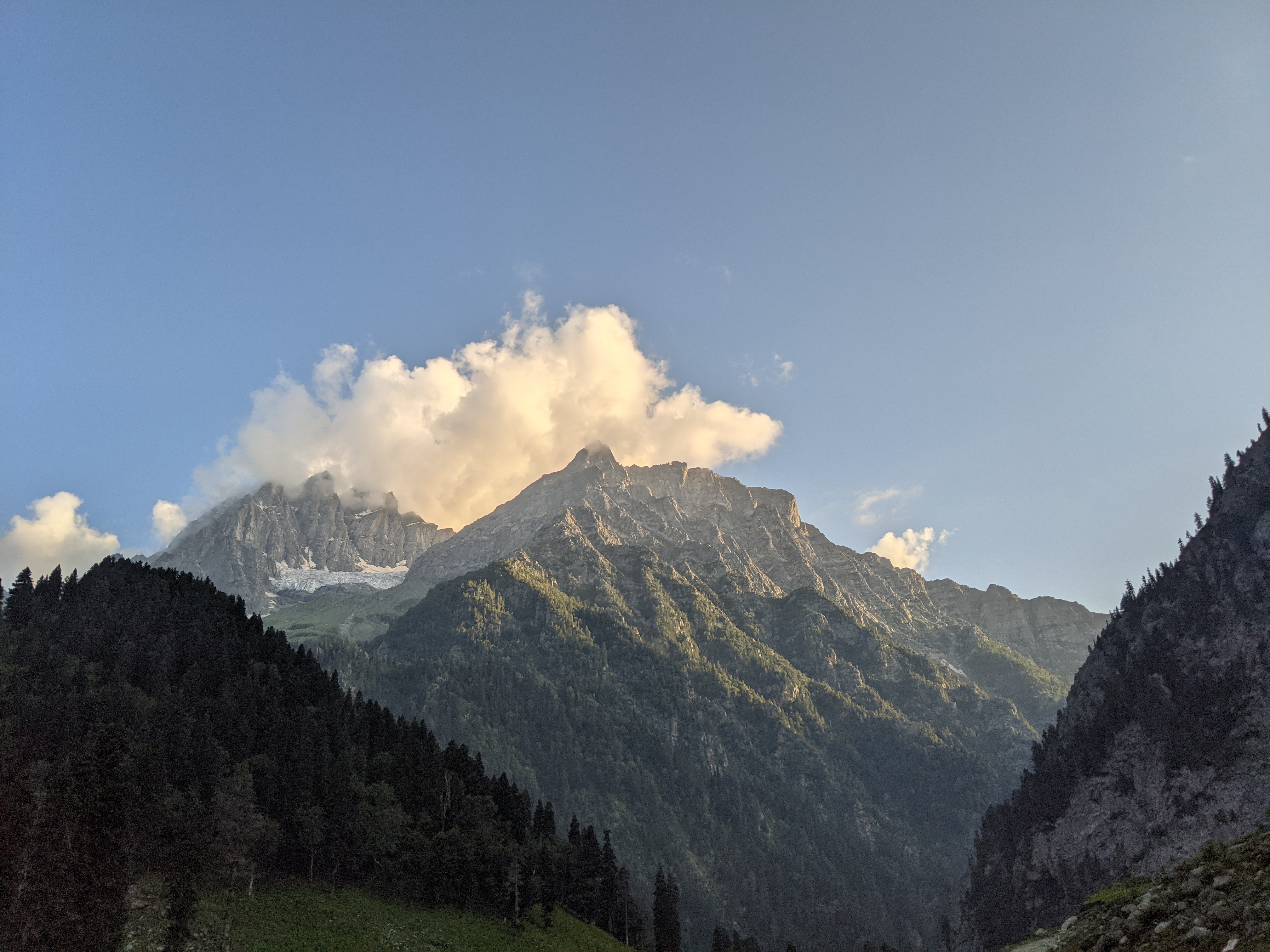
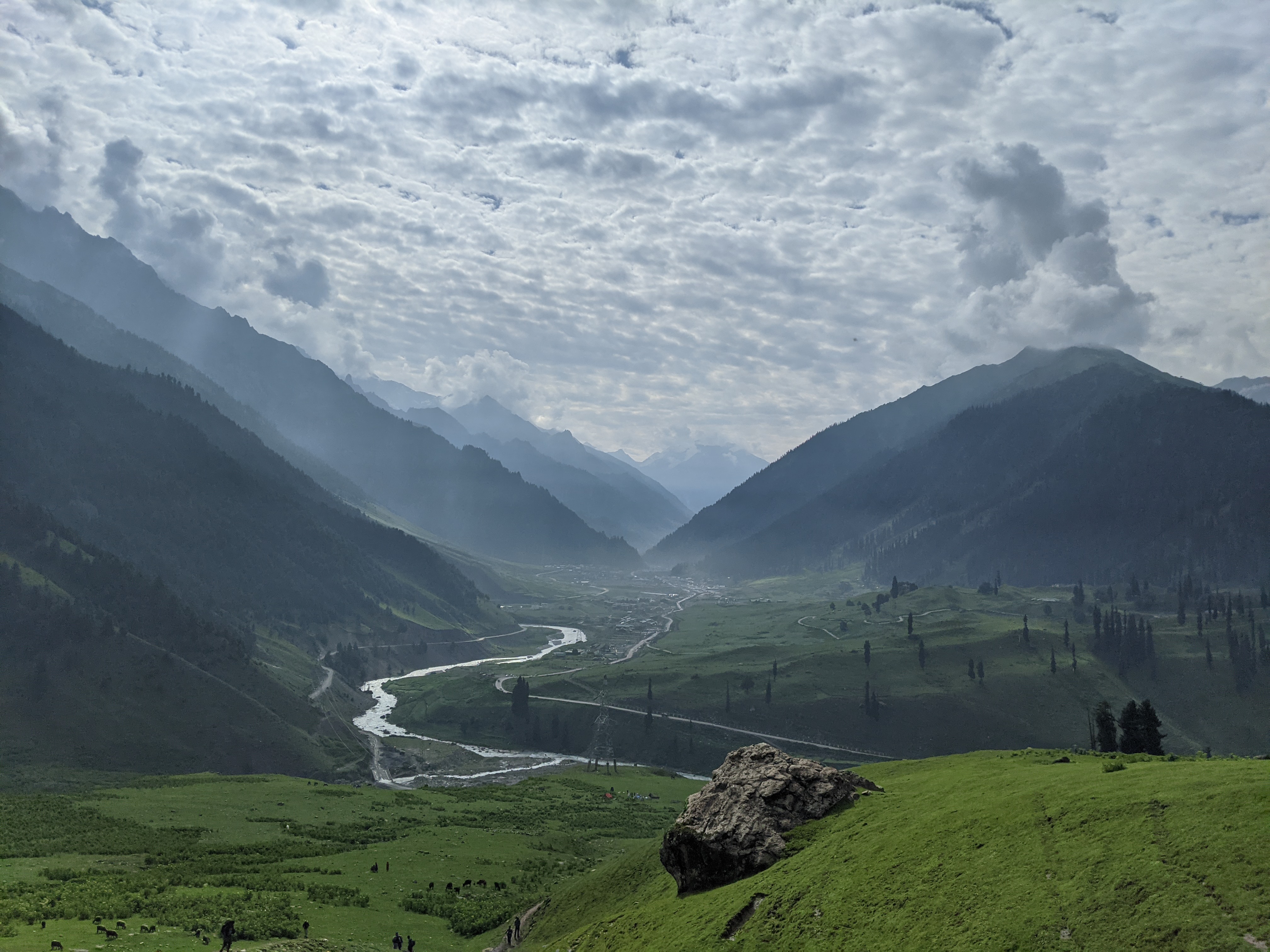
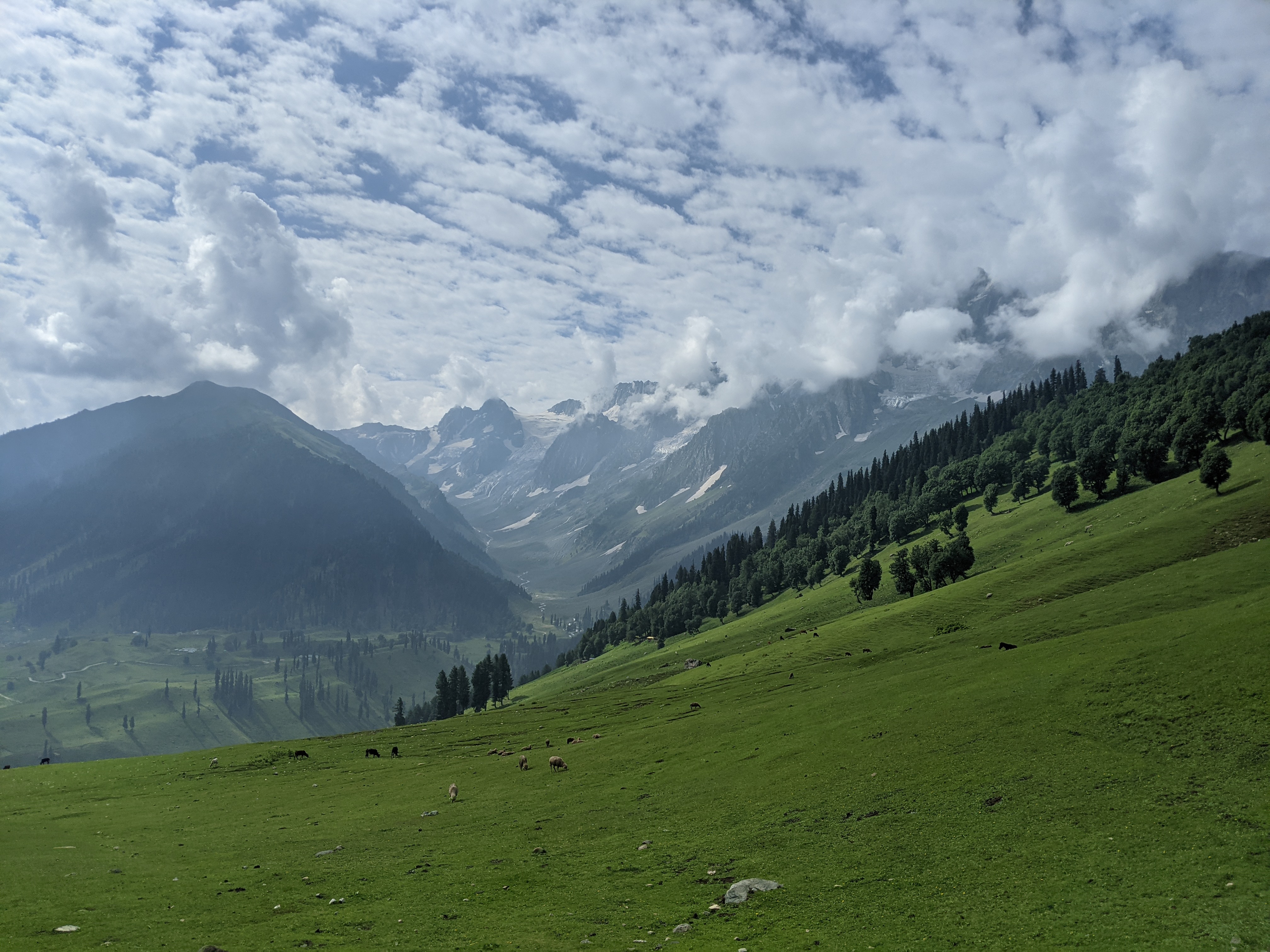
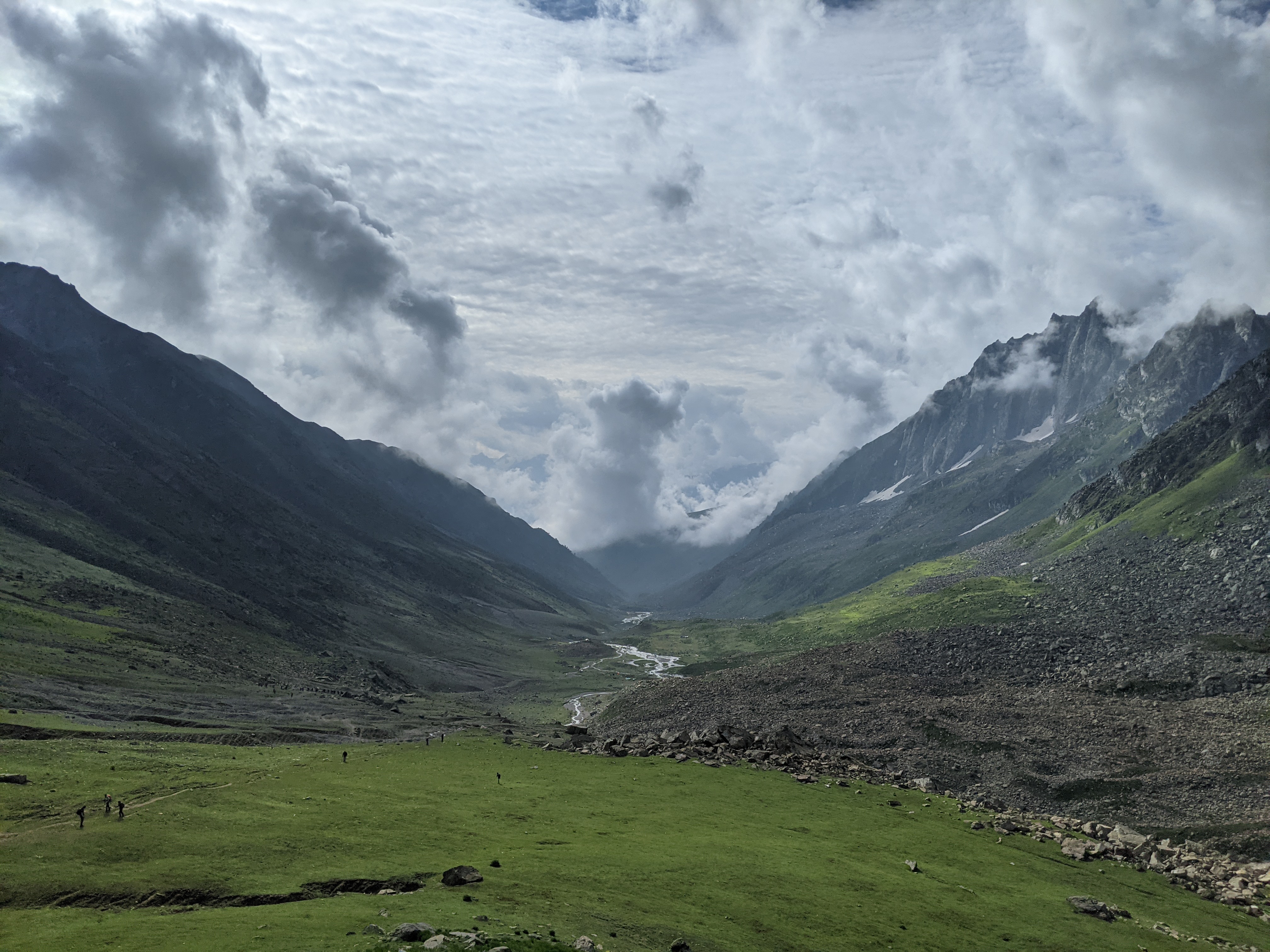
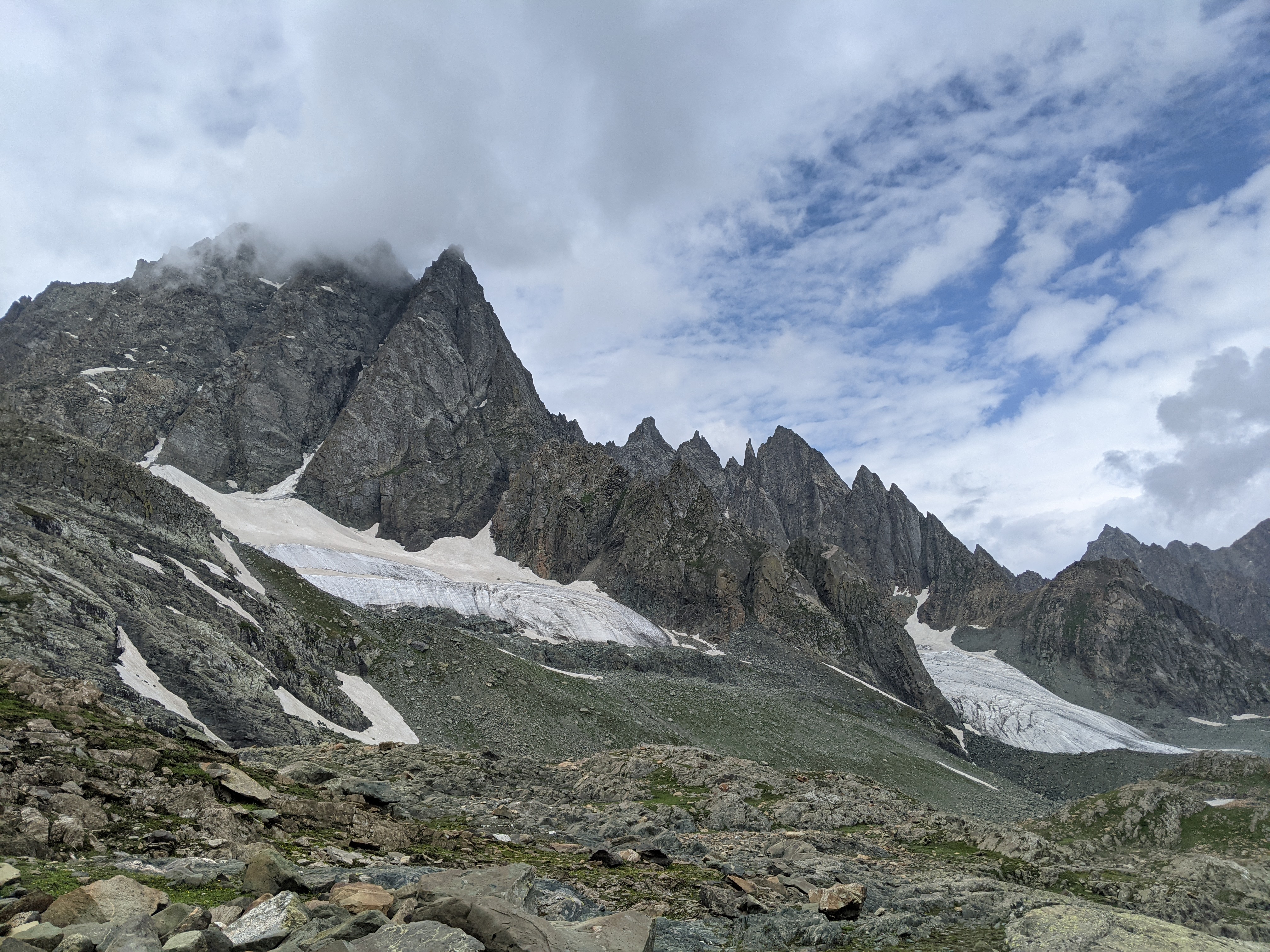
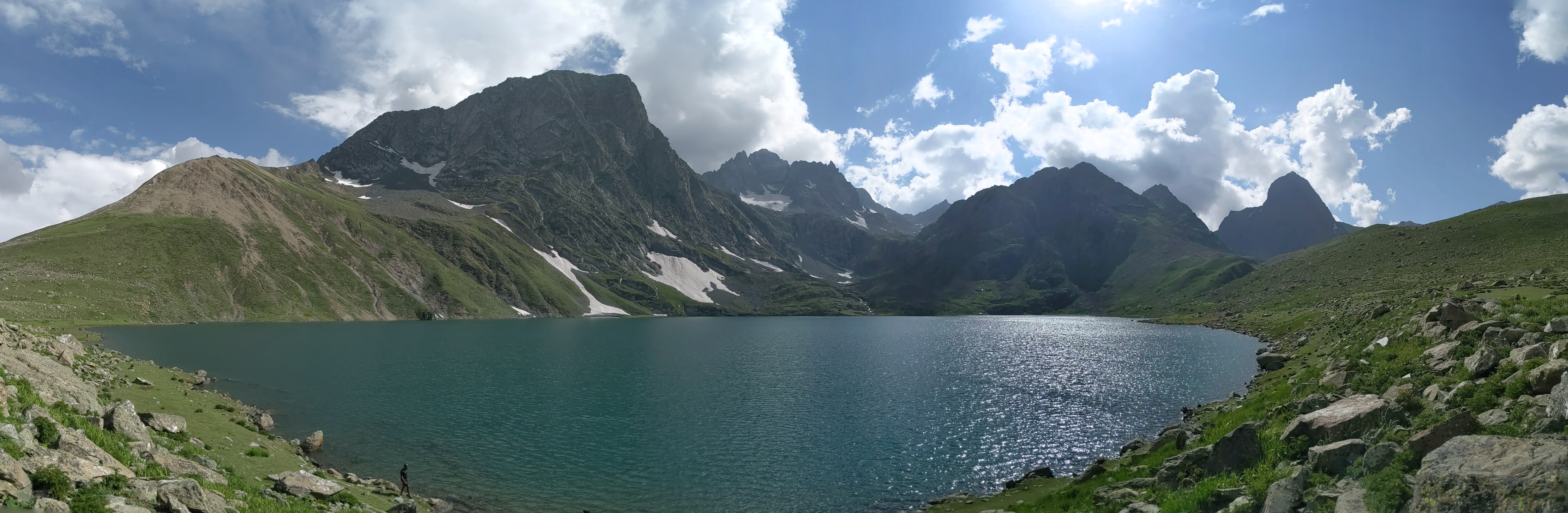
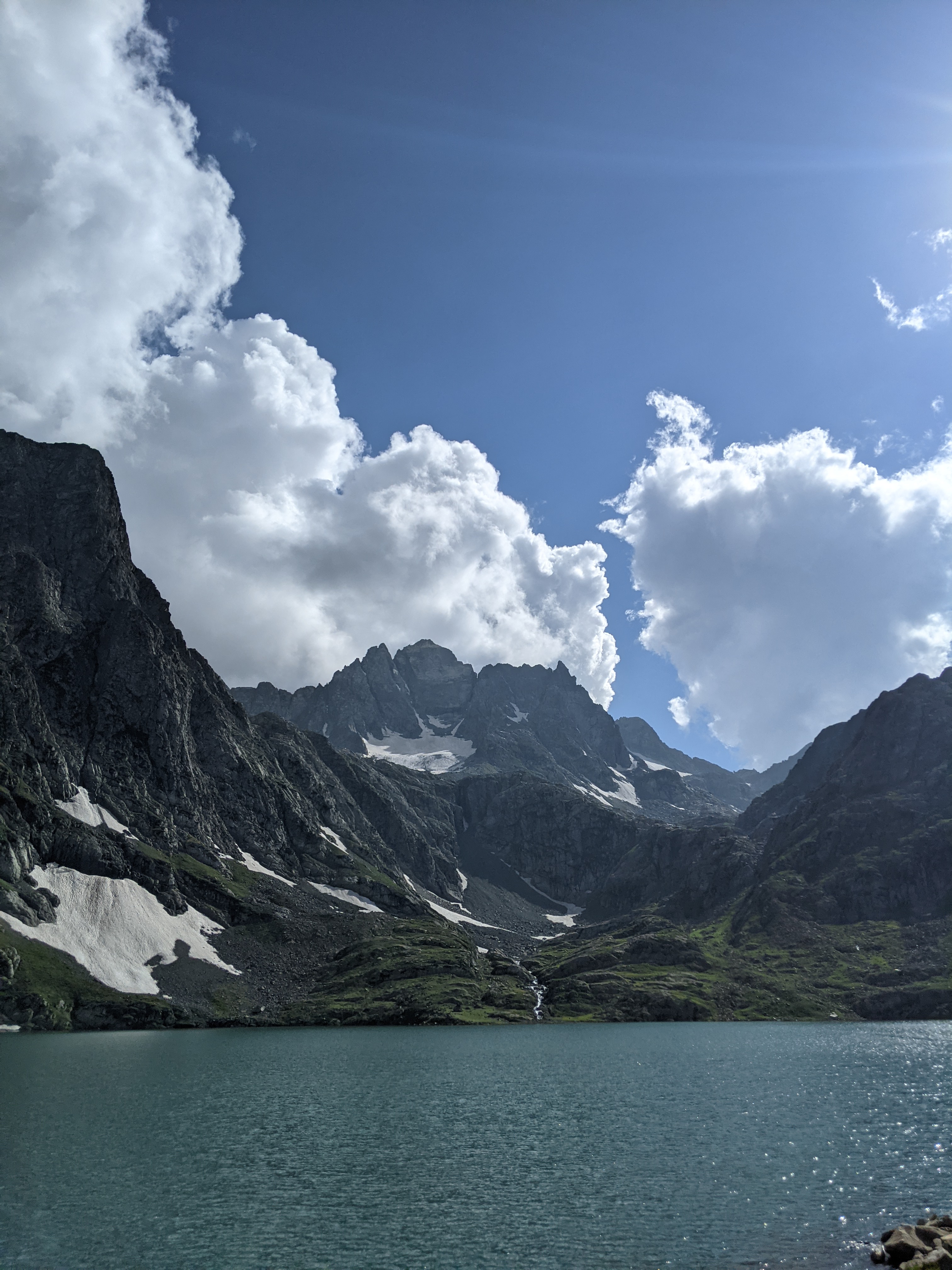
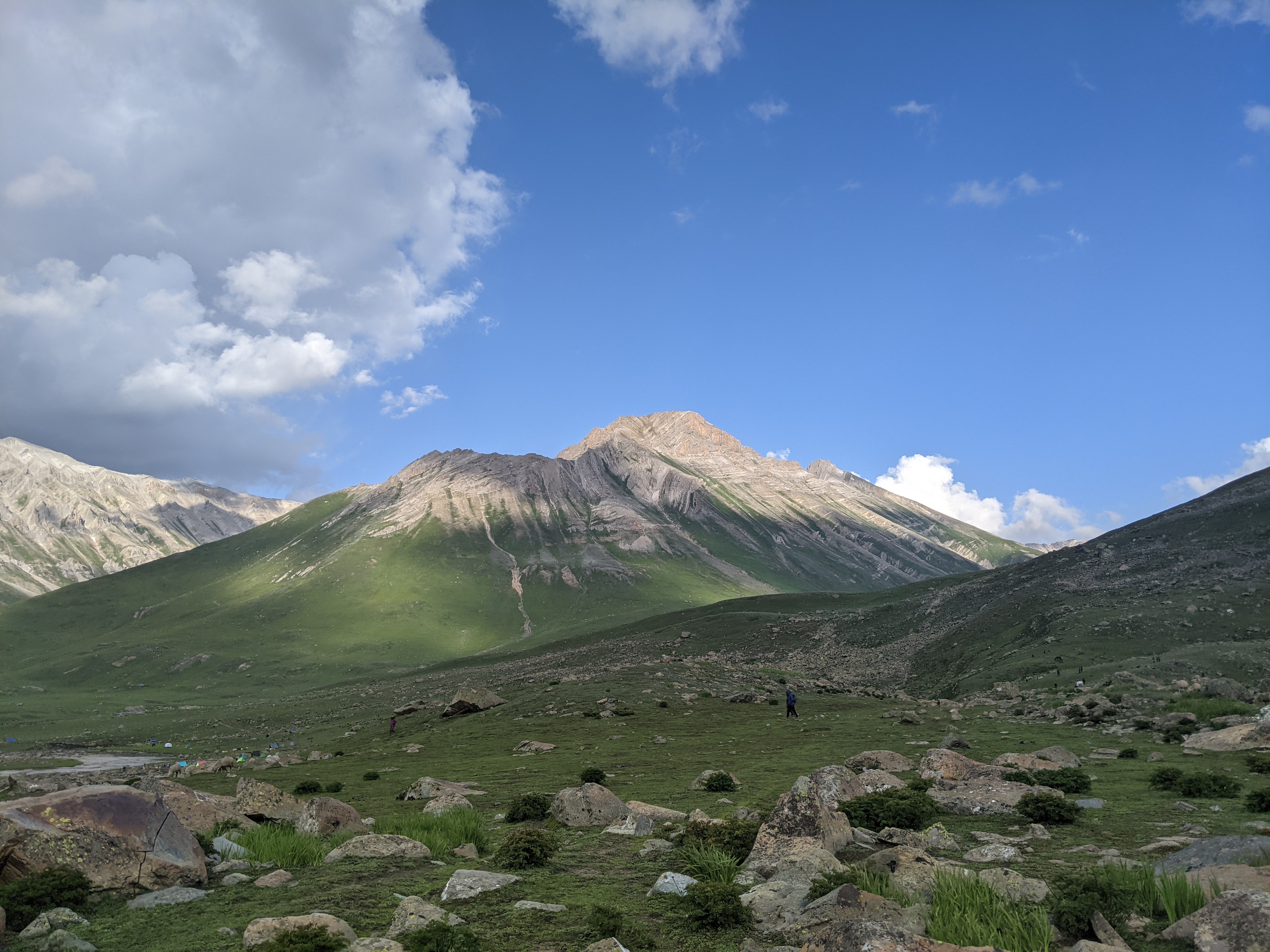
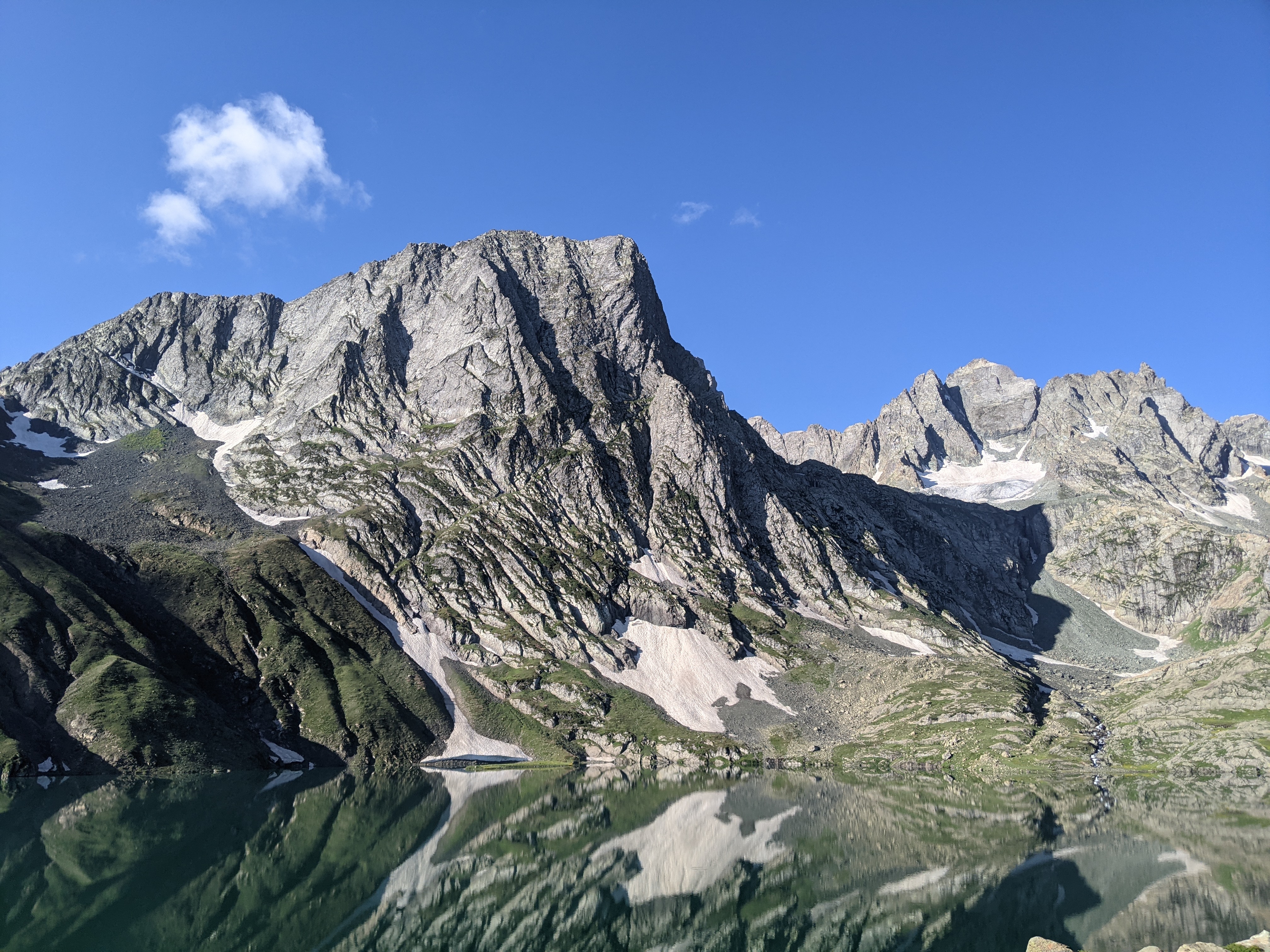
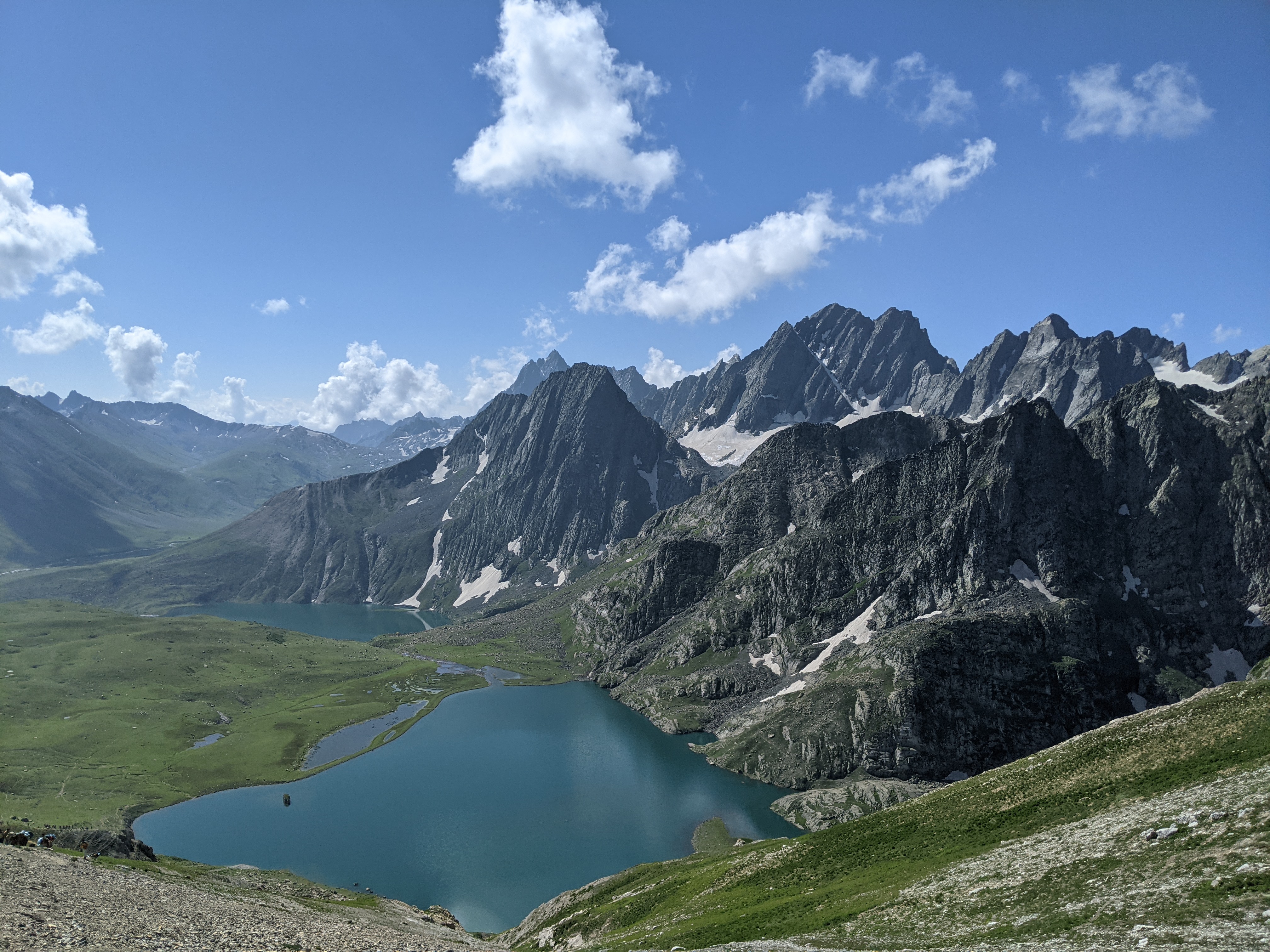
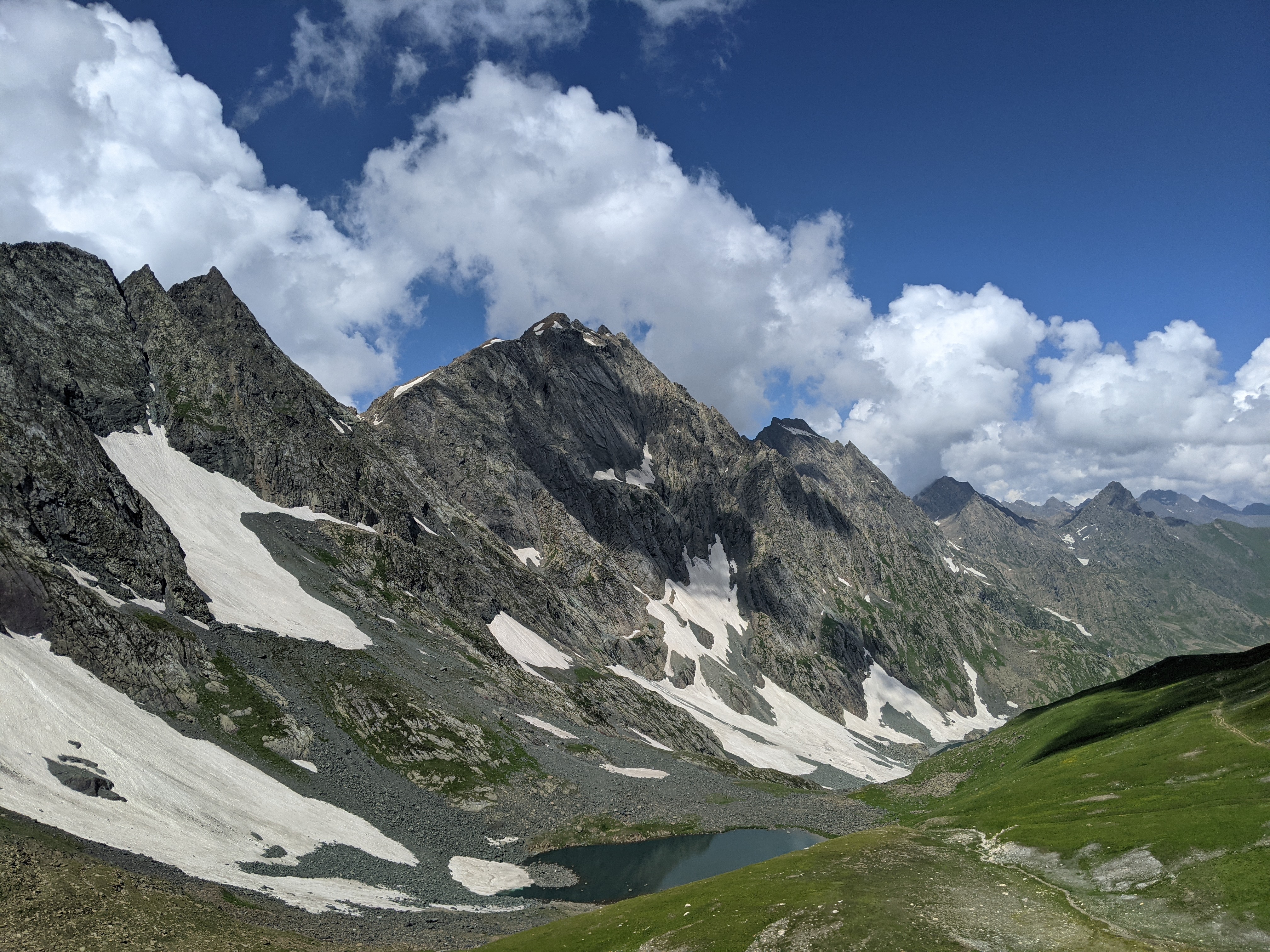
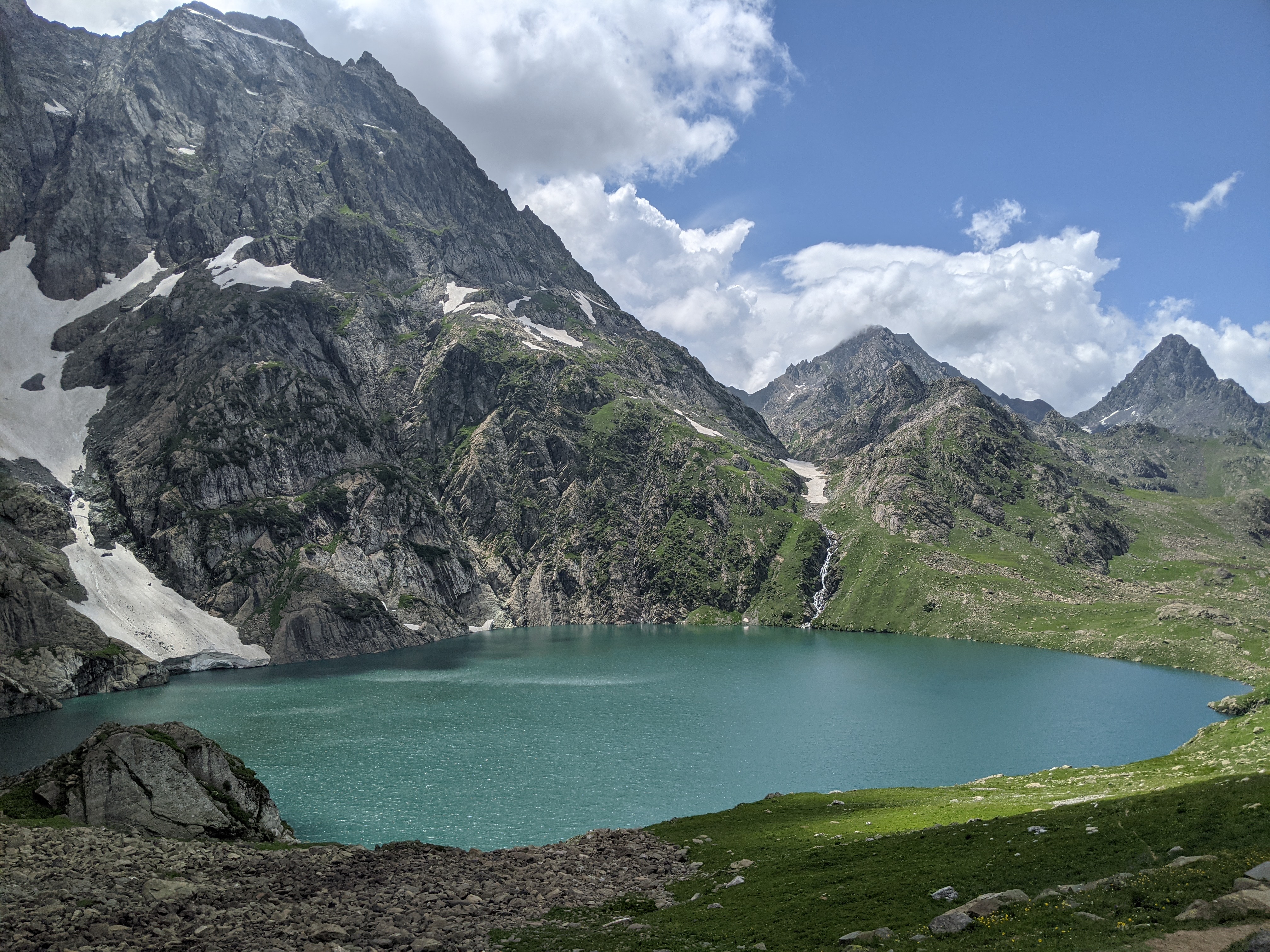
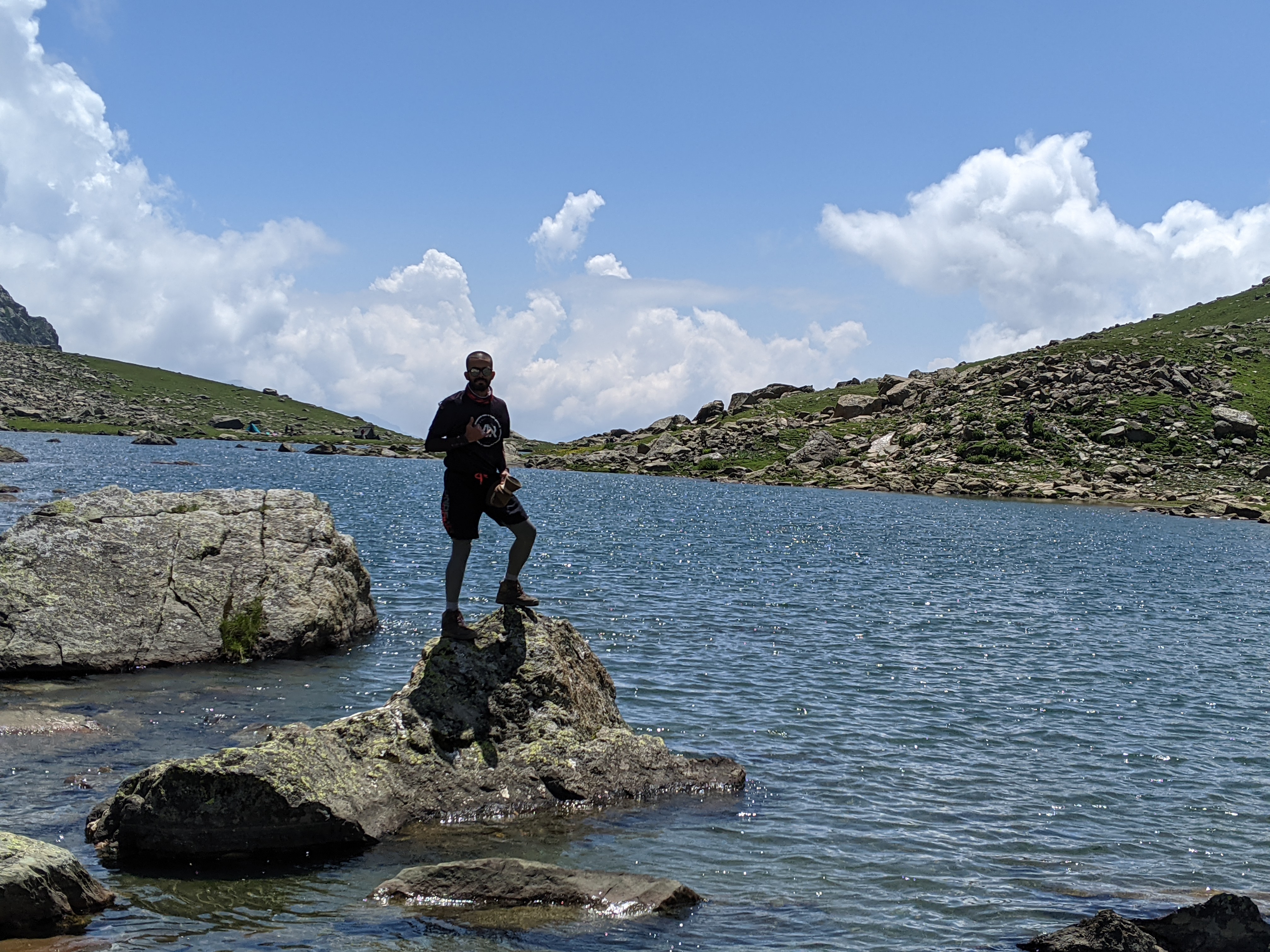
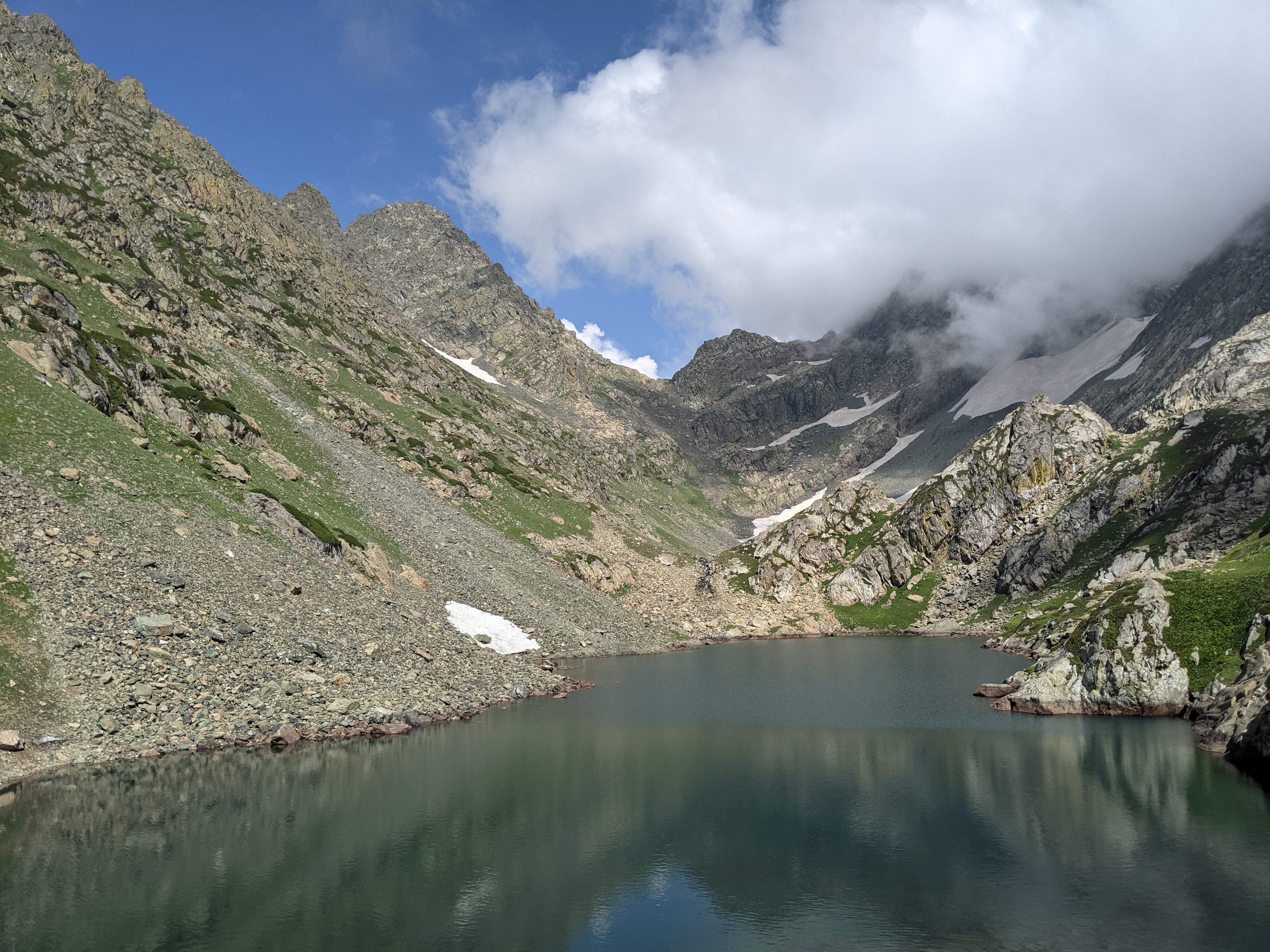
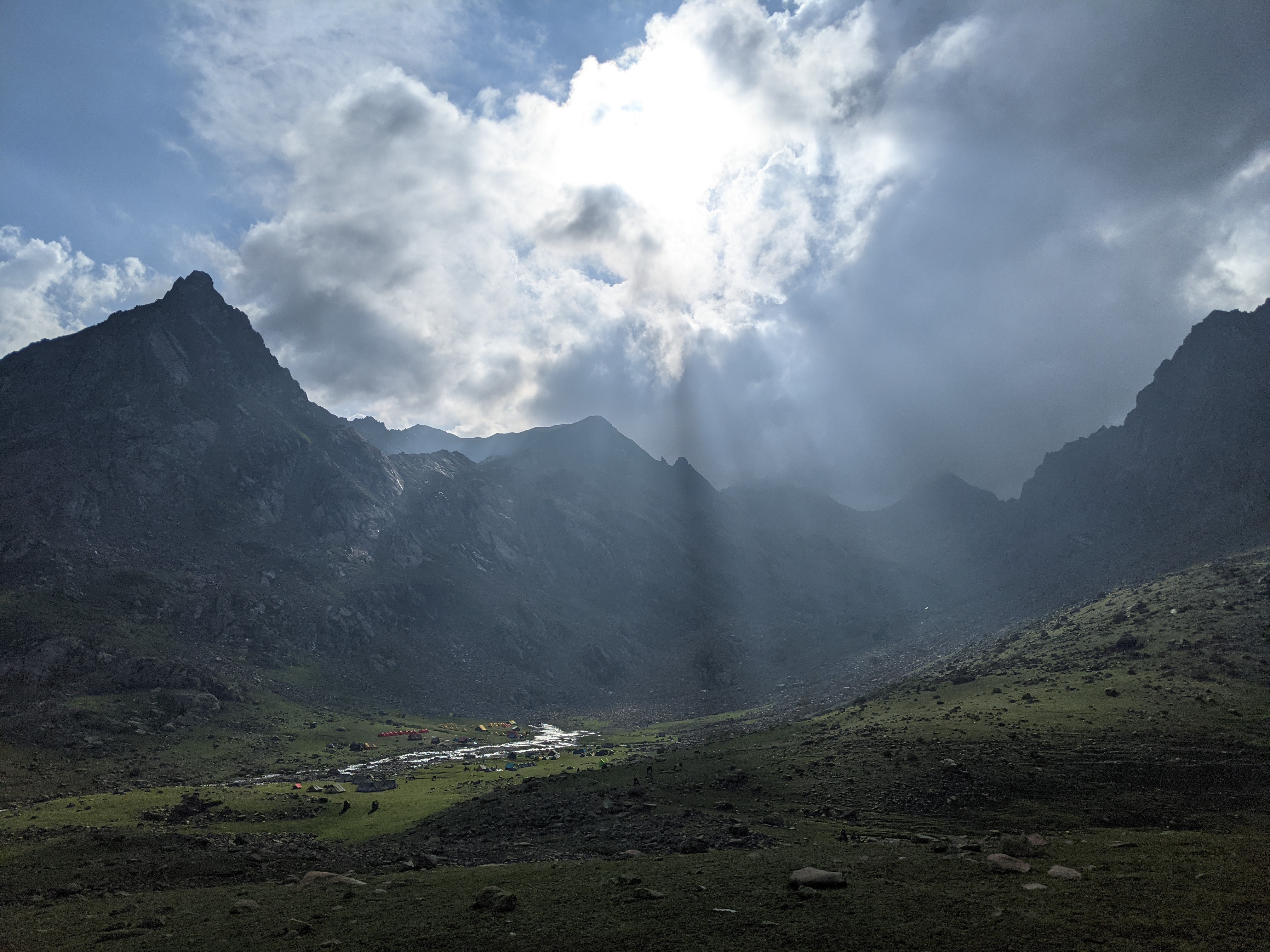
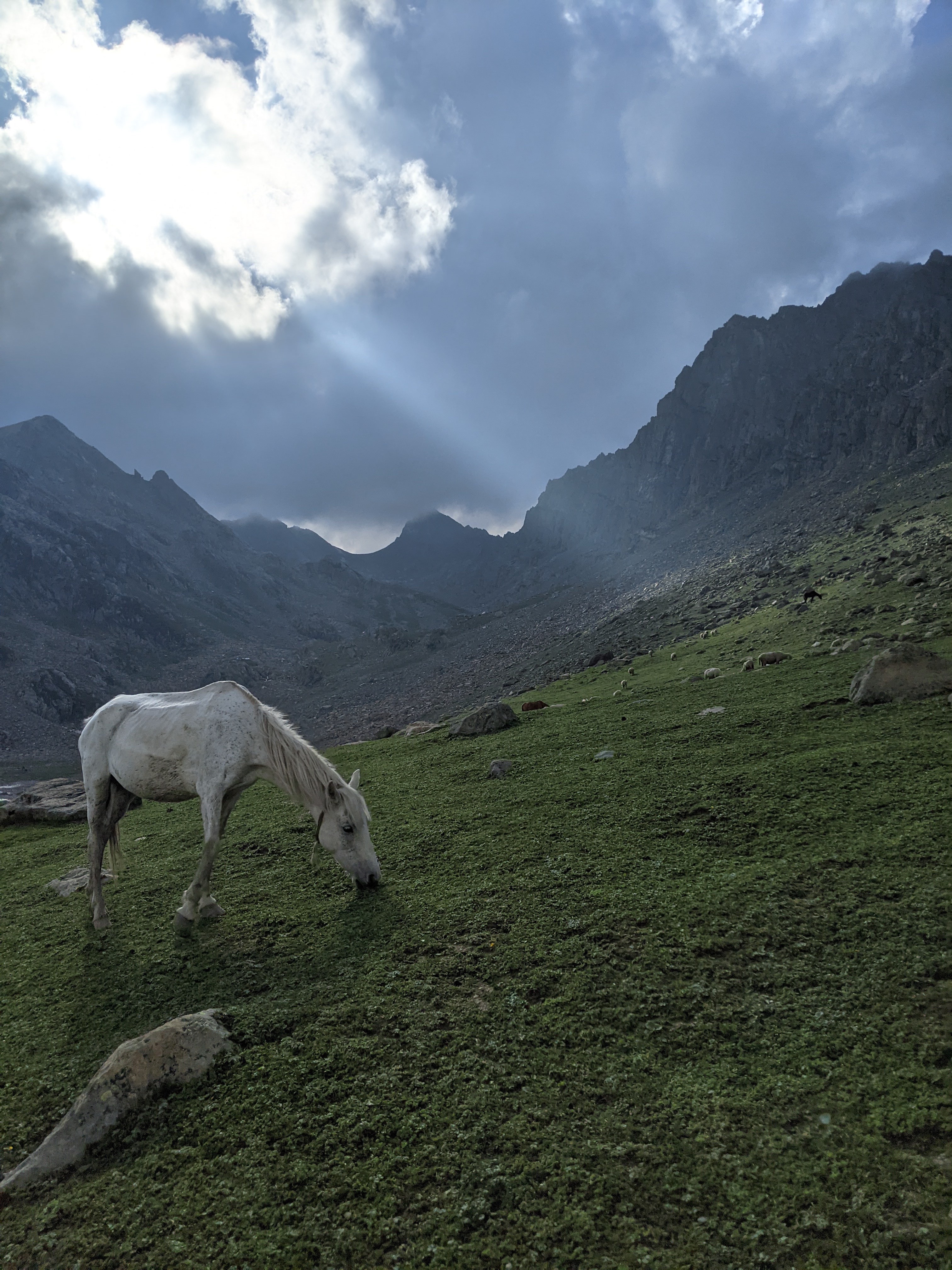
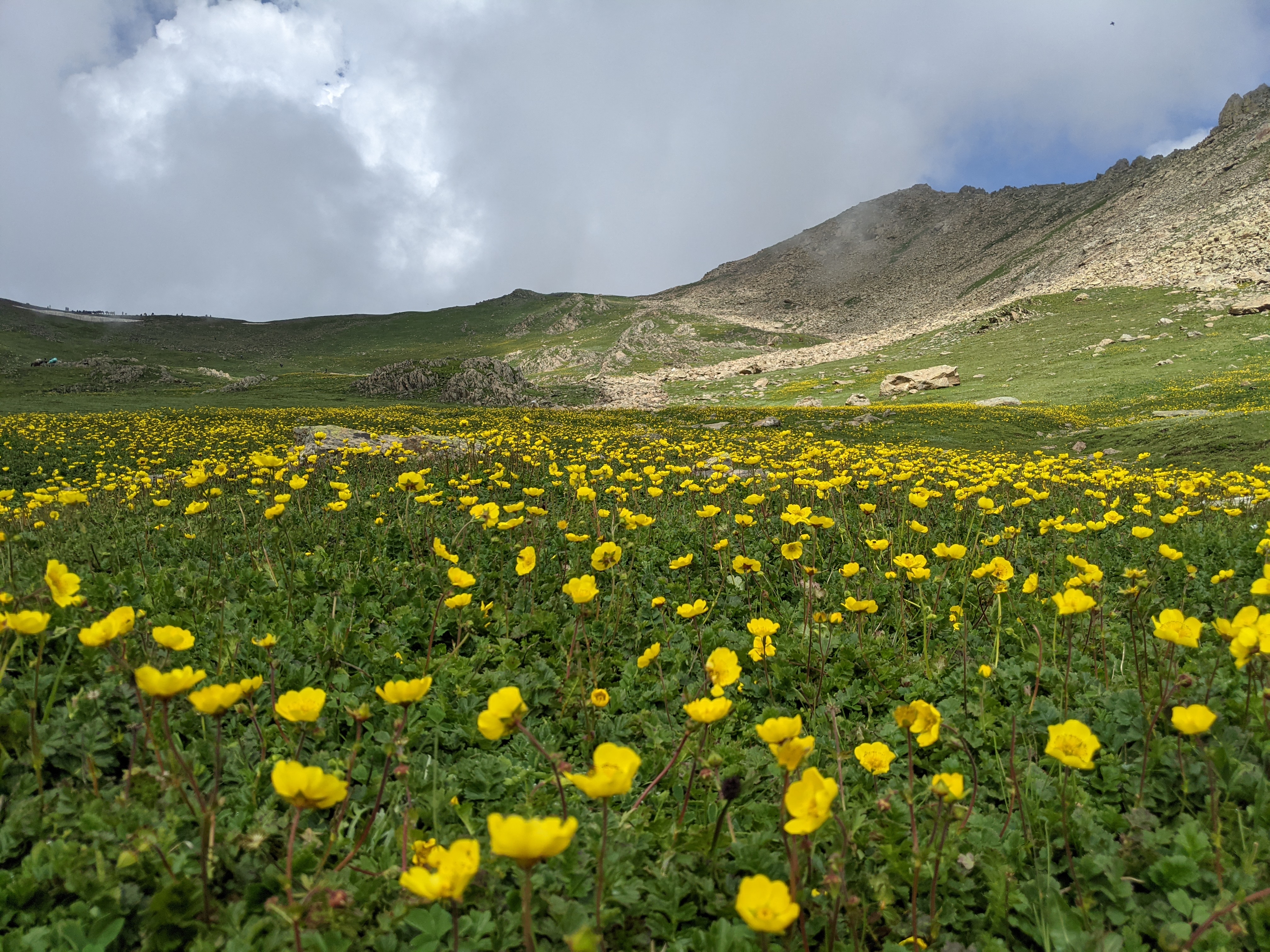
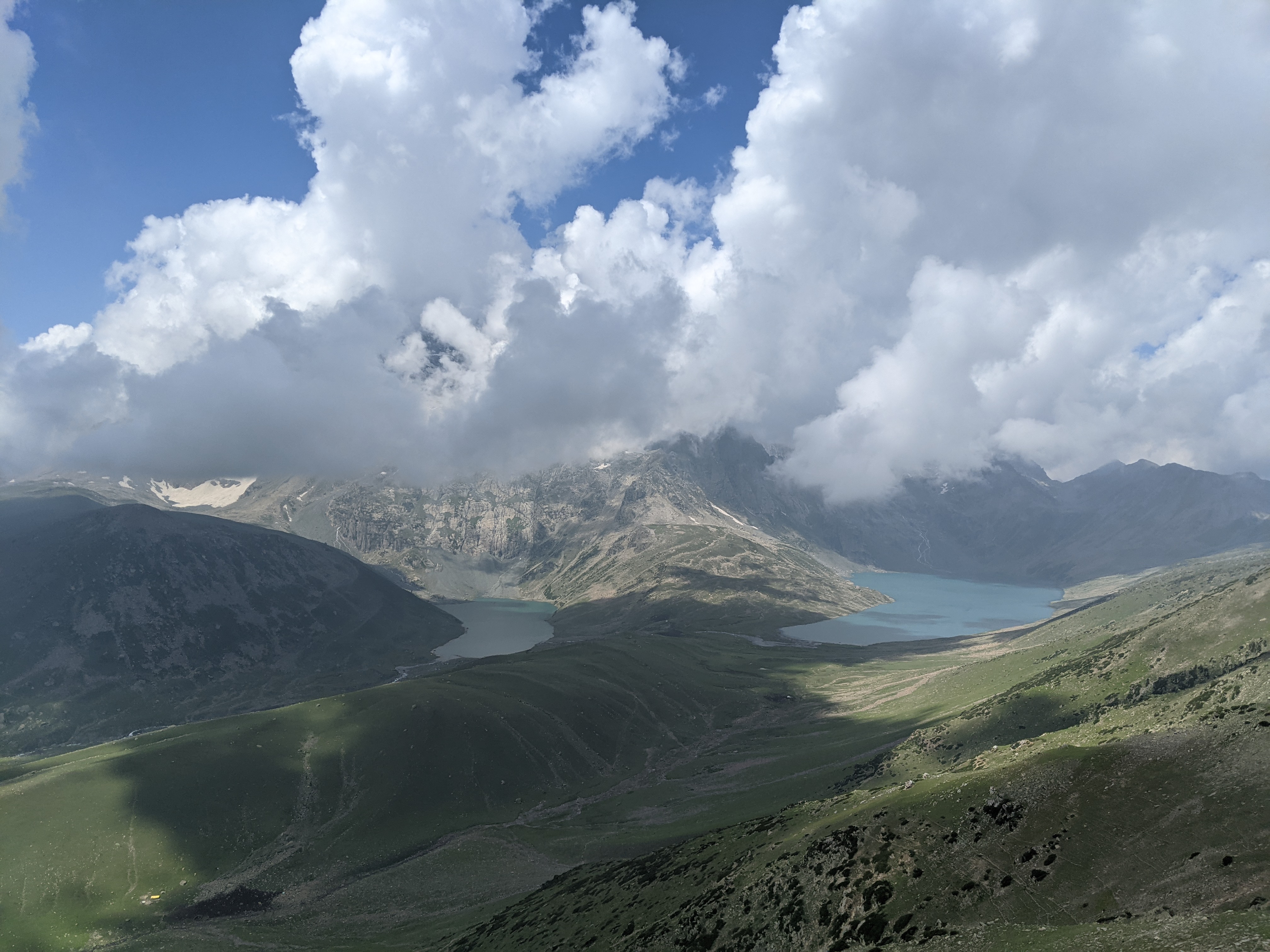
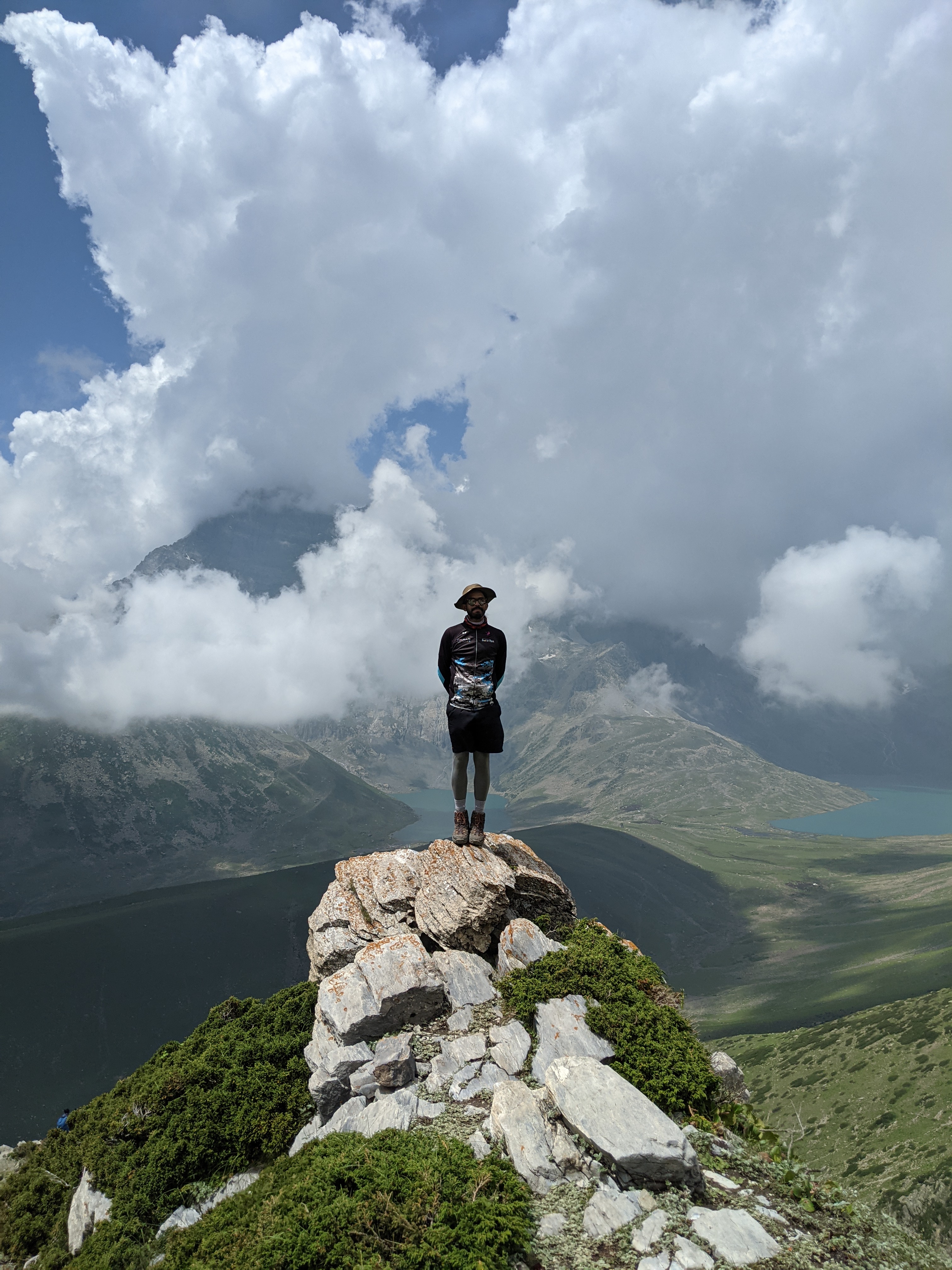
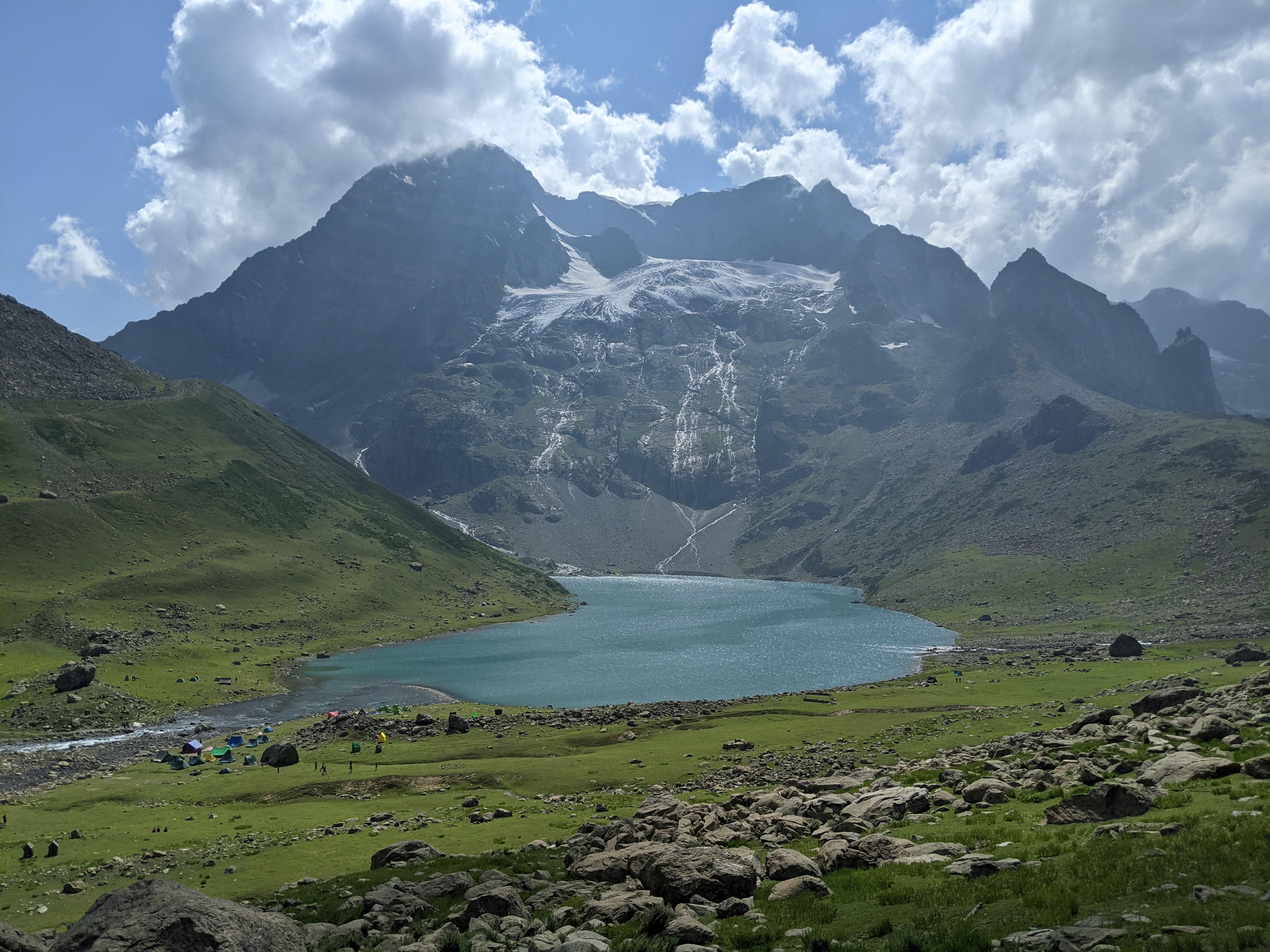
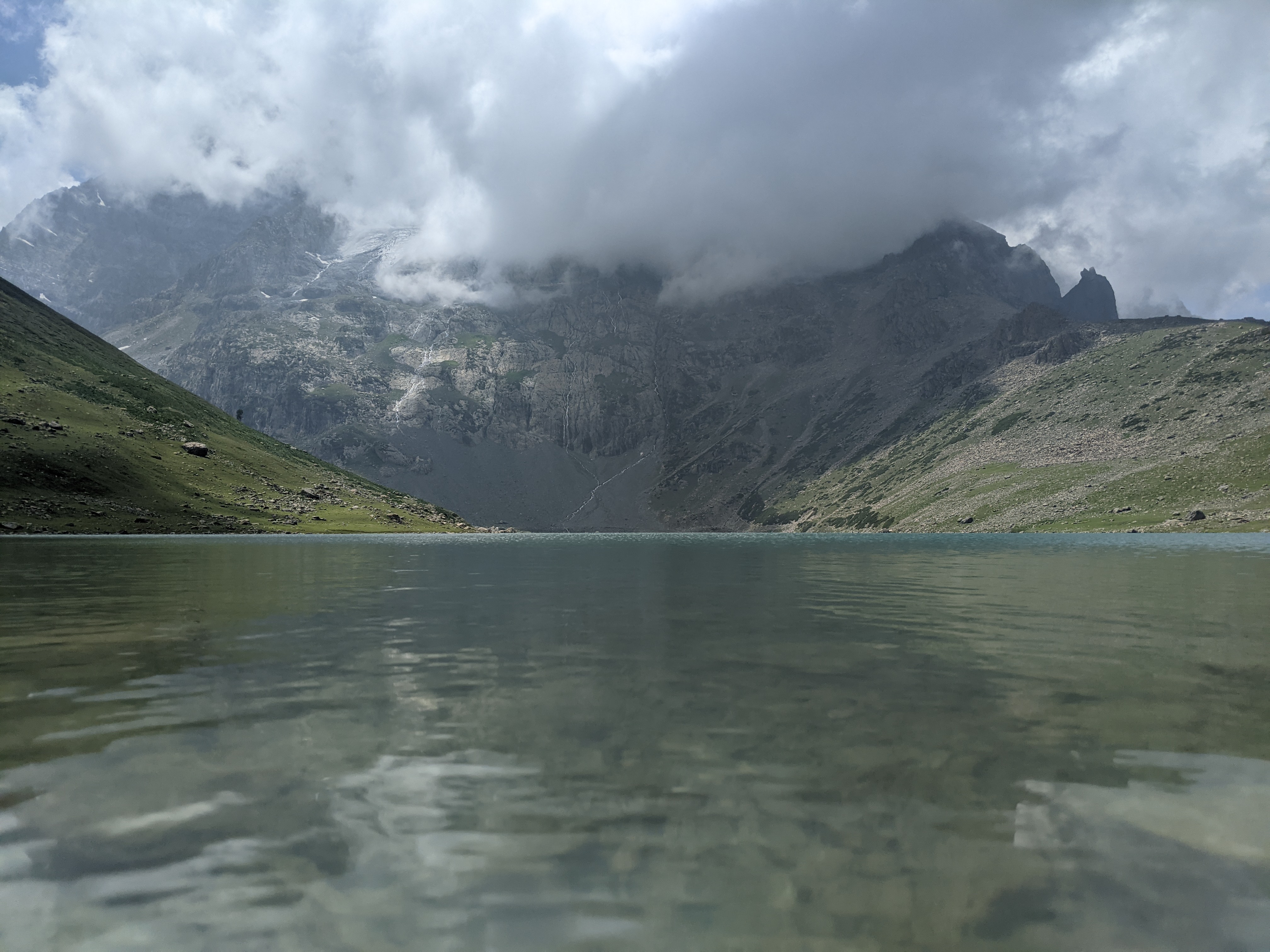
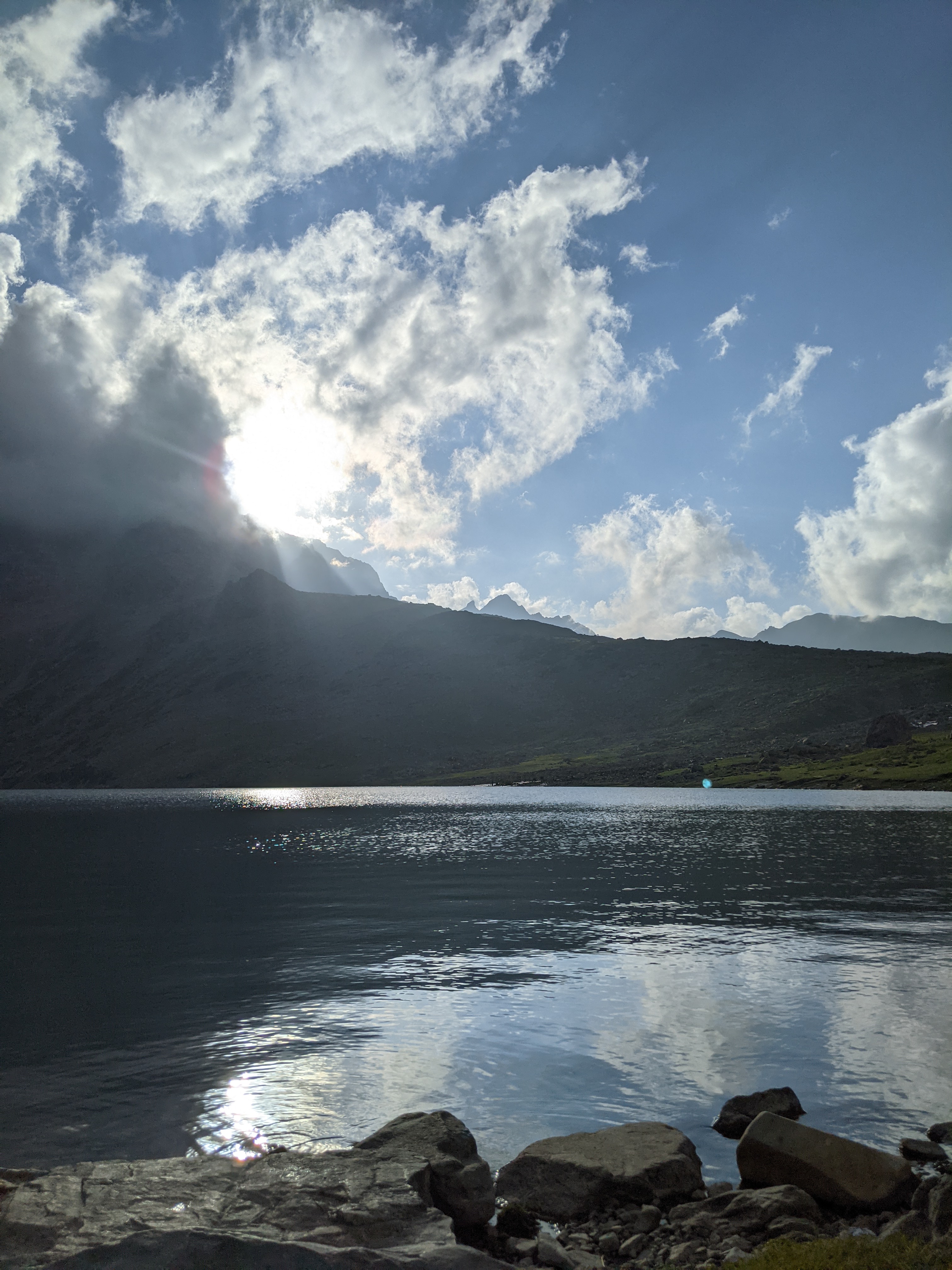
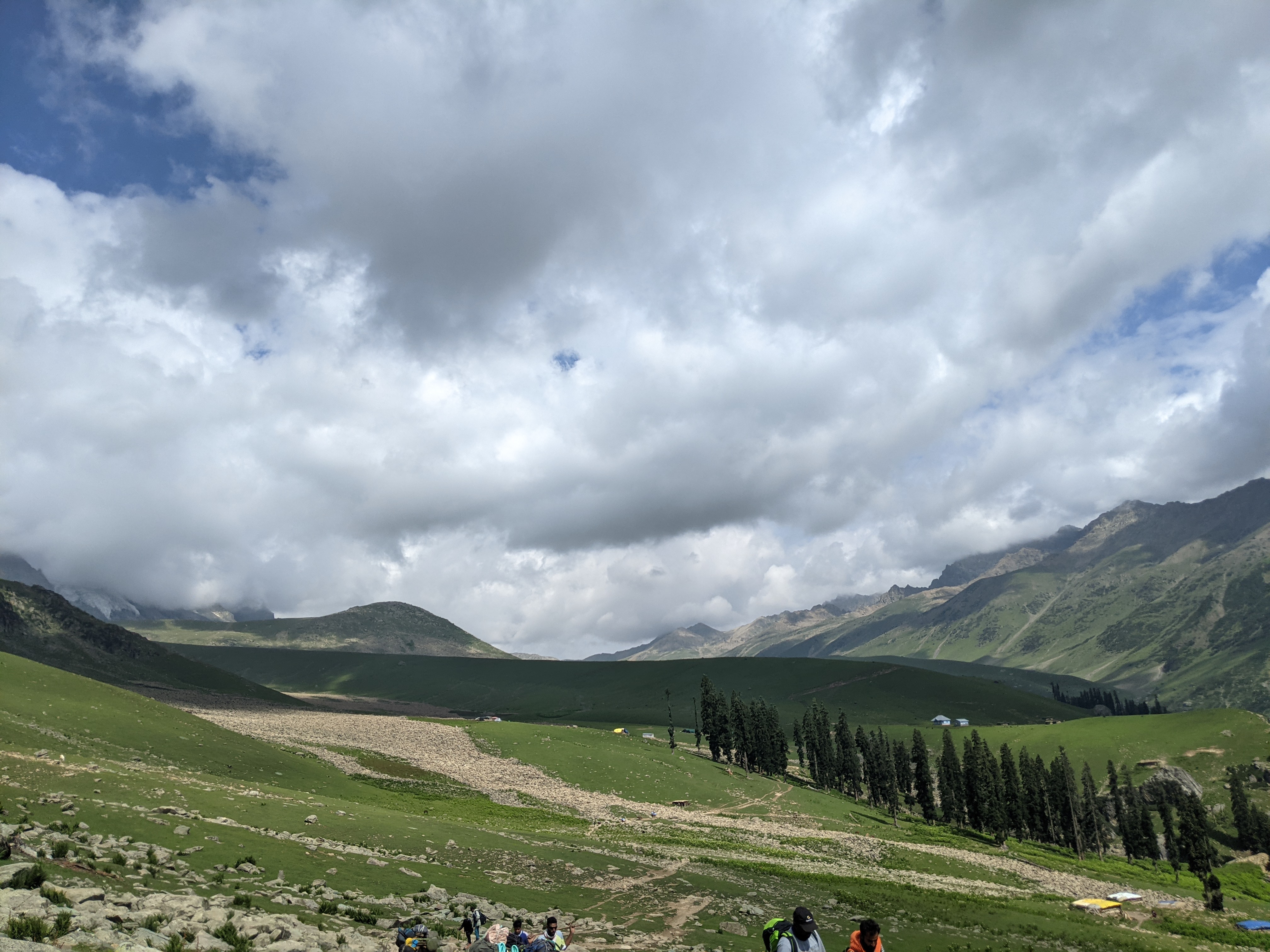
One of the most sought-after treks in the country right now, and it does complete justice to it’s popularity. You get to cross 3 high altitude passes and see more than seven alpine lakes over a period of 6 days (7 days – if you’re lucky to get a rest day). Every day you are surrounded by high mountains, grassy meadows, or green and turquoise alpine lakes. The trek starts from Sonamarg (Shitkari) and ends at Naranag, both places are easily accessible from Srinagar.
Why should you do the KGL trek?
It’s not too long (69 kms only), difficulty levels are moderate, and I would personally recommend it for beginners (we had a few in our group, and they all did splendidly). There are a lot of alpine lakes to explore out there of varied hues and blues, and someone did mention the region to be home to 70+ lakes. And to top it all, the night sky on a moonless night is perfect for stargazers, shooting stars and galaxy hunters.
Who should do the KGL trek?
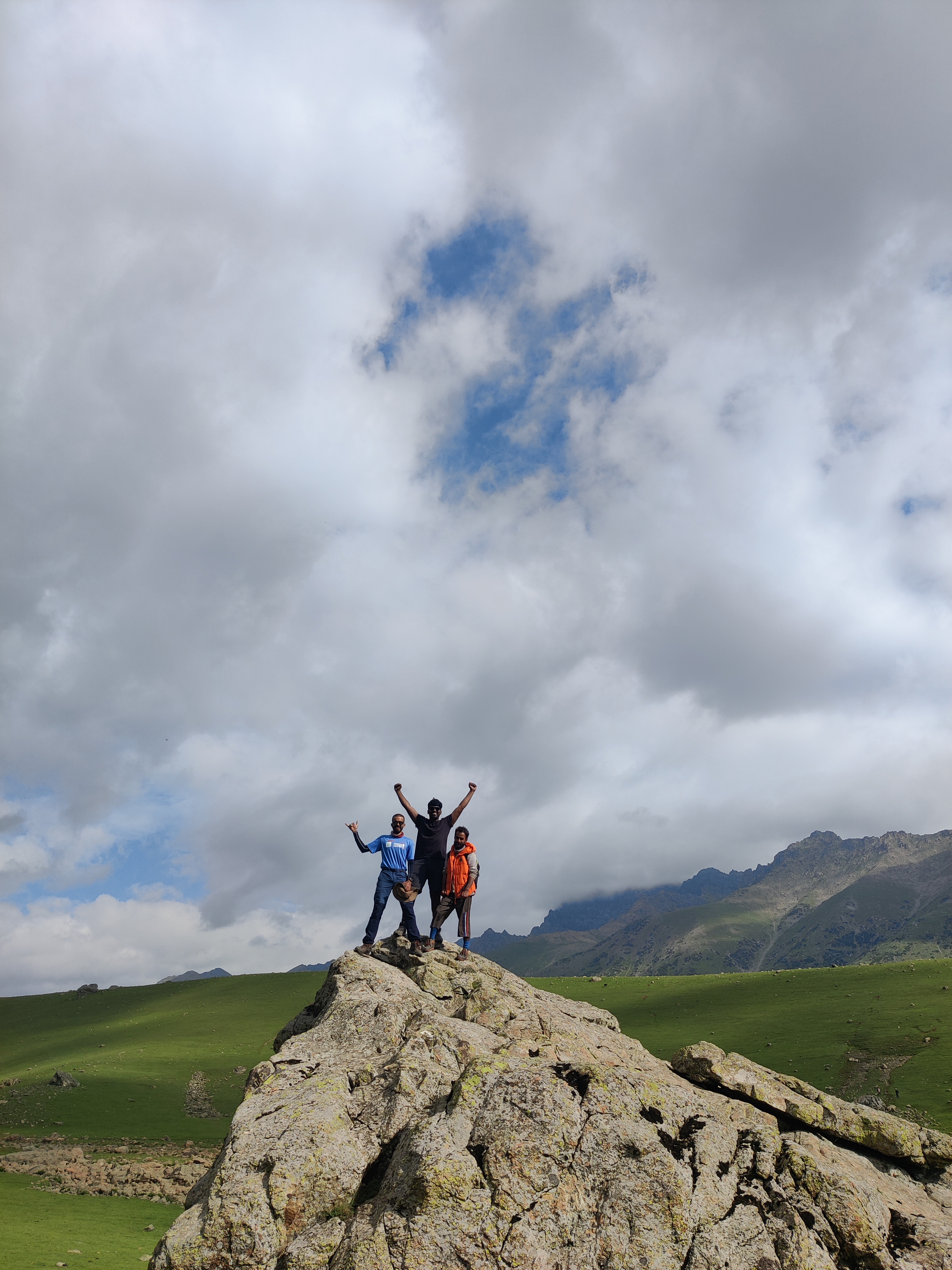
Everyone* who wishes to embark on their journey of trekking across our beautiful country, KGL can act as a good starting point. I saw kids, elders, overweights, underweights, welterweights, all sorts of ages and groups of people over the 7 days of my trek.
*keeping in mind you are physically active and mentally prepared to take on the long walks and the high-passes of the trek. If you ask me, it’s all in the head. Your legs do the walking, whilst your mind does the talking.
When should you do the KGL trek?
The online guides suggest July, August and early September. The dates for my trek were 8th to 14th of August, with all of us assembling at Shitkari, Sonamarg on the 7th of August. Luckily, we had 7 days of sunny, rain-free trekking days which was quite a relief. You really don’t want to walk in the rain during the trek, it’s not fun at all. Also, sometimes the KGL treks get cancelled due to bad weather / rain, so keep an eye out for the weather forecast before making your bookings.
Who should you do it with?
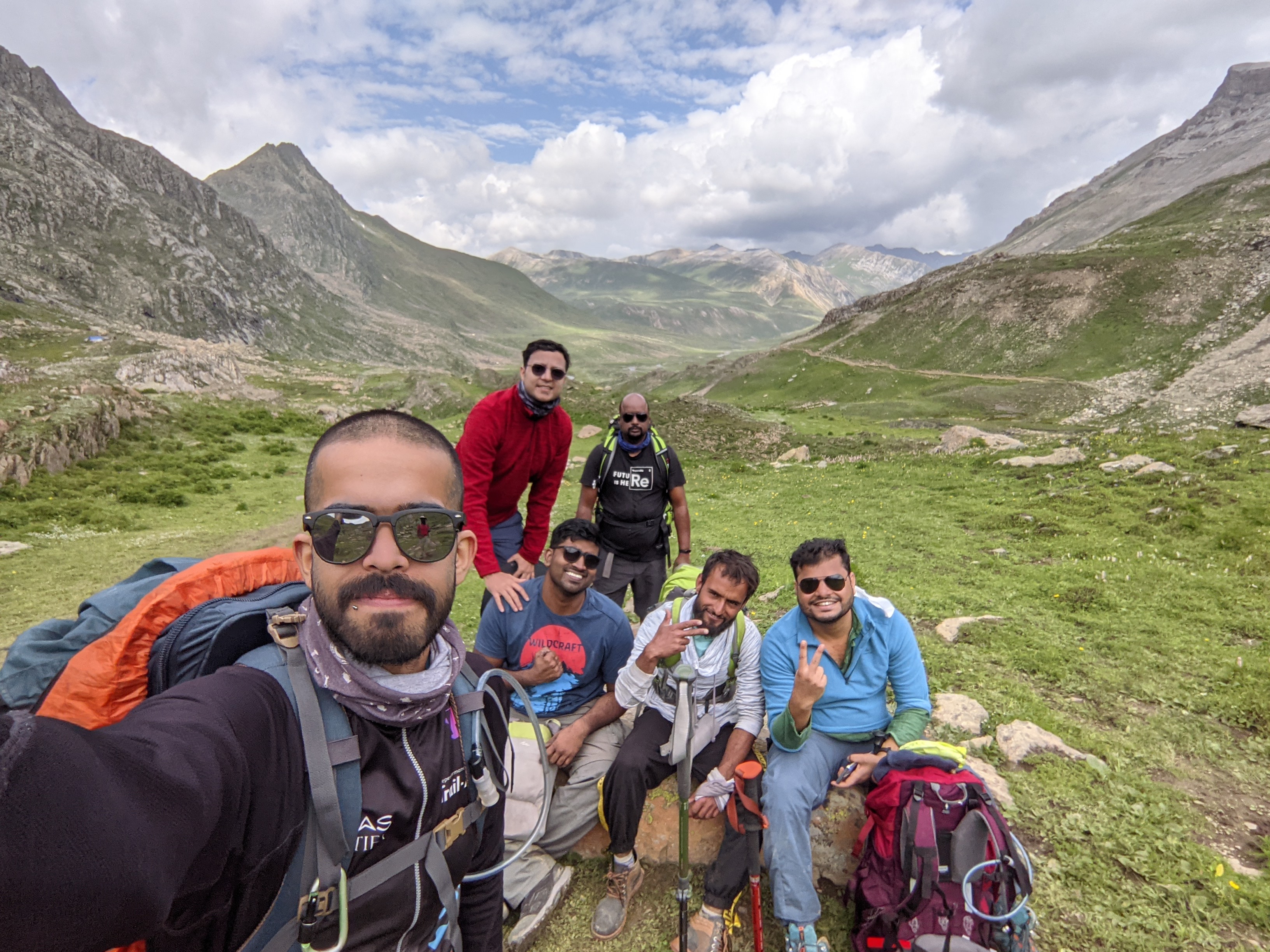
Bikat Adventures is my preferred organisation for trekking. We had 2 Trek Leaders + 2 guides for a batch of 15 people only, the operations were smooth and everything was very well organised. Apart from that there are a lot of options to chose from, but keep in mind the size of the group you’re going with versus the number of trek leaders / guides allotted to your batch. If things go wrong, the trek leaders are supposed to take charge, but if you are with a group of 20 with 1 trek leader, then I believe it’s always a risk.
Some people do it alone as well, that should be fun too!
What are the essentials to carry for the KGL trek?
Proper waterproof cover for your bags, buy a plastic sheet and wrap your essentials in it inside the bag itself.
Sunscreen, lip balms etc. to protect yourself from getting baked
A hat is better than a cap / a buff to protect your face and neck
Waterproof trekking boots are always good, normal trekking boots work as well but make sure they have been used before. Avoid using brand new trekking shoes.
A head torch with spare batteries
Binoculars to spot the stars and the galaxies in case you’re a night-sky lover
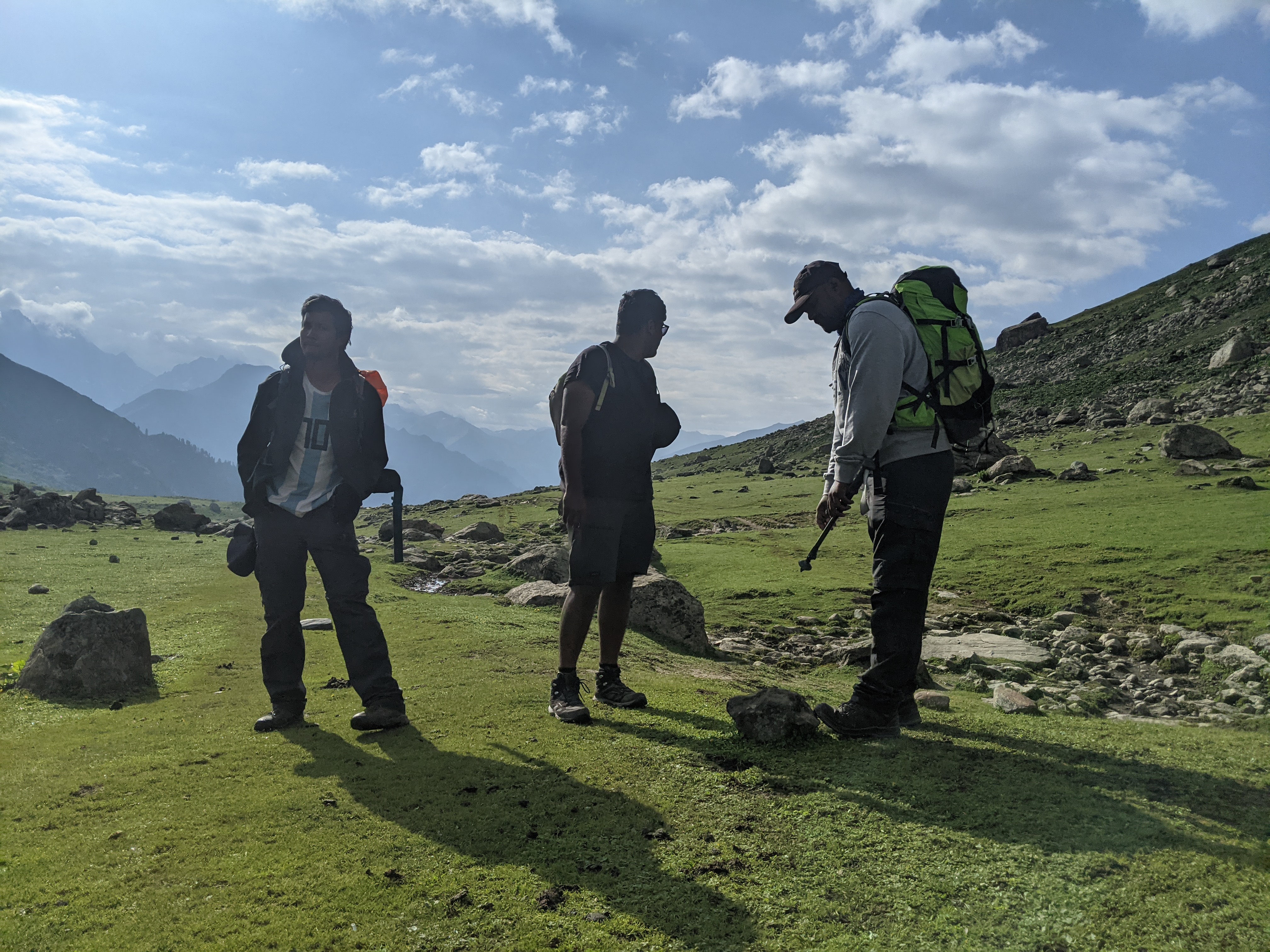
Itinerary, with pictures:
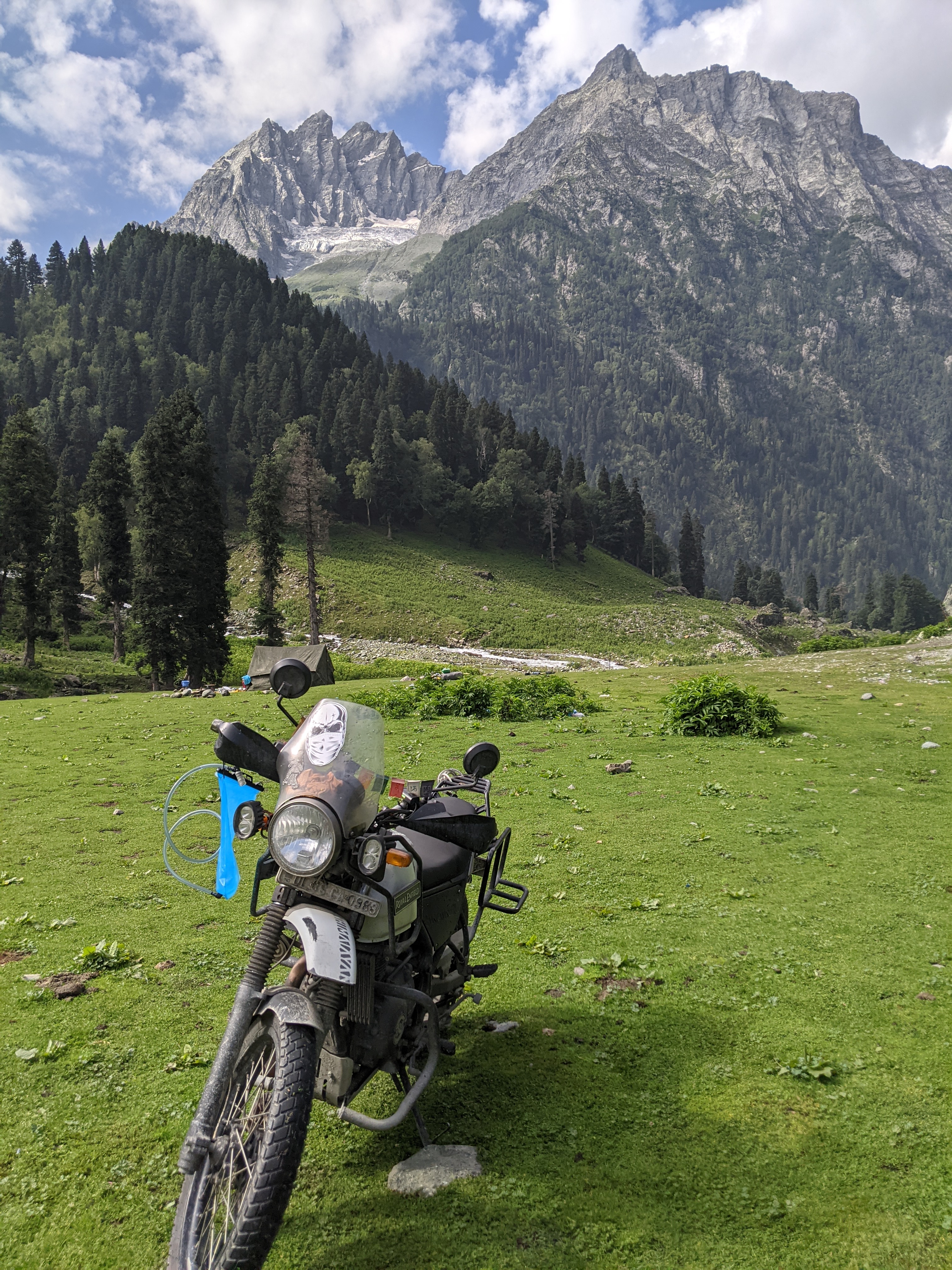
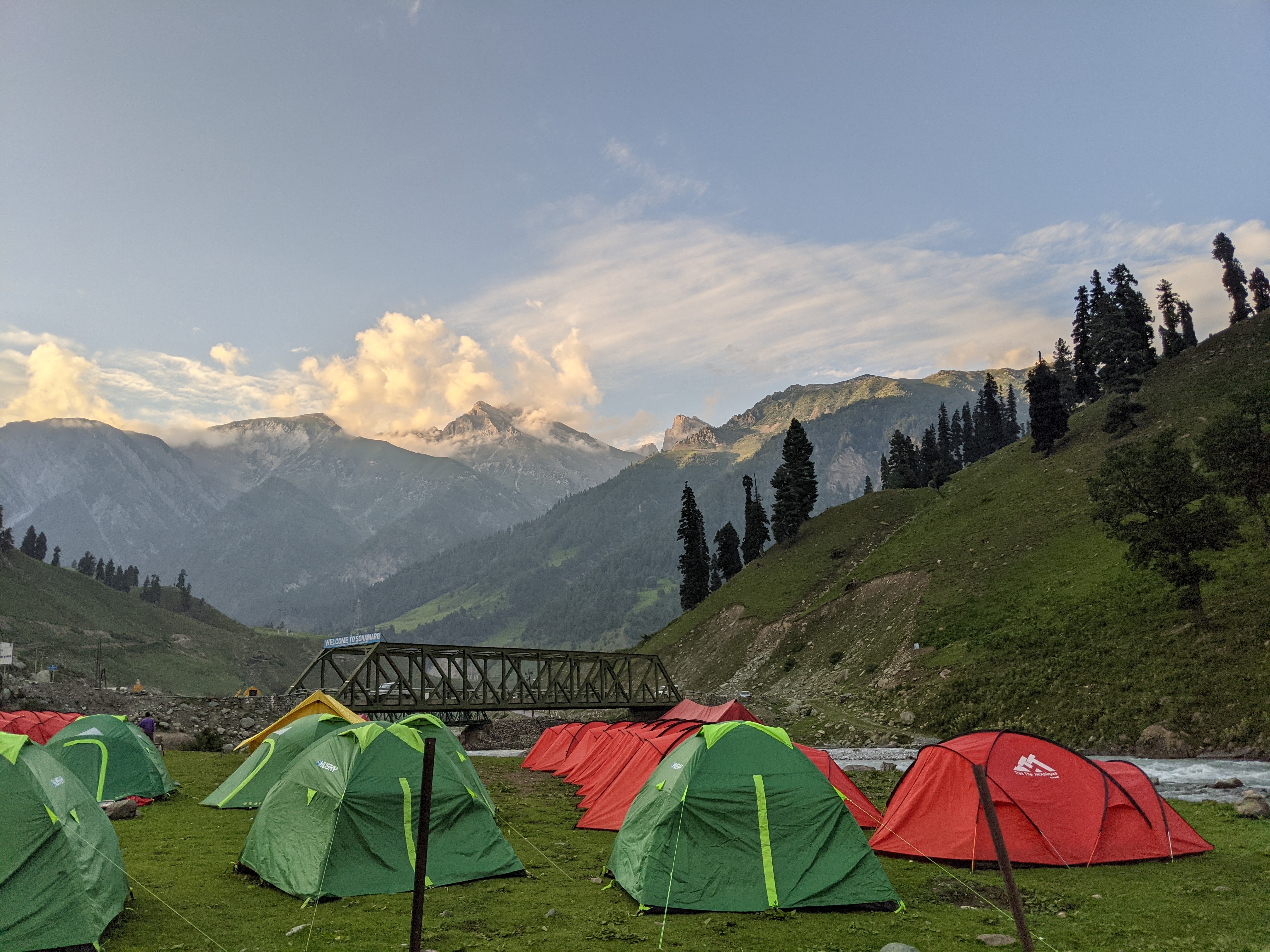
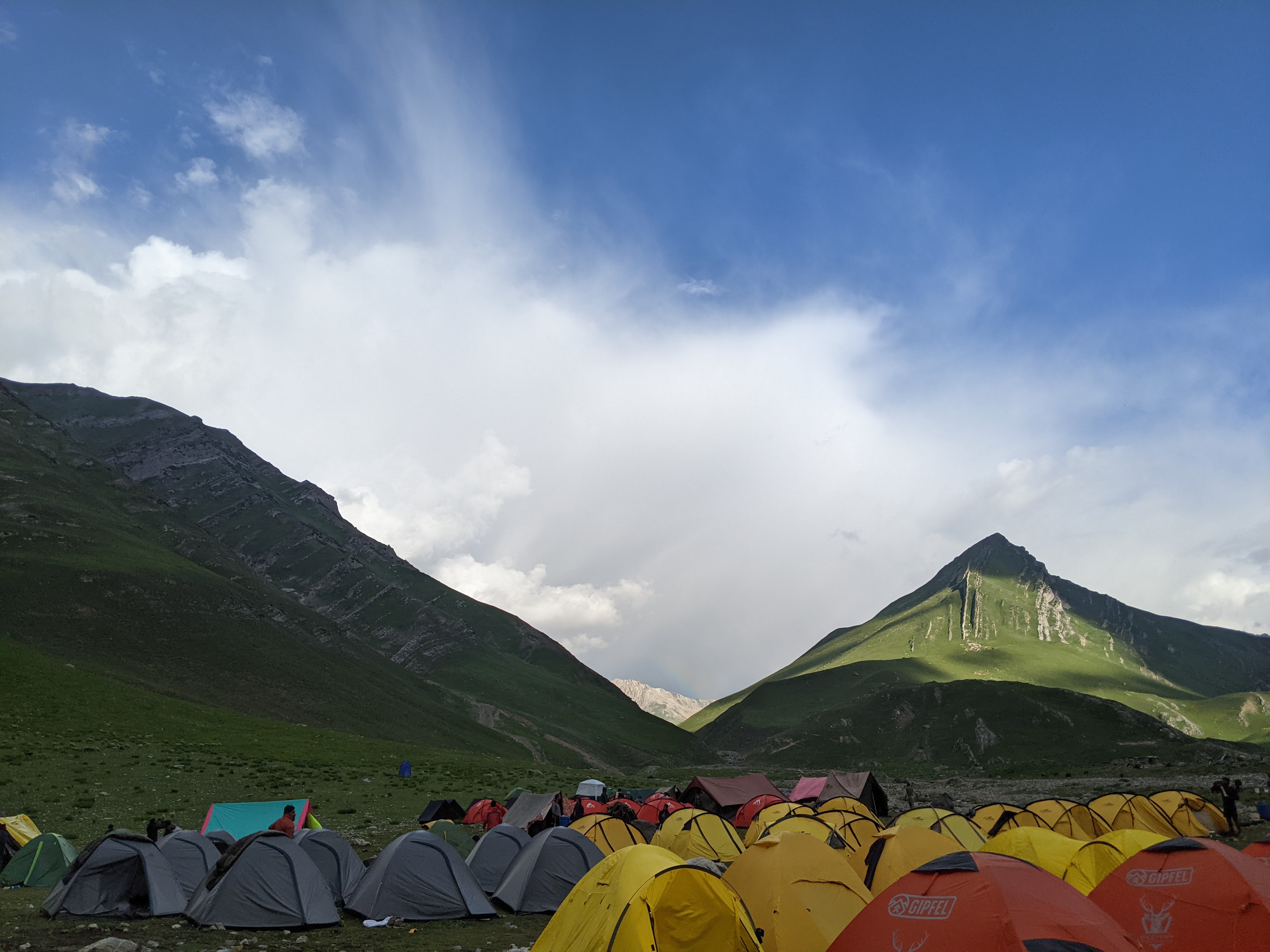
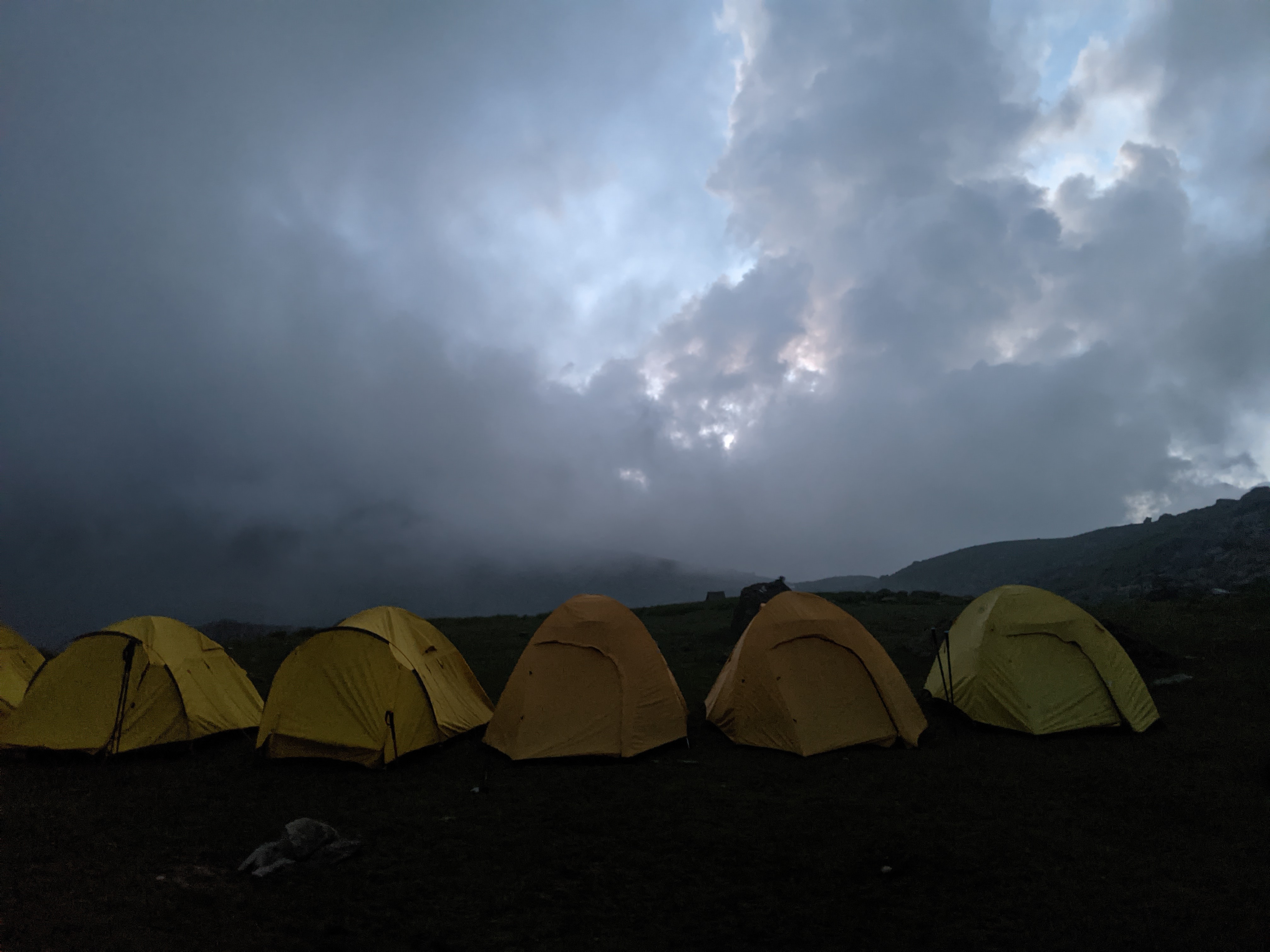
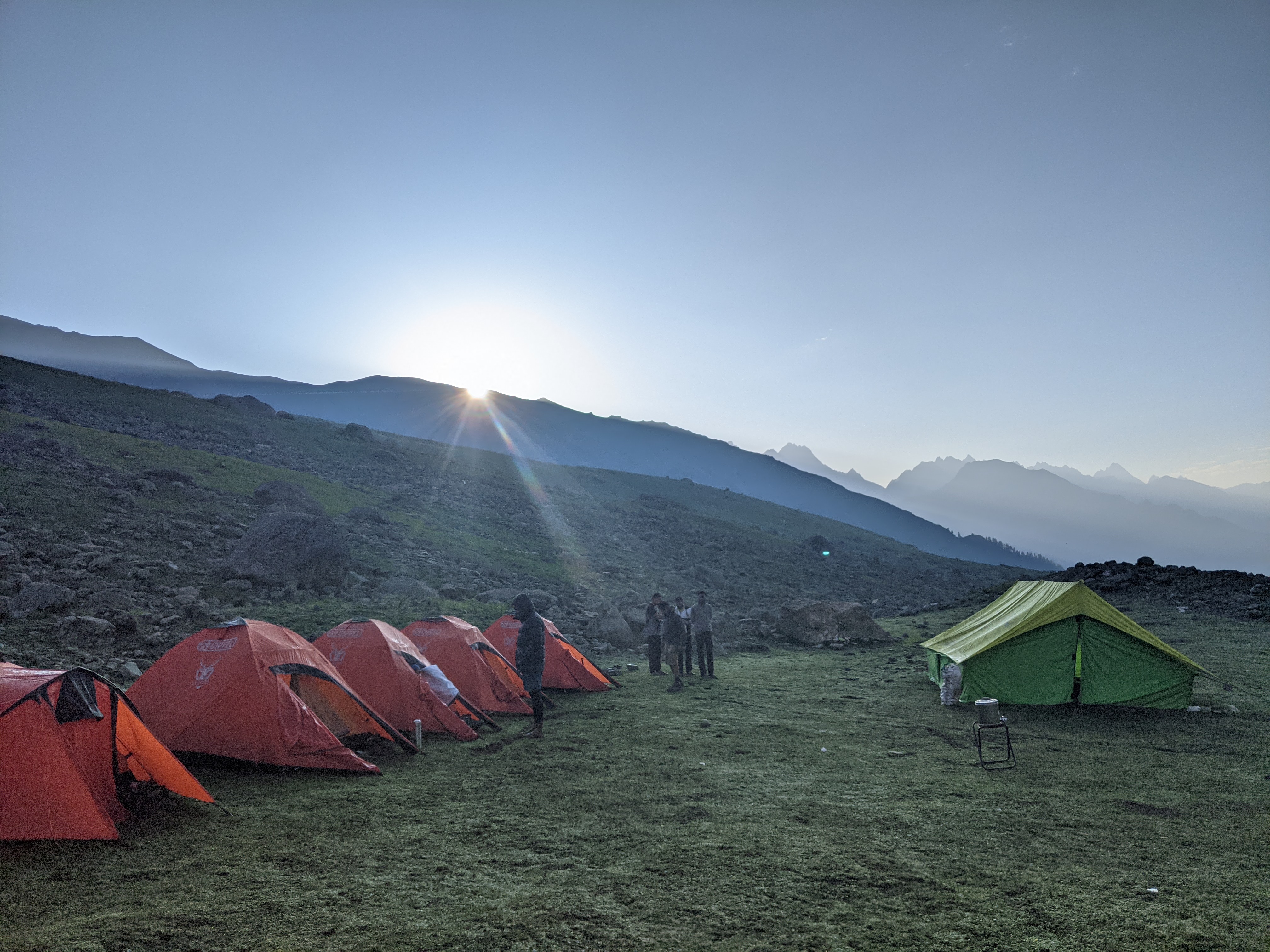
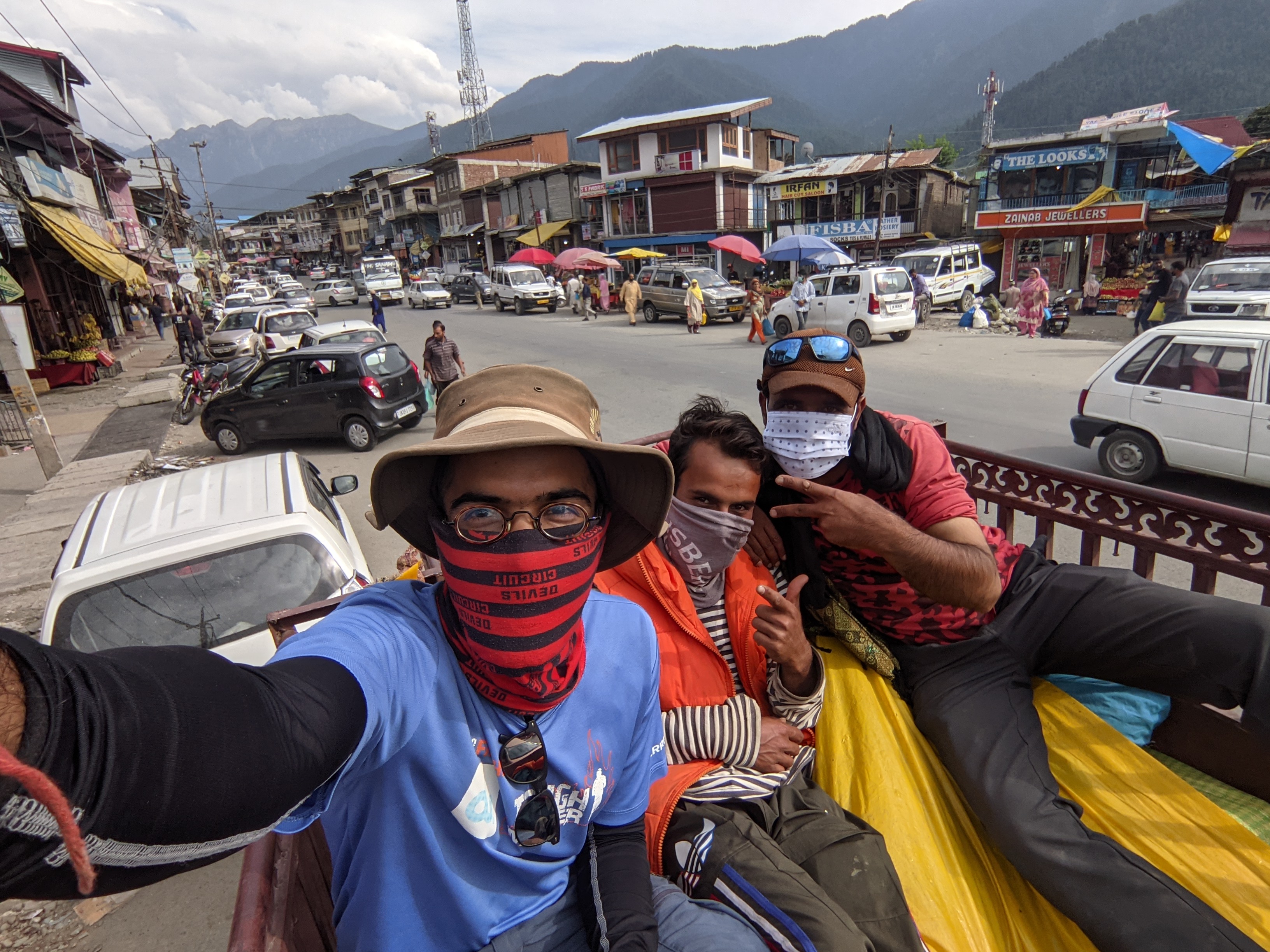
Day 1: Arrival at Sonamarg / assemble at Shitkari (2,730 m) Most of the campsites are at Shitkari so in case you’re confused and your tour operator isn’t responding just head to Shitkari which is right before Sonamarg. I rode my bike down to Shitkari, and left it at Sonamarg for the entirety of the trek and picked it up on my way back.
Day 2: Sonamarg (2,730 m) to Nichnai (3,500 m)
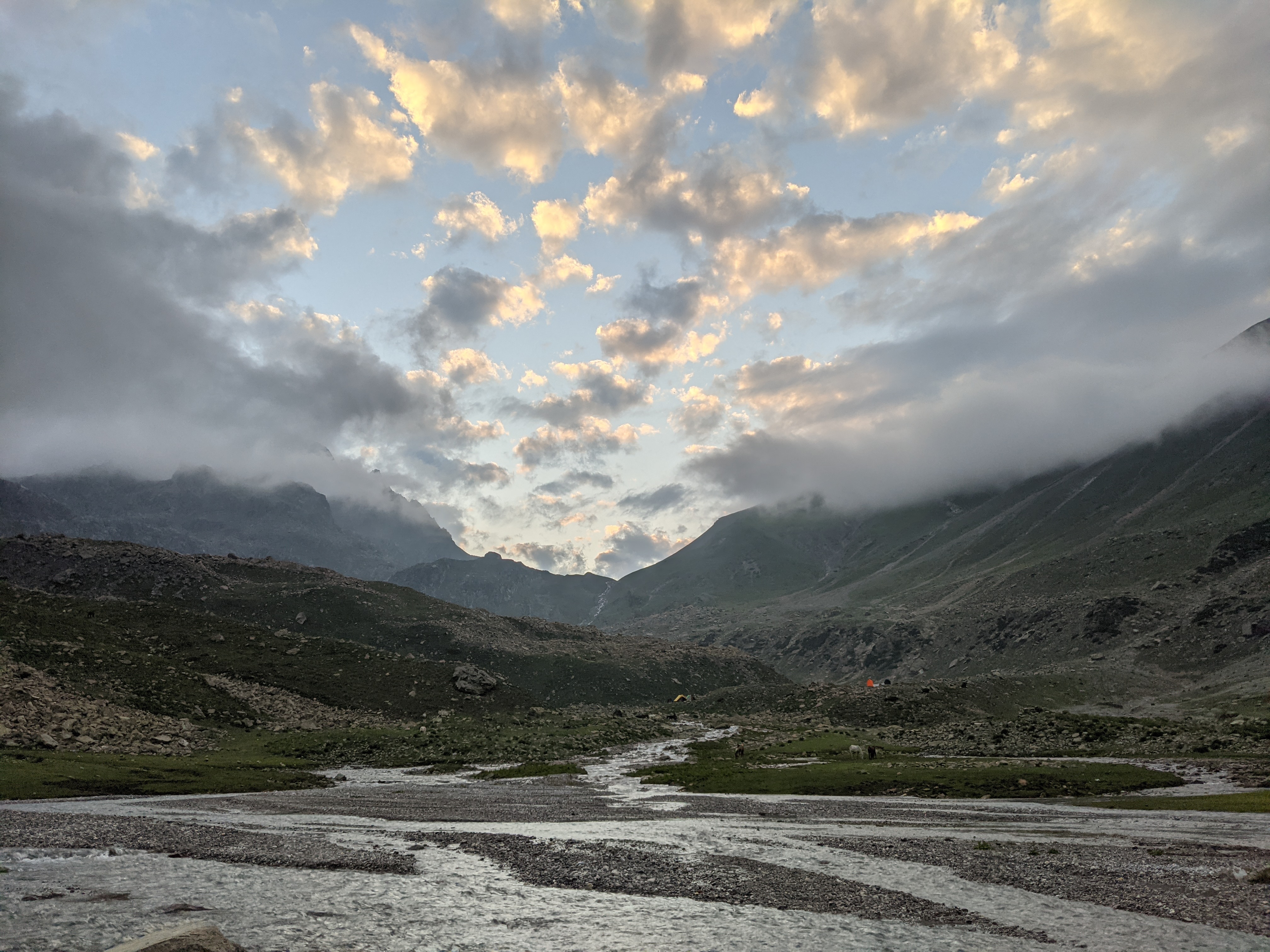
Day 3: Nichnai (3,505 m) to Vishansar Lake (3,658 m) via Nichnai Pass (4,150 m) The trek finally starts taking shape with the terrain changing, crossing a high pass and reaching the first of the alpine lakes – Vishansar Lake. Spent the day soaking in the beauty of the lake and the beautiful terrain around the campsite.
Day 4: Vishansar Lake (3,580 m) to Gadsar Lake (3,810 m) via Gadsar Pass (4,206 m) Gadsar Pass is the highest point of this trek, but it’s not too hard to be honest. The beginners in our group were super smart and extra-hardworking so they left an hour before us and met us all at the top. Our group was one of the first to cross the pass that day, champs! The Gadsar Lake is probably the prettiest lake en route.
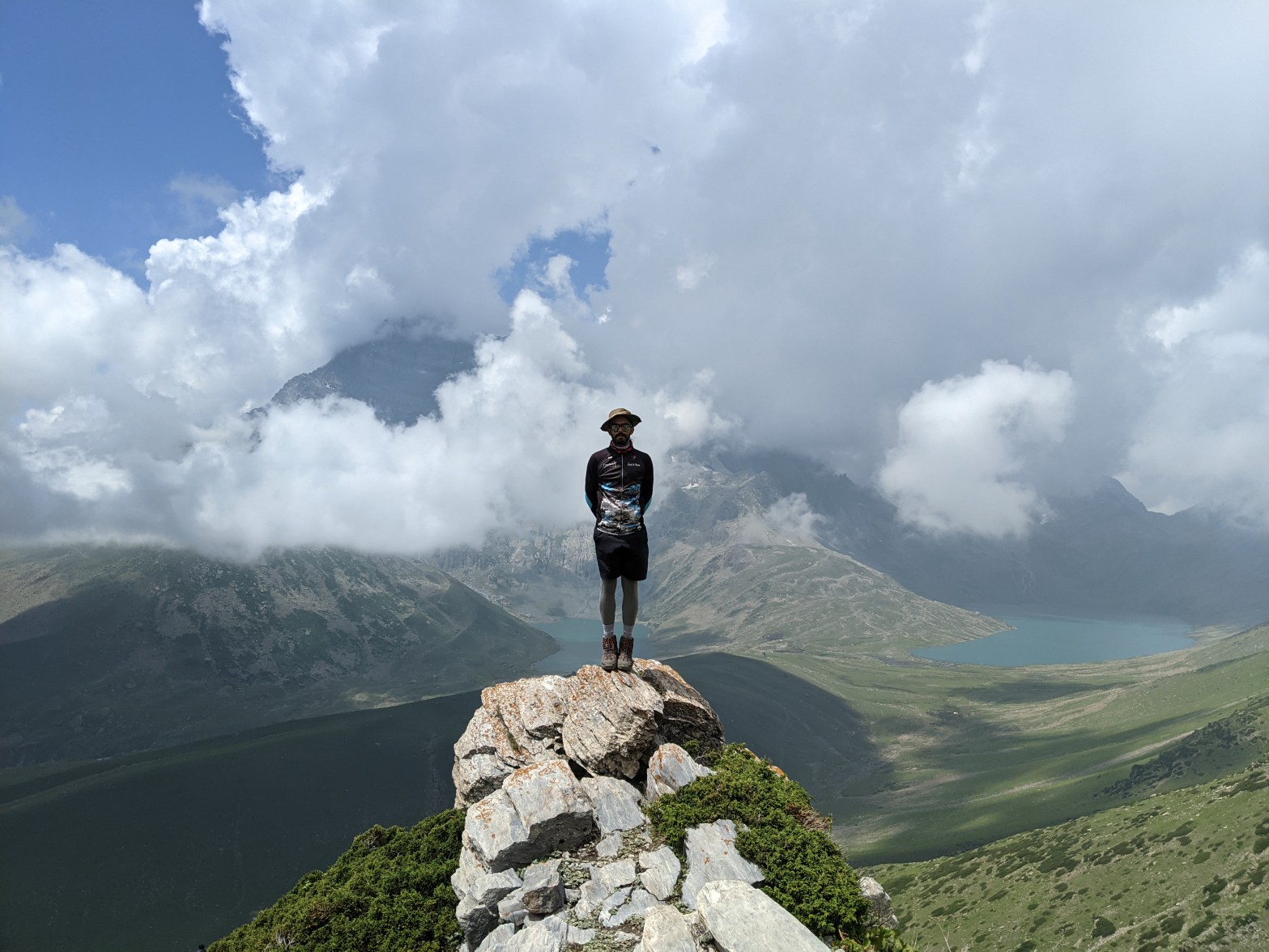
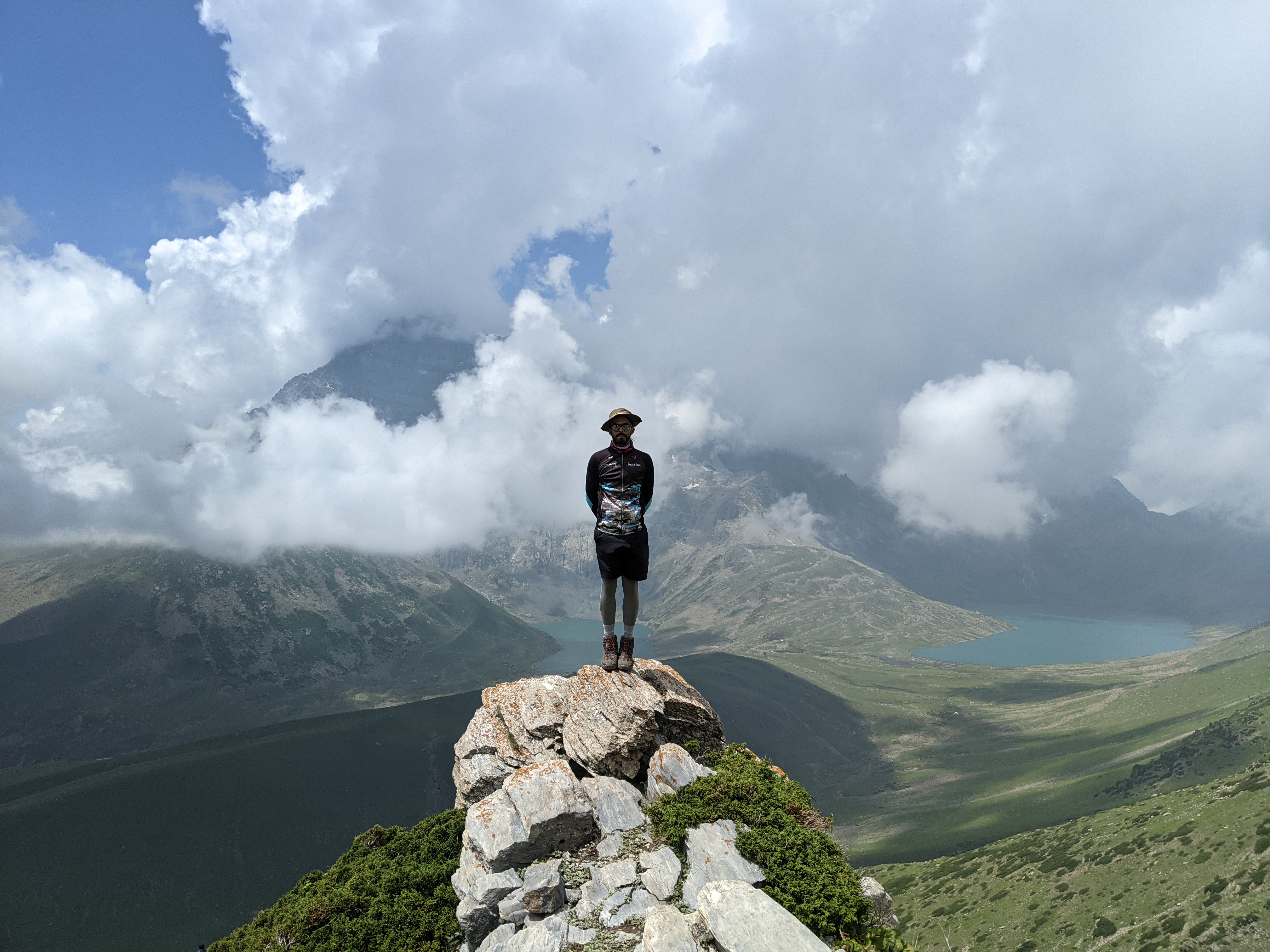
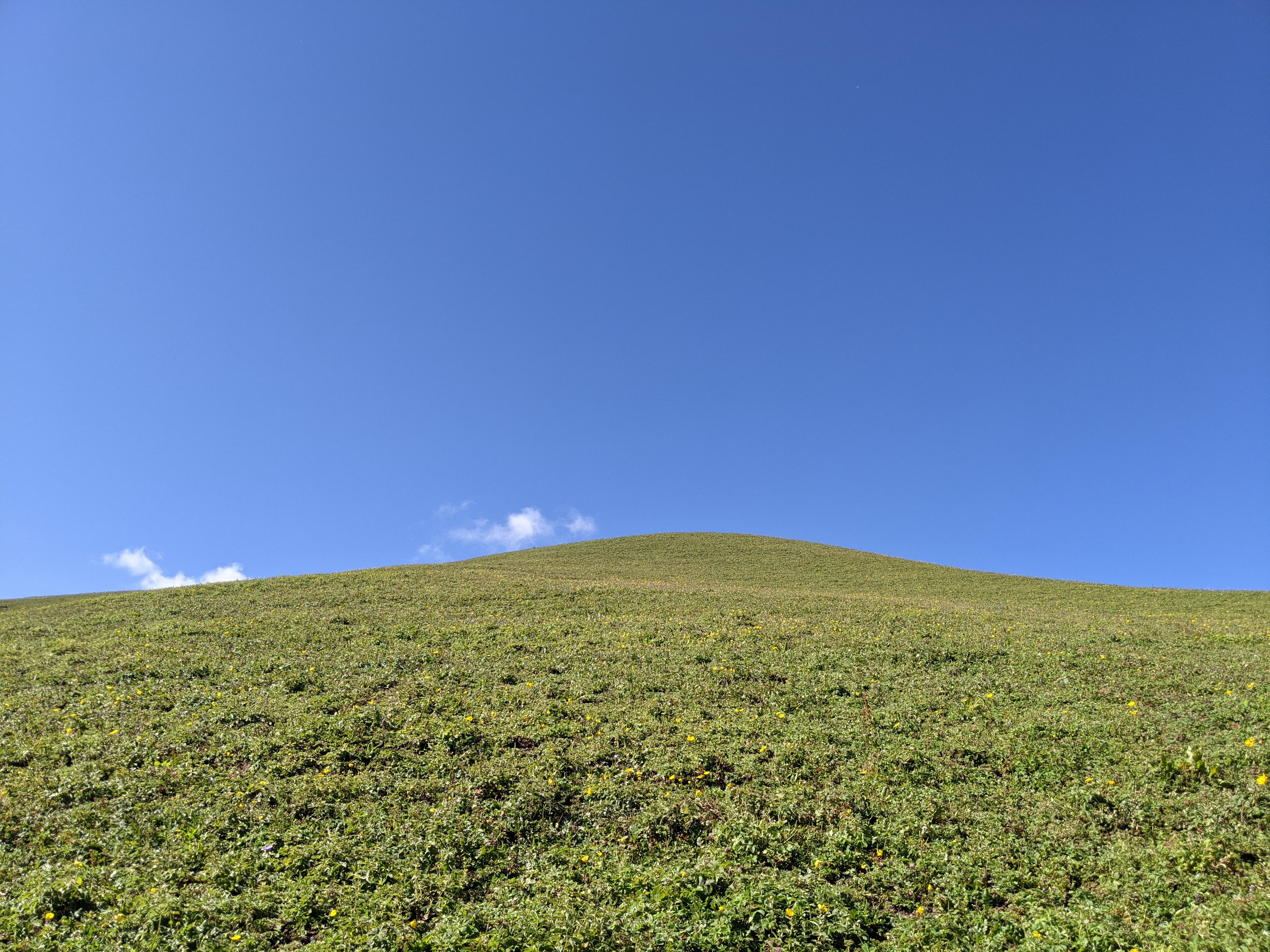
Day 5:Gadsar Lake (3,810 m) to Satsar Lake (3,658 m) The day starts with a nice climb along a path lined with wild strawberries, and then you hit the Windows wallpaper scenery on your left and the Nanga Parbat (8,125 m) in the distance on your right. After reaching early to Satsar, we climbed on towards another lake hidden in the mountains where we organised the National Stone Skimming contest which was a two-way tie between Tahir bhai and Sanjay, our trek leader. For ’twas a good day.
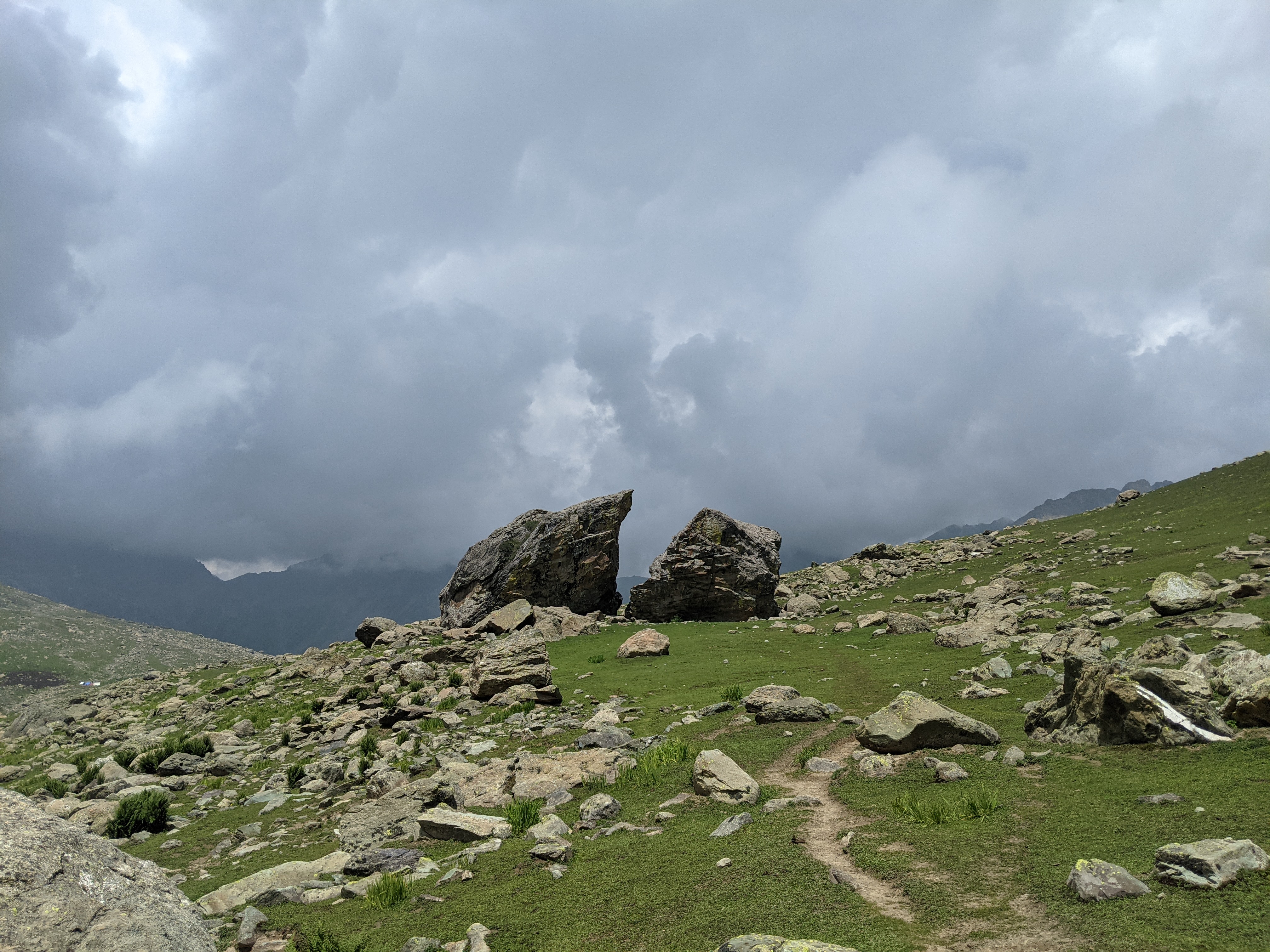
Day 6:Satsar Lake (3,658 m) to Gangabal Lake (3,505 m), via Gangabal Pass (~4,100 m) One of the best campsites overlooking the Nund Kol Lake and the mighty Harmukh peak (5,142 m ). If you’re lucky you get to chill / rest at this campsite for a day. Take a short walk to Gangabal lake or try breaking a bone climbing any of the huge boulders overlooking the campsite.
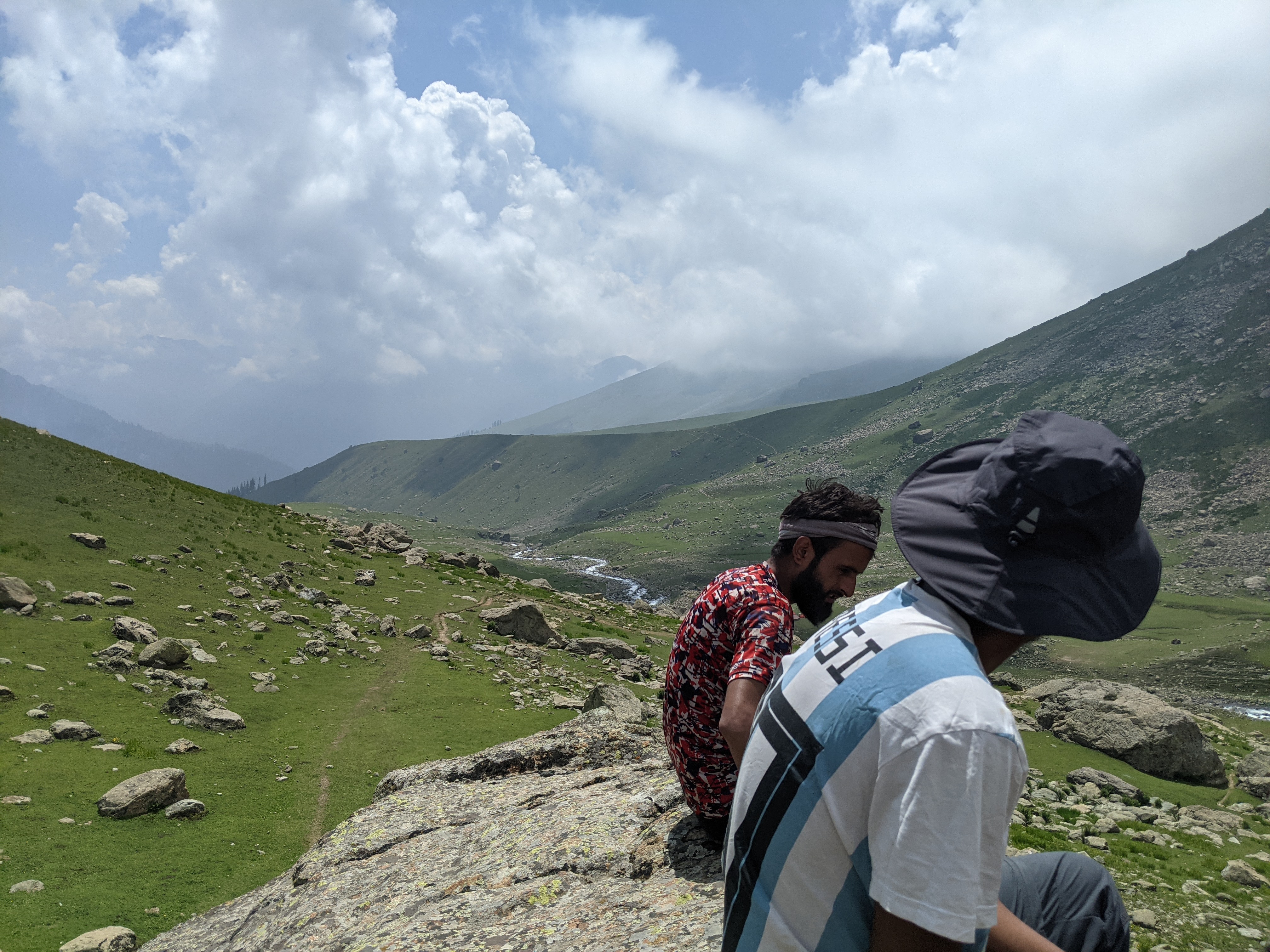
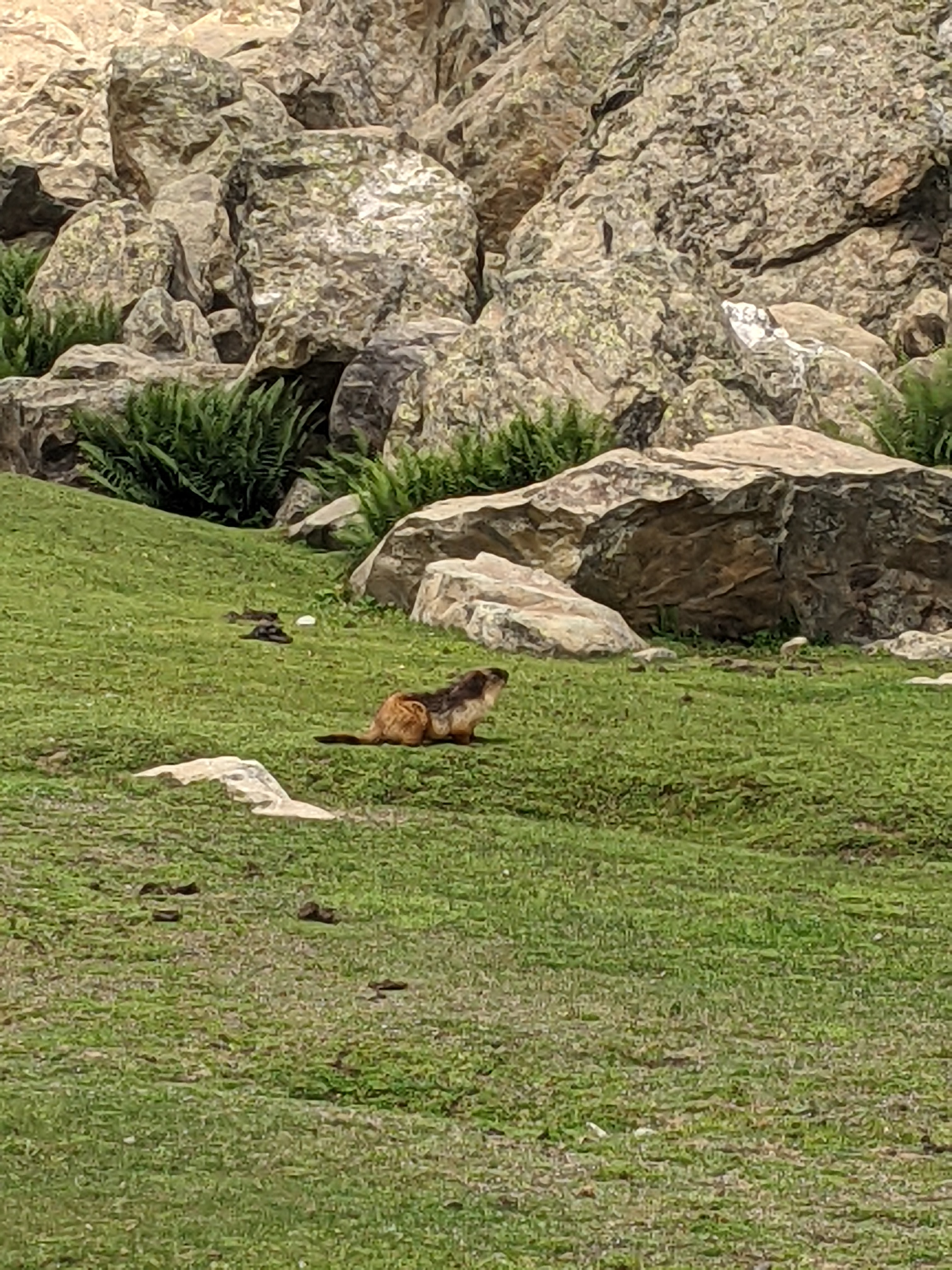
Day 7:Rest Day at the Gangabal Lake campsite This was my favourite day of the trek where I hardly moved a muscle. Spent a while in the morning fooling around the massive boulder opposite the Gangabal Lake, playing frisbee and catch with the staff until we lost them both, spying on a marmot for good 15 minutes or so and lazing in the sun doing absolutely nothing. Bikat offers a rest day while most of the trek companies do not, so it’s a good deal to just chill for a day in the mountains doing nothing. Our cooking staff was sweet enough to conjure up a birthday cake for one of our trekking mates as well 🙂
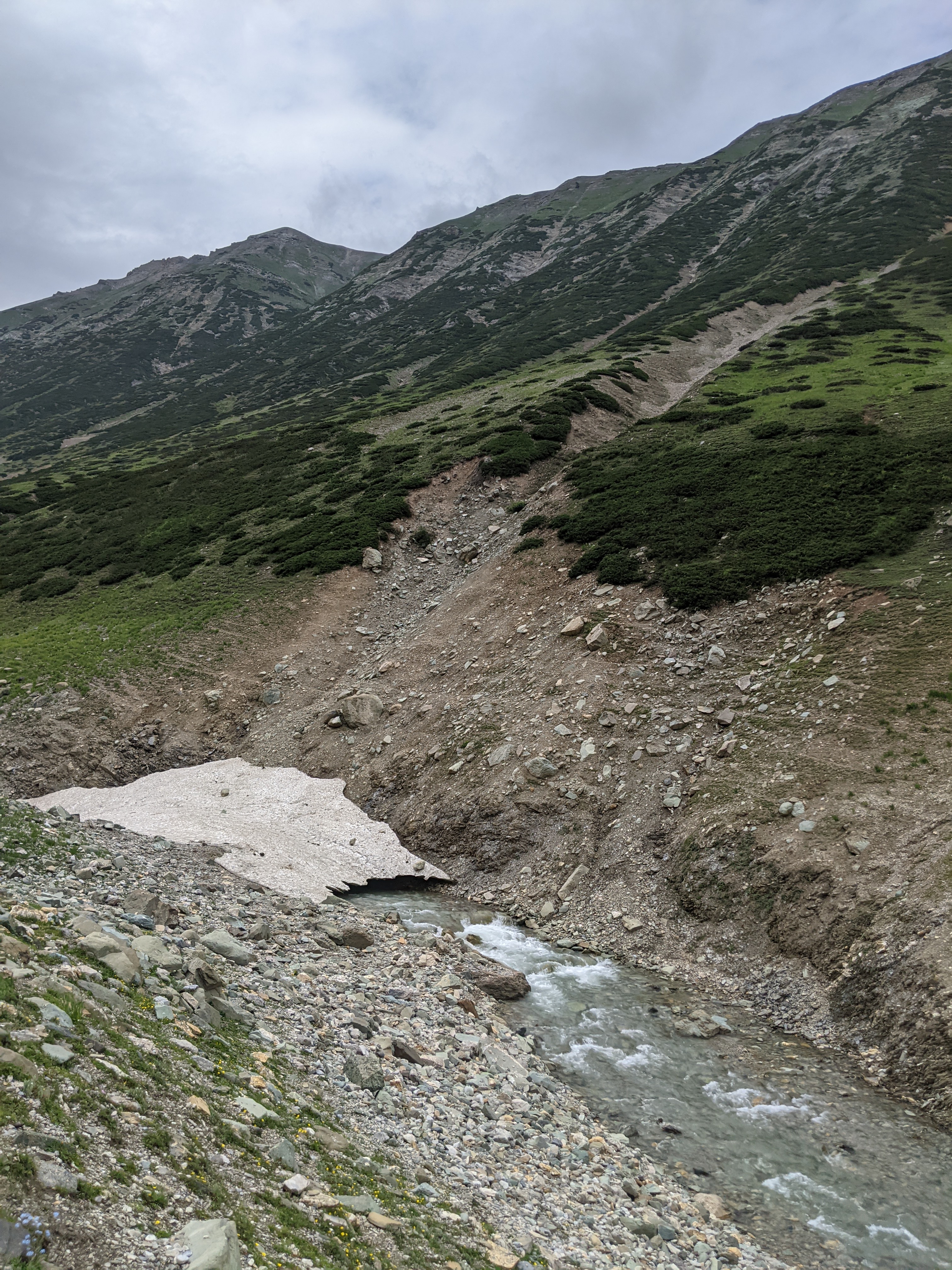
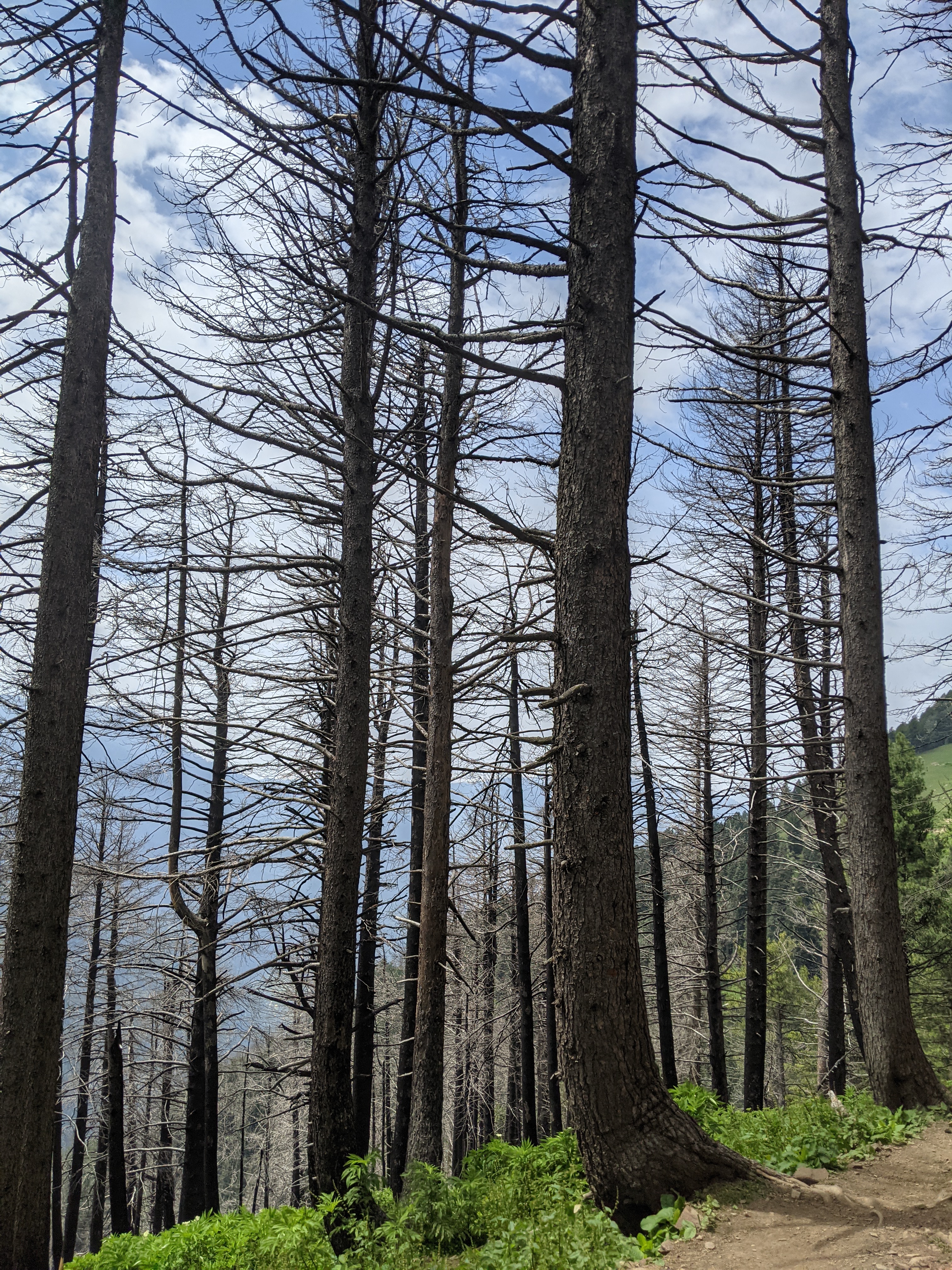
Day 8:Gangabal Lake (3,505 m) to Naranag (2,271 m) Least favourite day, going back is always sad. The tree-line starts to appear, you pass one final army check-post and then it’s all downhill (literally) from there. Mobile networks reappear, and people disappear. Thankfully we walked back without any rain, if it rains on your last day you don’t walk back, you slide into Naranag.
Summary
The KGL trek is by far one of the best treks in the country right now. It’s suitable for people of all ages, beginners or advanced trekkers, so you should definitely go for it before it gets too popular and dirty and the government shuts it down. Try and book your trek looking at the weather forecast, avoid rain if possible. Be prepared mentally (and physically) to finish the trek once you start it. Please do not discard your plastic bottles, wet wipes, cigarette butts, i.e., all non-biodegradable waste in the mountains. Keep the terrain clean, and green!
If you have any questions or suggestions, feel free to ask in the comments below!
It’s the 5th of February, I’m sitting at home skimming through all of the websites of the mountaineering institutes in India. I know for a fact that HMI is one of the best, so I end up sending them an email for vacancies. They reply back saying there are limited openings in BMC 343 which commences on the 1st of April.
Fast forward to the 31st of March, and there we are – checking in to one of India’s finest institutes for mountaineering on a cold, wet evening.
The institute
For those of you who are unaware about mountaineering courses and institutes etc., here’s a quick break down for you:
BMC – Basic Mountaineering Course, no eligibility criteria, ~ 28 days
AMC – Advance Mountaineering Course, need an “A grade” in BMC, ~ 28 days
MOI – Method of Instruction, need an “A Grade” in AMC, ~ 22 days
S&R – Search & Rescue, need an “A Grade” in AMC, ~ 22 days
Let’s break down the 28 days training into 4 phases, as per the colour of the terrain we’re at;
The green: ~ 6,700 ft to 8,500 ft (the initial prep)
The brown: ~ 8,500 ft to 14,600 ft (trek to the base camp)
The white: ~ 14,600 ft to 16,500 ft (training at the base camp)
The colourless: (the walk back home)
THE GREEN
These are the initial days at the institute which was from the 1st to the 8th of April. It starts with checking-in to your hostel, where you are segregated into rooms (state-wise). Our room no.6 consists of 8 guys from Delhi, Gujarat and Rai Bareilly.
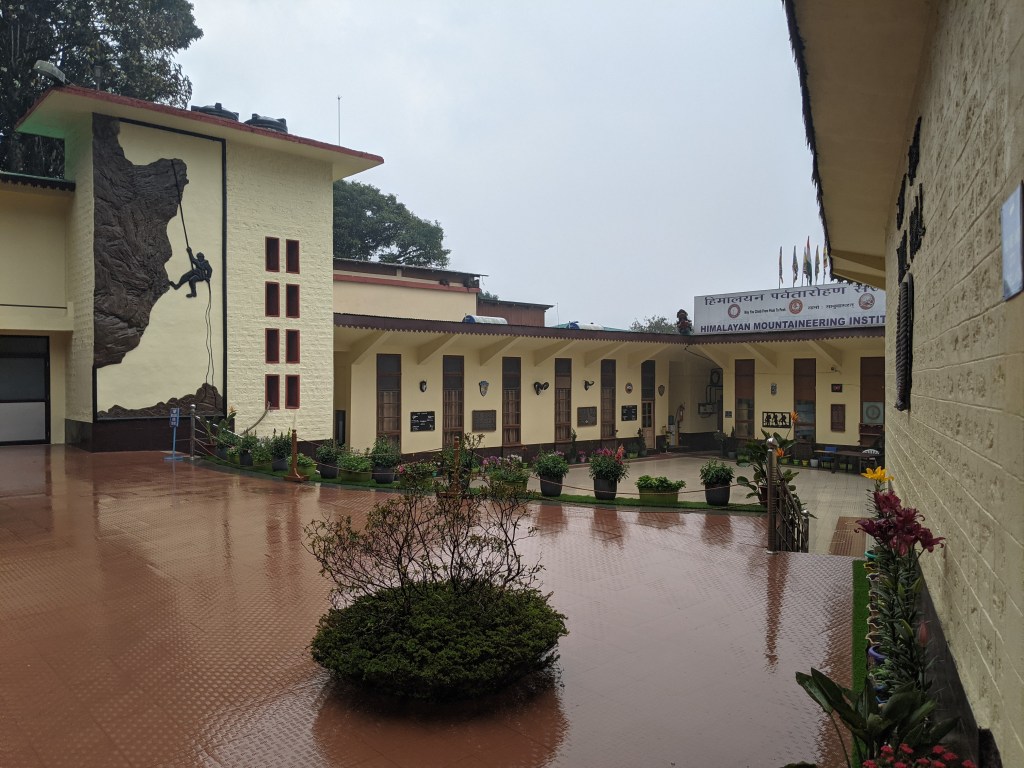
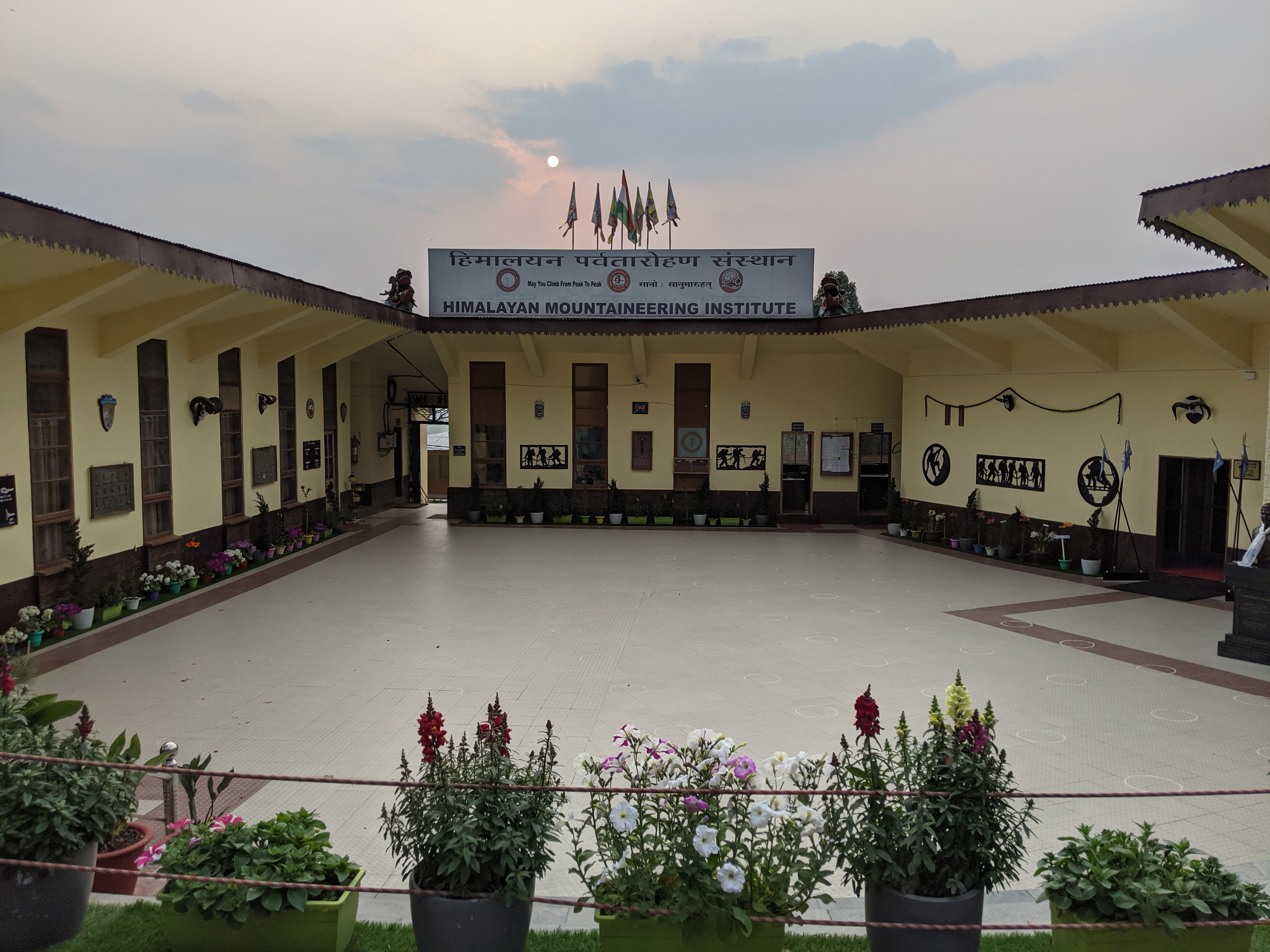
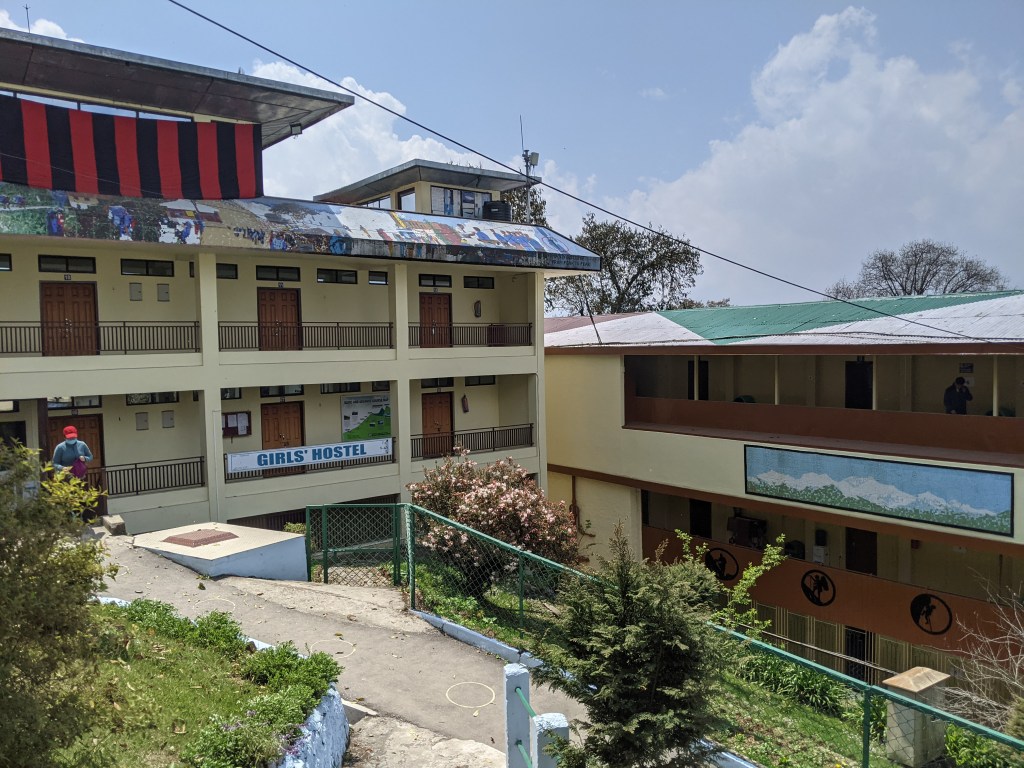
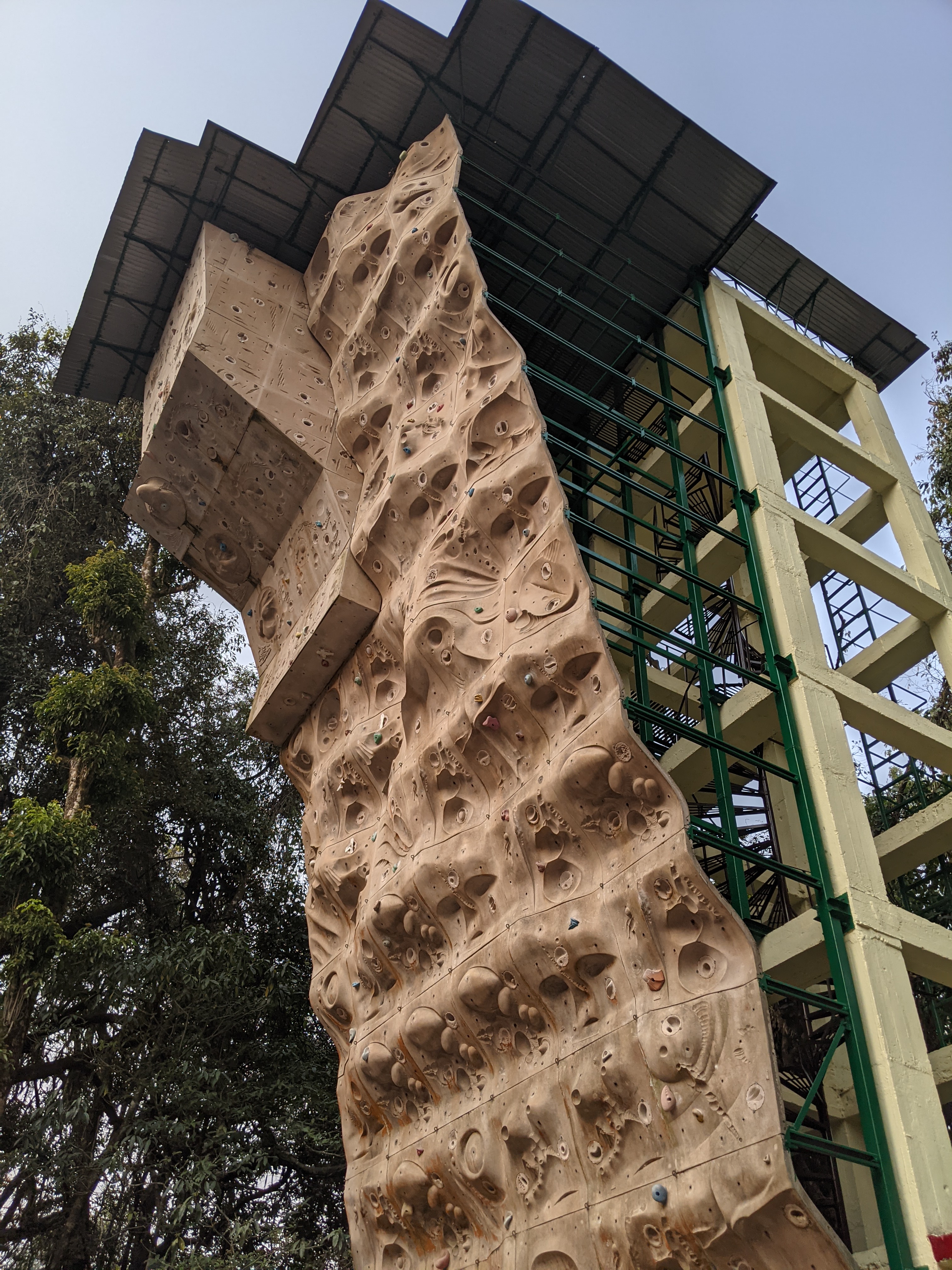
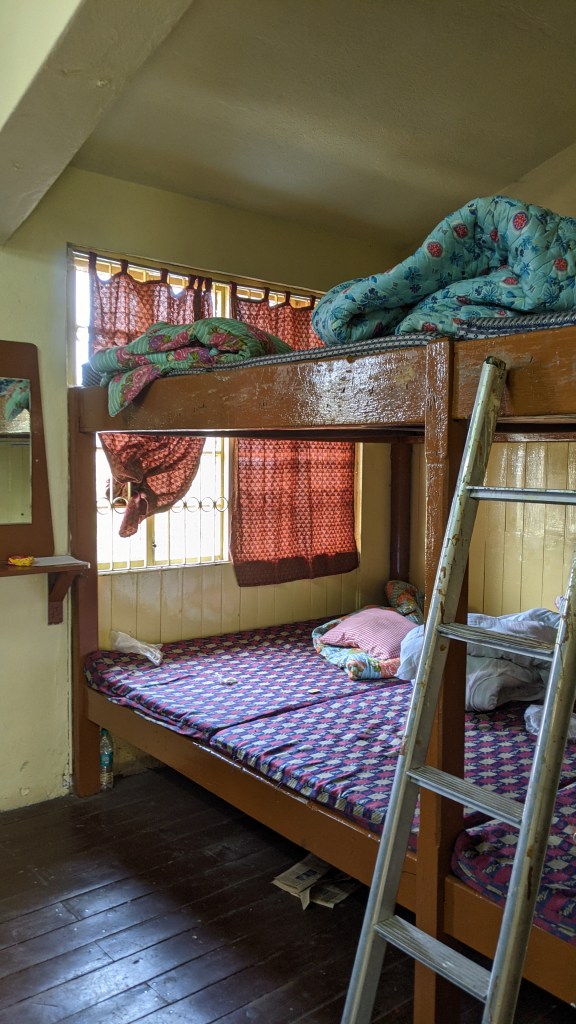
The institute: The HMI campus is beautiful. It’s a small space allocated to the students to walk around freely, but it’s lined with flowers and trees which make up for a pretty sight. The boys hostel has 8 beds in each dorm with a common washroom on every floor, girls hostel has 4 in each with an attached washroom. Our movement is restricted to 2 climbing walls, a restaurant, a museum, an auditorium, a library and a hall / makeshift classroom.
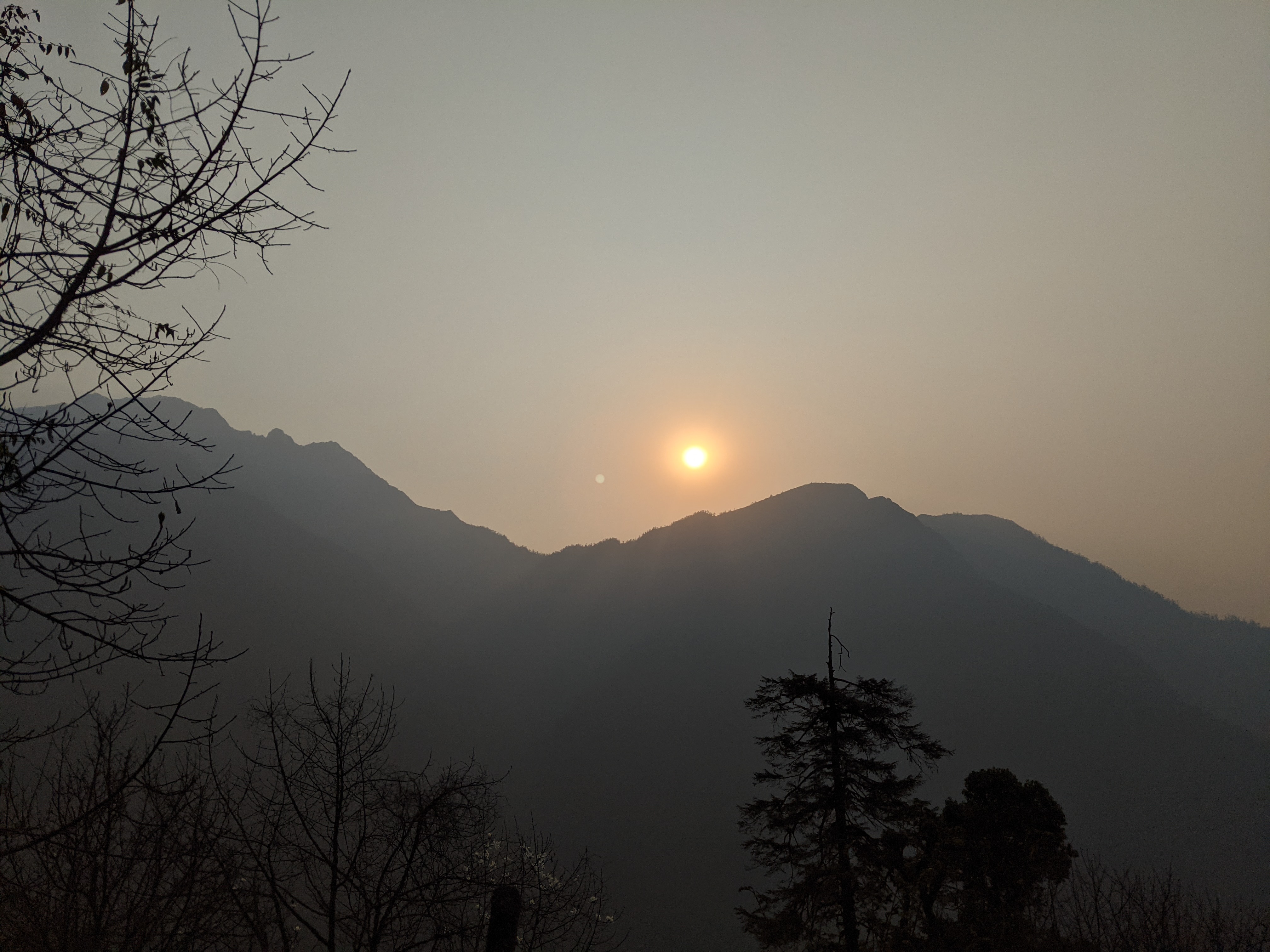
Sunset at the institute
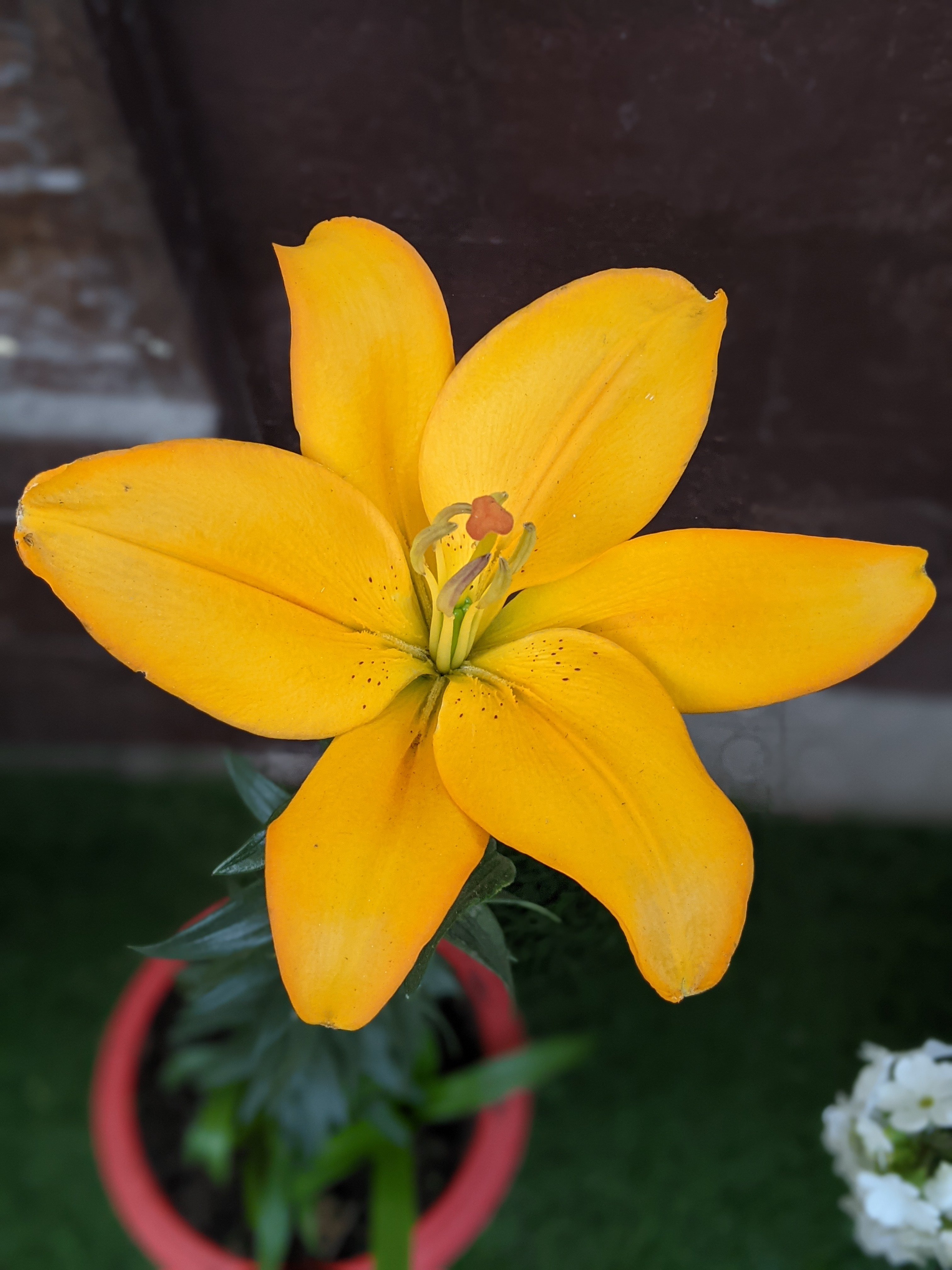
Lilies ❤
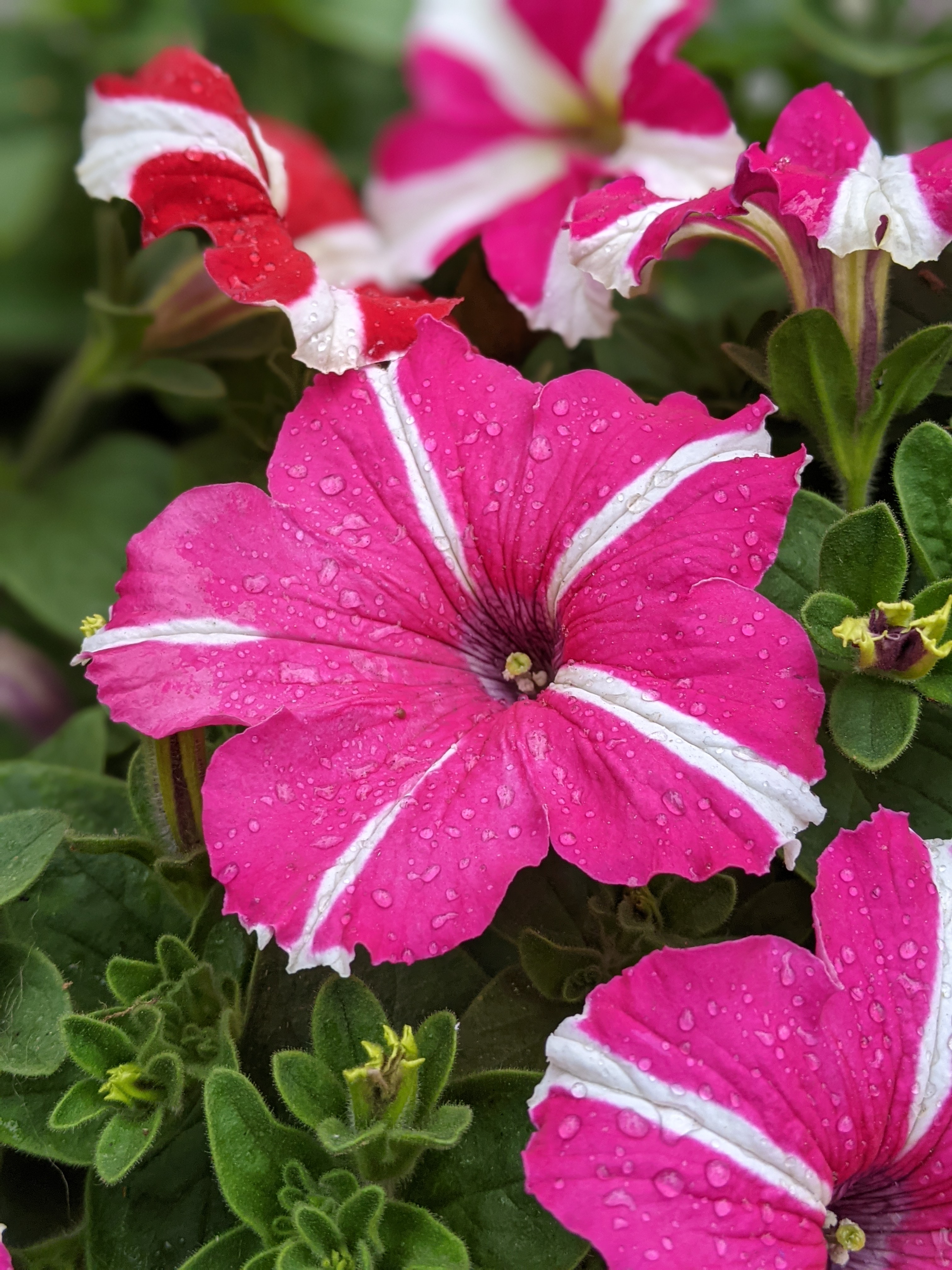
Petunia (maybe)
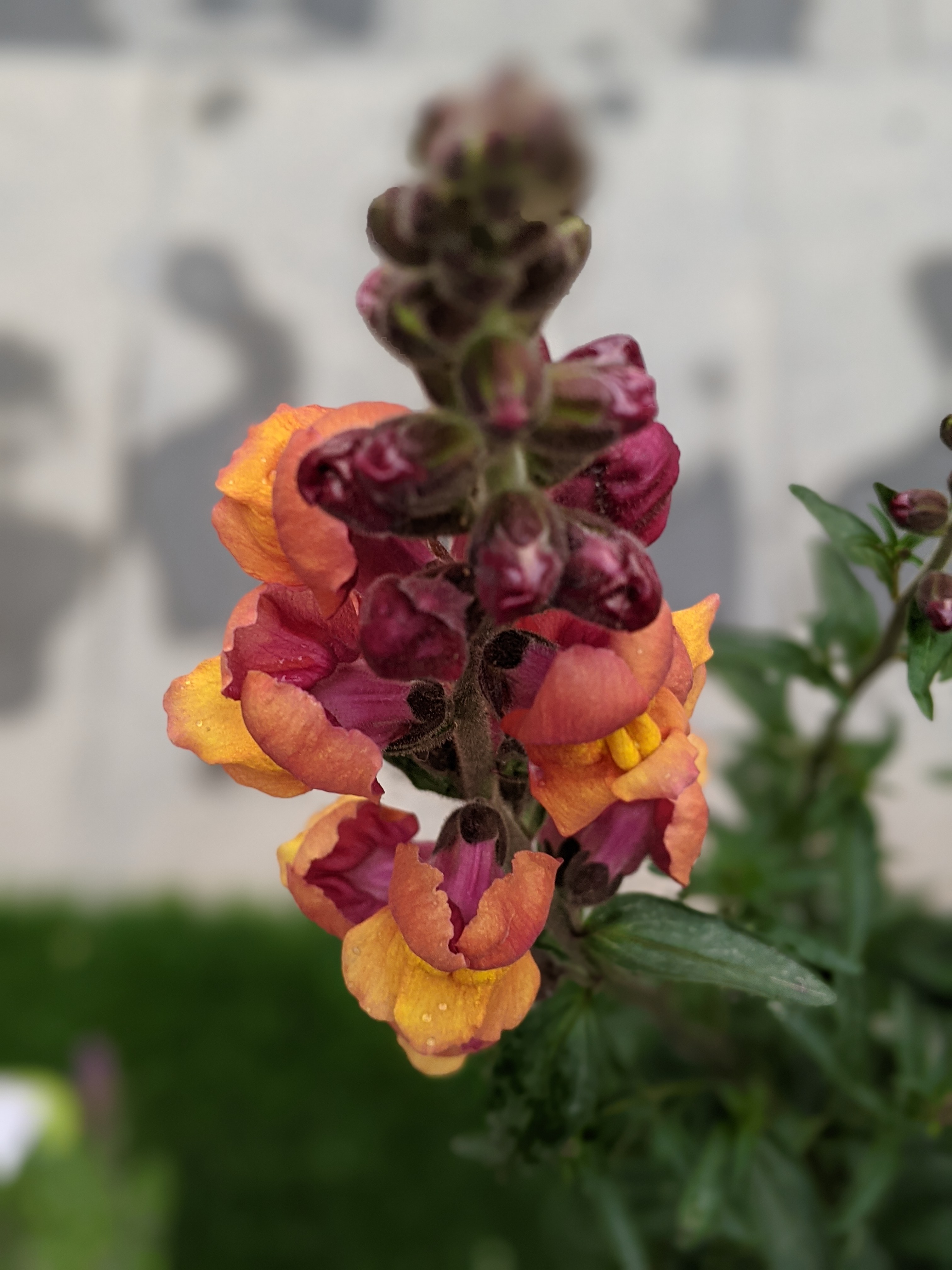
Gadilus (maybe)
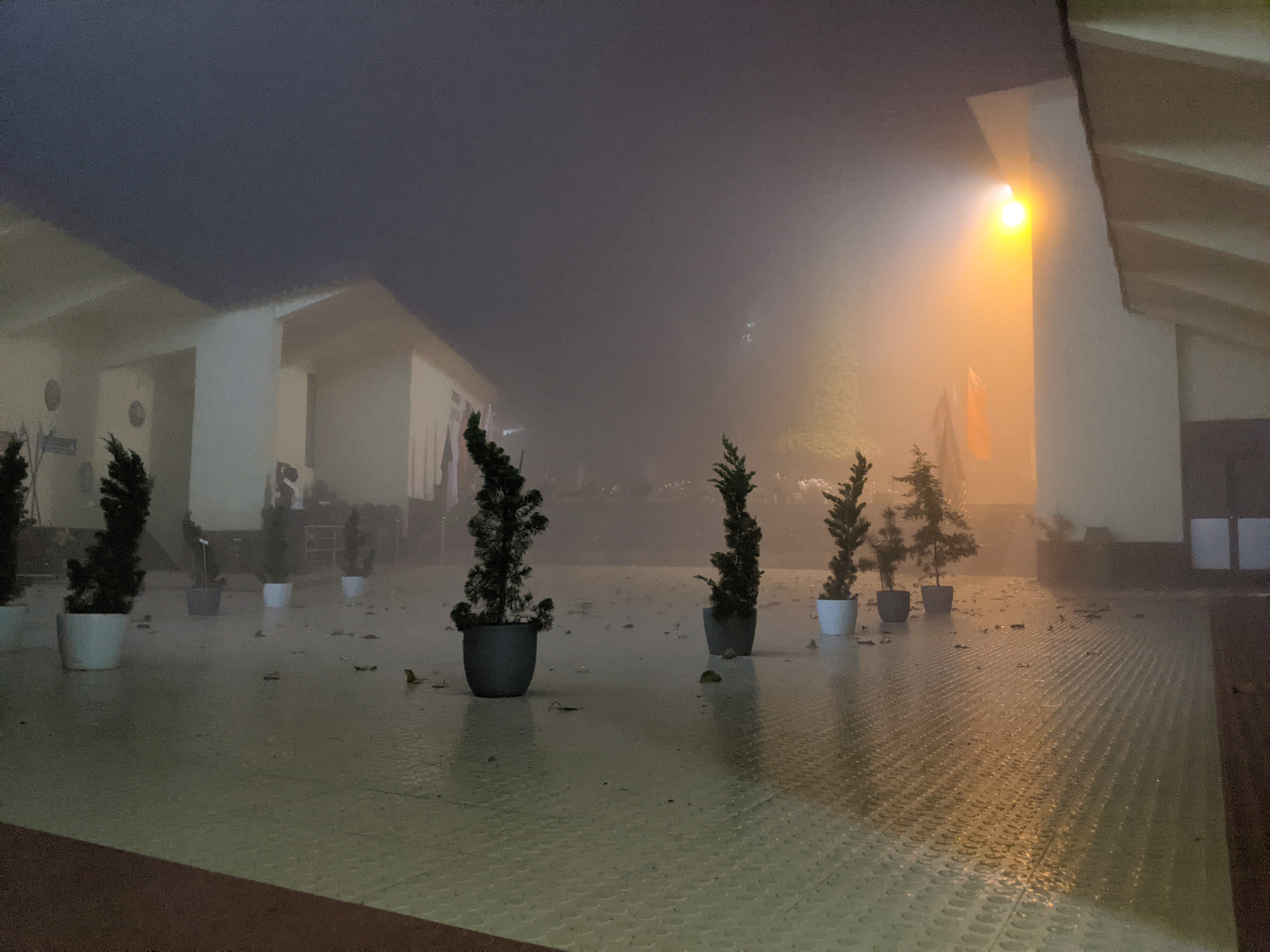
Nights of white satin
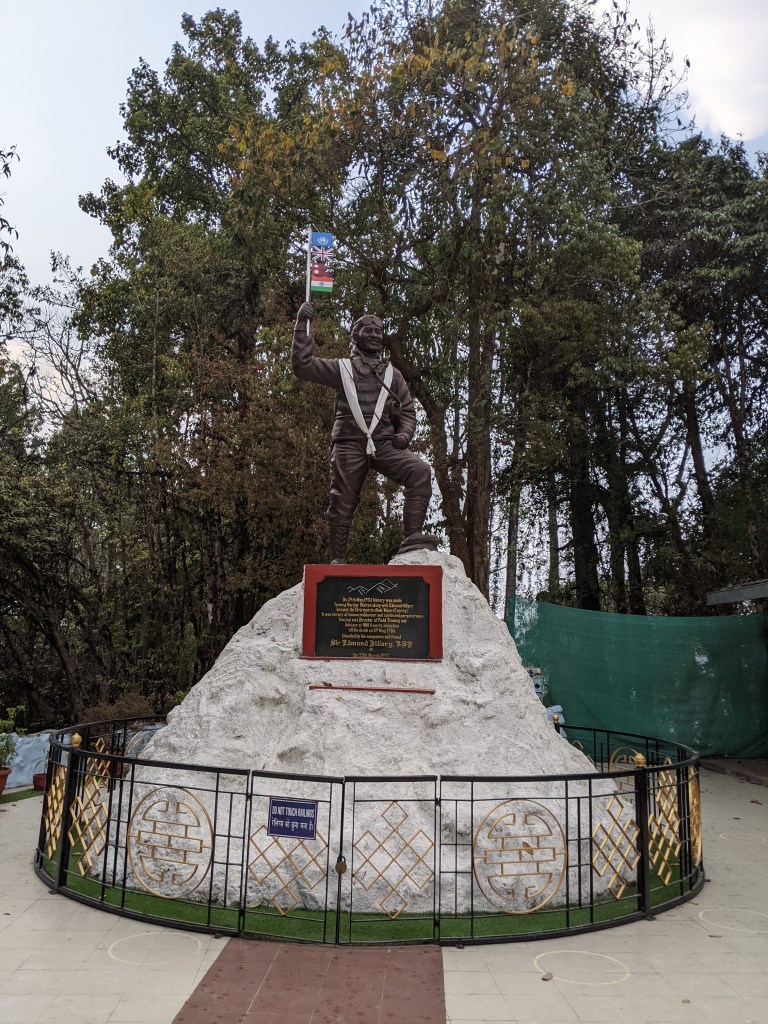
Sir Tenzing Norgay Sherpa’s statue
Girls left, but the boys are always right :p
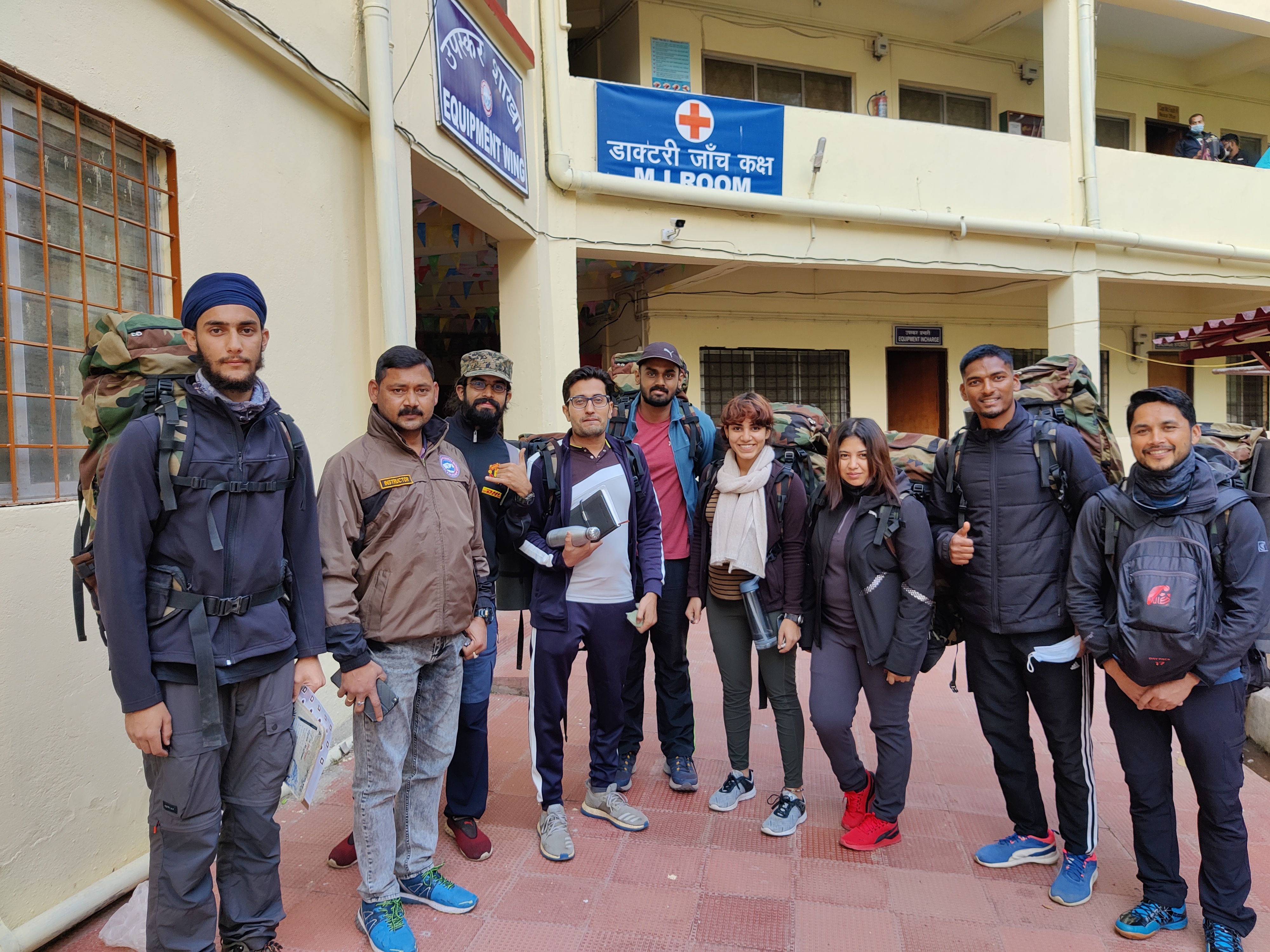
The ropes: We are divided into “ropes” – teams of 8-9 individuals with whom we will be spending the rest of our course with, and each rope is assigned an instructor. Simply put: your rope is your family for the rest of the course, and your instructor is the head of the family. I was assigned to Rope 1, which was the best I could have asked for. Our rope consisted of fighters, and not quitters and whiners, and was headed by one of the finest instructors at the institute – Sumendu sir.
Rope 1 with our instructor, Sumendu sir (camera shy: Ali)
The people: It’s a diverse group of 70 people, a mix of men and women, the youngest being 18 years old and the oldest turning 60 during the course itself. People from all over the country, coming together to fulfil their dreams of becoming a mountaineer.
The morning PT & Yoga: Our days usually start around 4-5am with chai, followed by a 6am run + exercise, or a yoga session. The morning PT is my favourite part of the day to be honest, specially the runs – the pace is quite easy and pushing yourself during these runs and exercise sessions only acclimated you more for the upcoming days. Post the morning PT, the days usually consisted of theory classes, basic mountaineering techniques and a few rock climbing sessions.
The food: at the institute is quite average, but no point complaining – since I’ve had much worse. Just happy to get unlimited servings to cover up the calories we burn during the day. Oh, and yes – salt, don’t forget to add salt to your food which literally doubles the star rating.
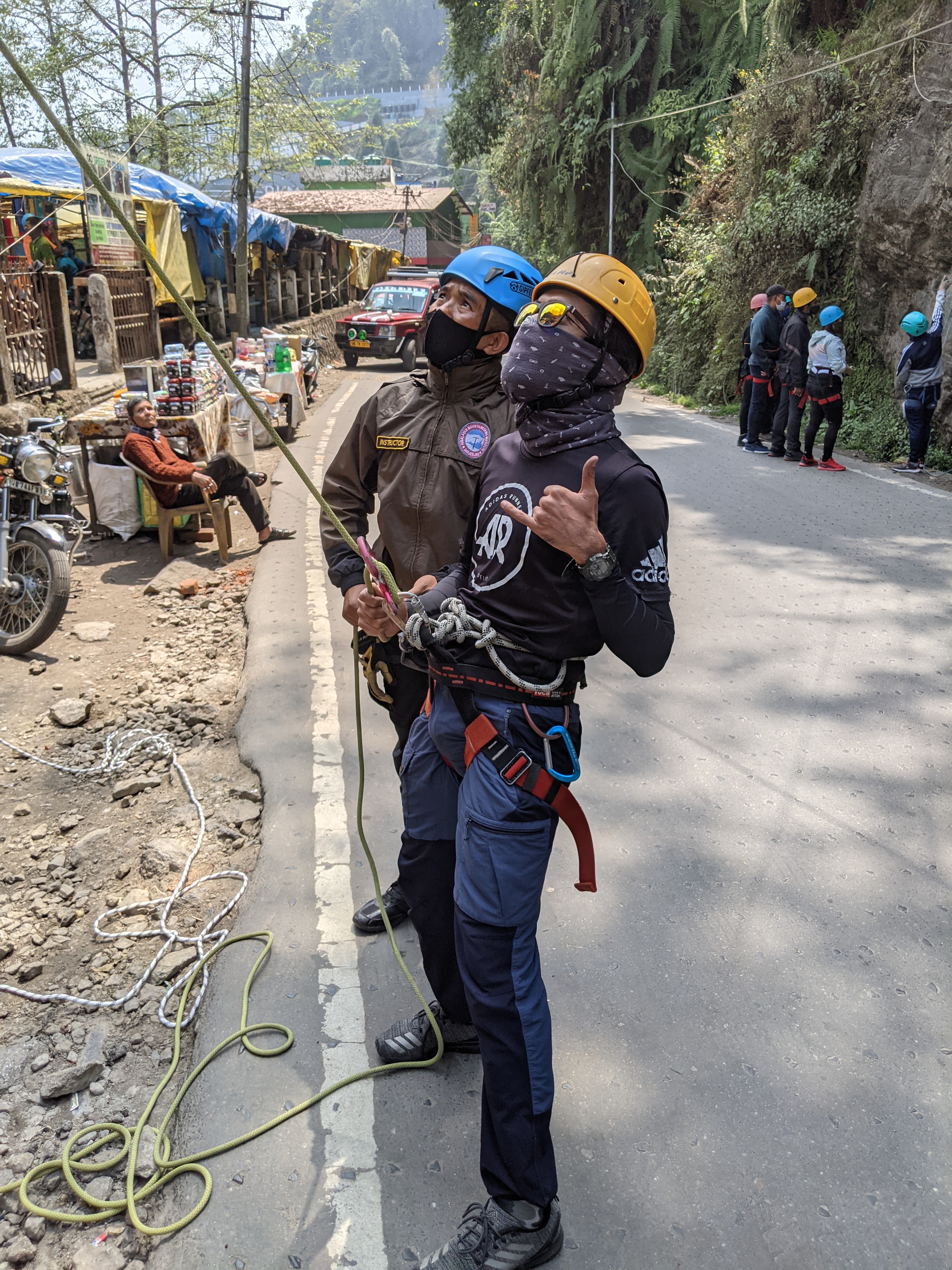
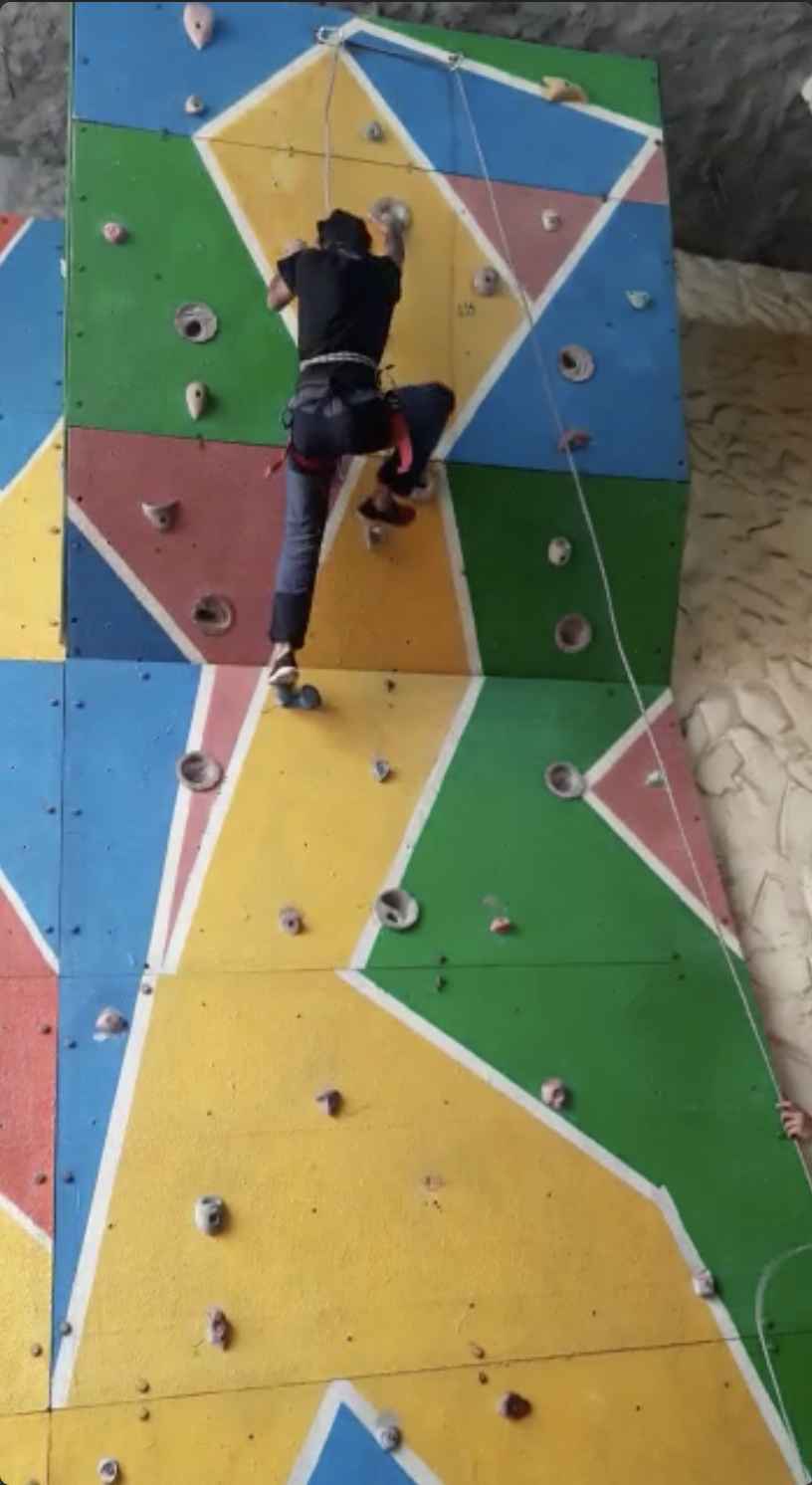
The climbing: For climbing, we were tried and tested on the indoor Cheema wall at the institute, and the outdoor Tenzing rock which is a short walk from the institute. The trick to rock climbing is to get out of your head and into the game.
To be present in the current moment, shut out the noise, look for gaps and trust your holds, and keep moving upwards.
Outdoor climbing wall
Belaying next to Umesh sir, the only army instructor in the team
Cheema indoor climbing wall
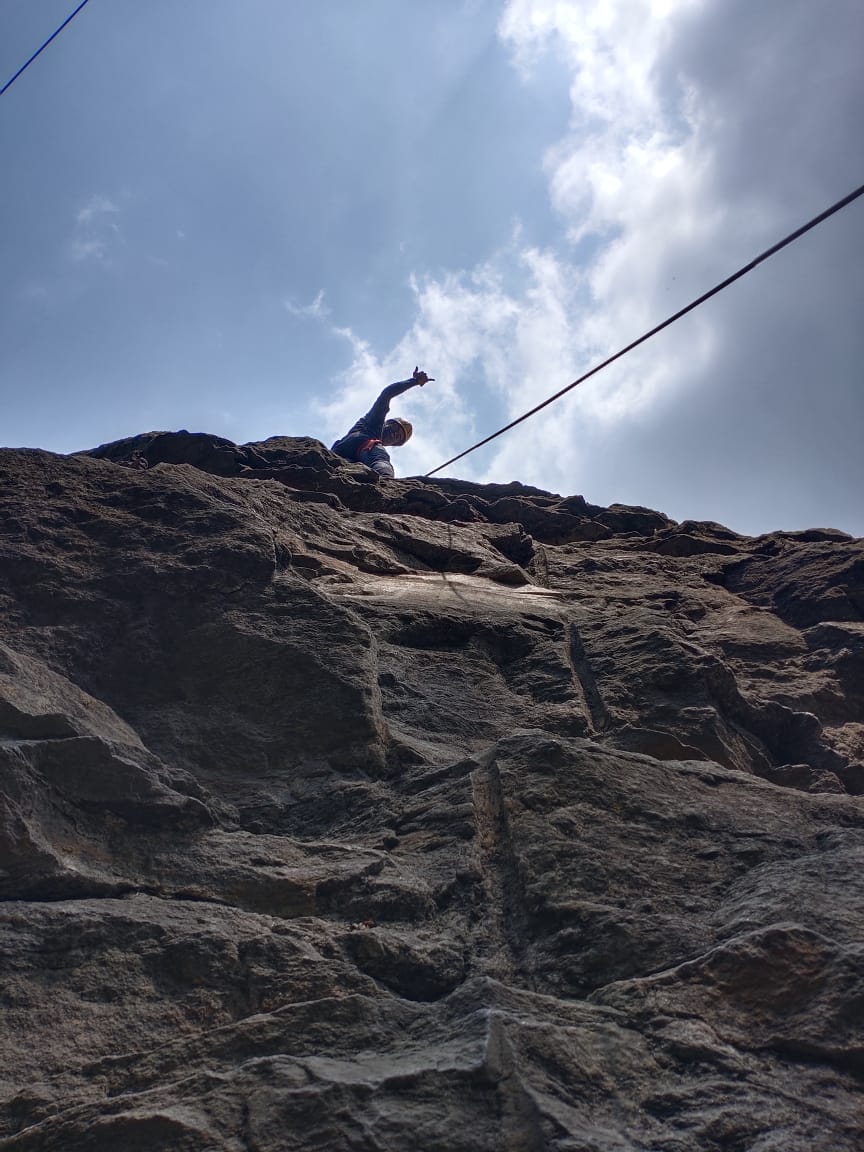
Rock climbing sessions at the Tenzing Rock
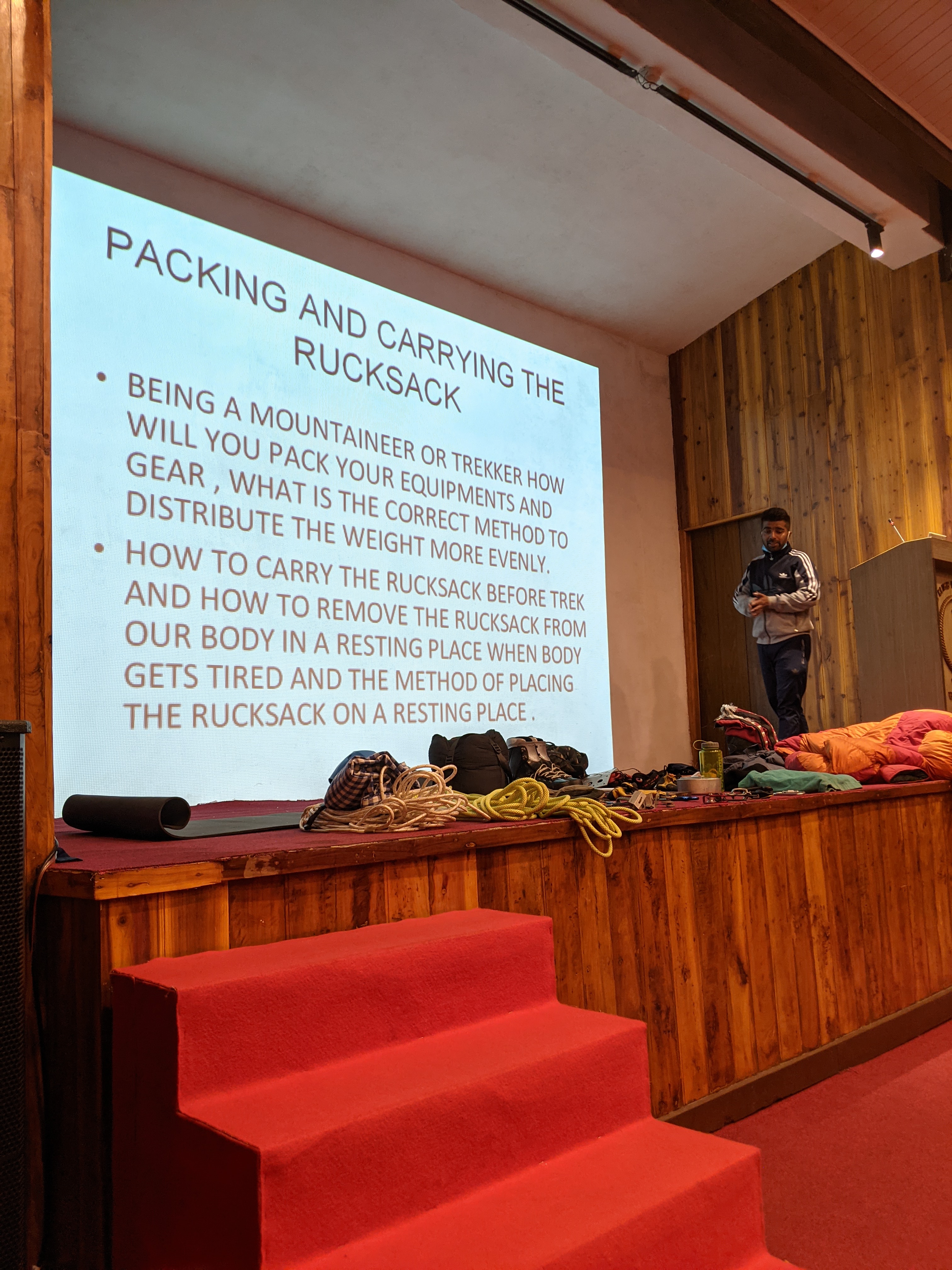
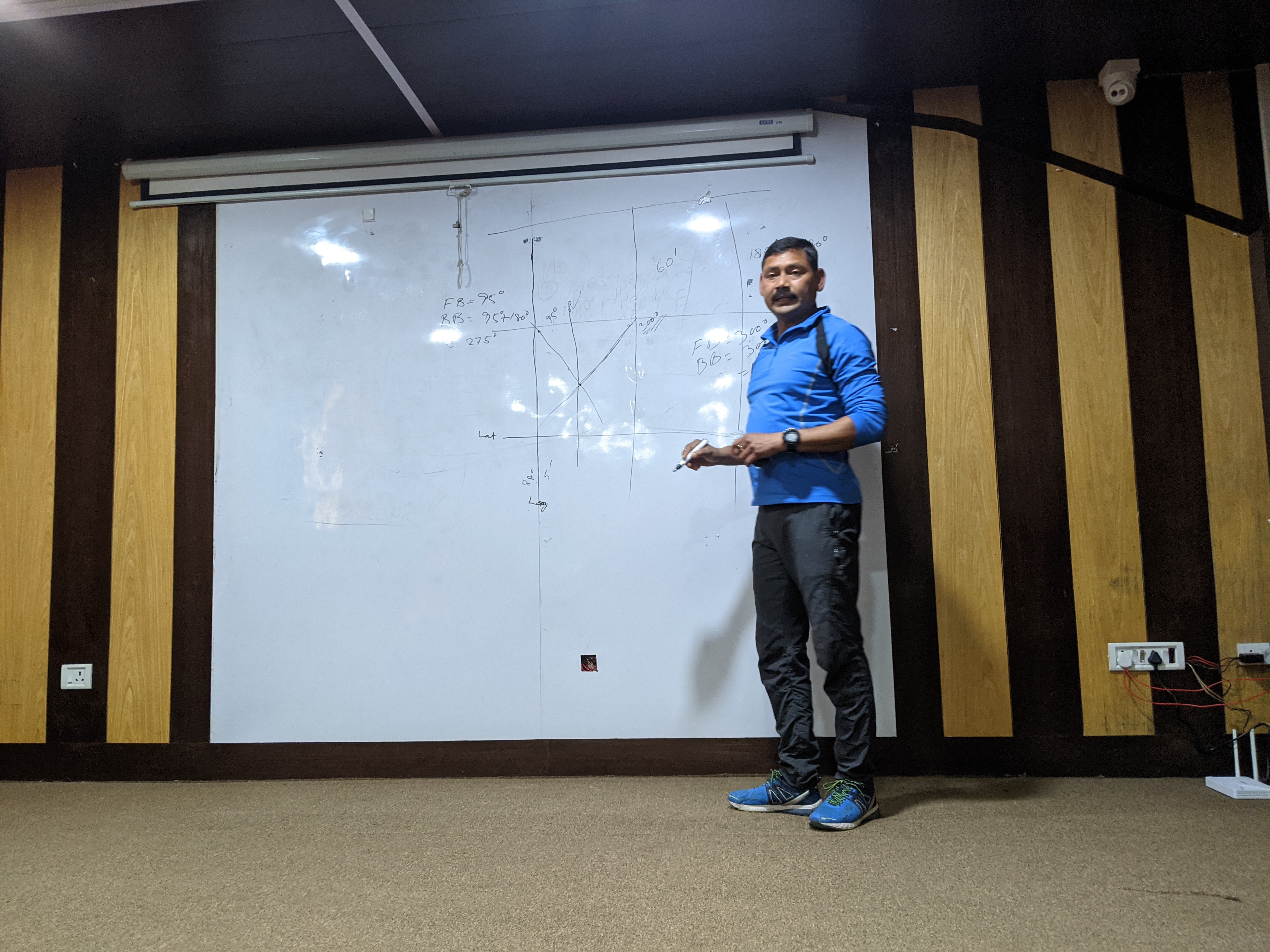
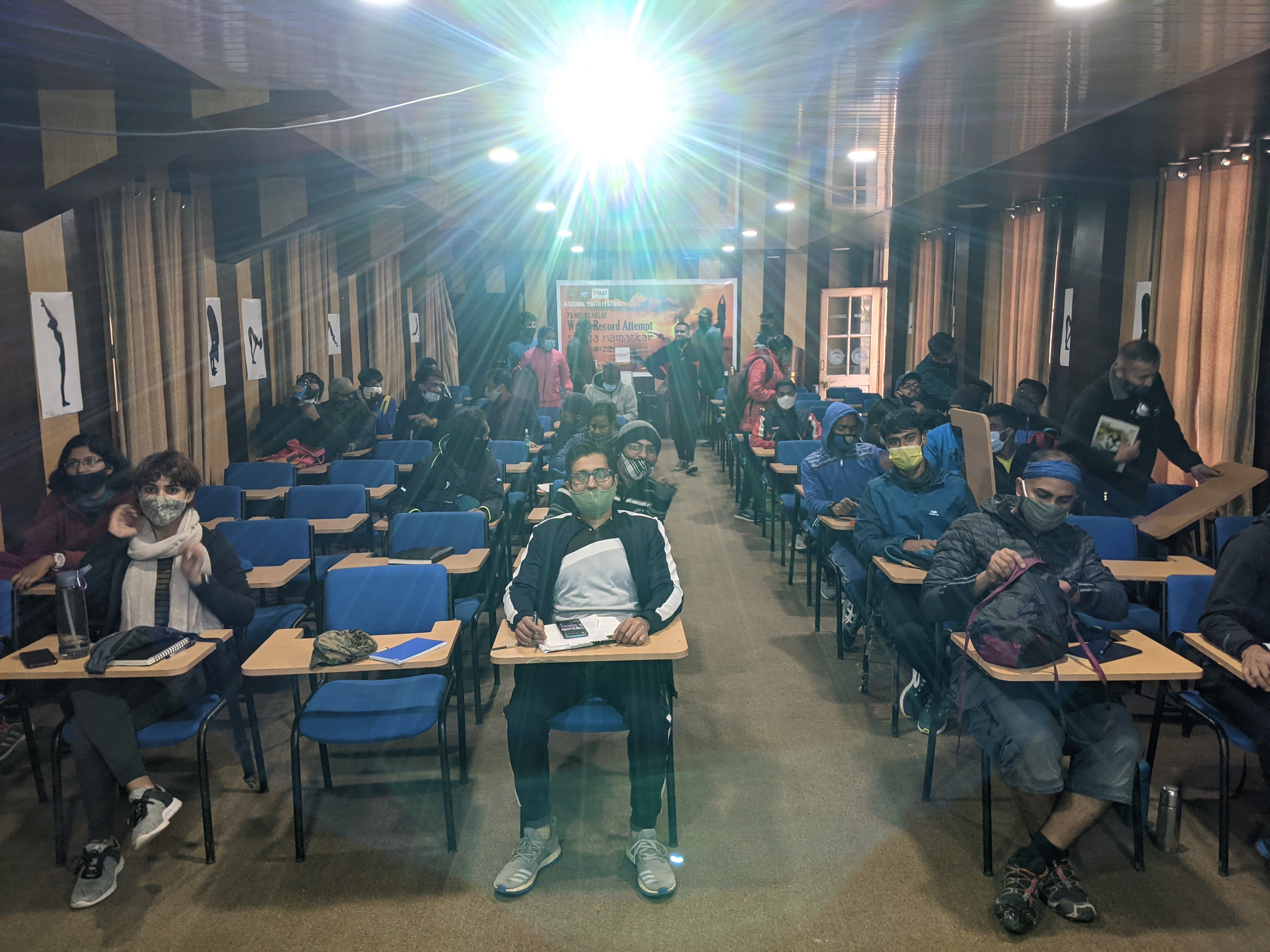
The theory classes: The theory classes were great, all the instructors are quite fluent in both English and Hindi. Your only enemy during the theory classes would be sleep.
The auditorium
Bossman taking a theory class
The classroom
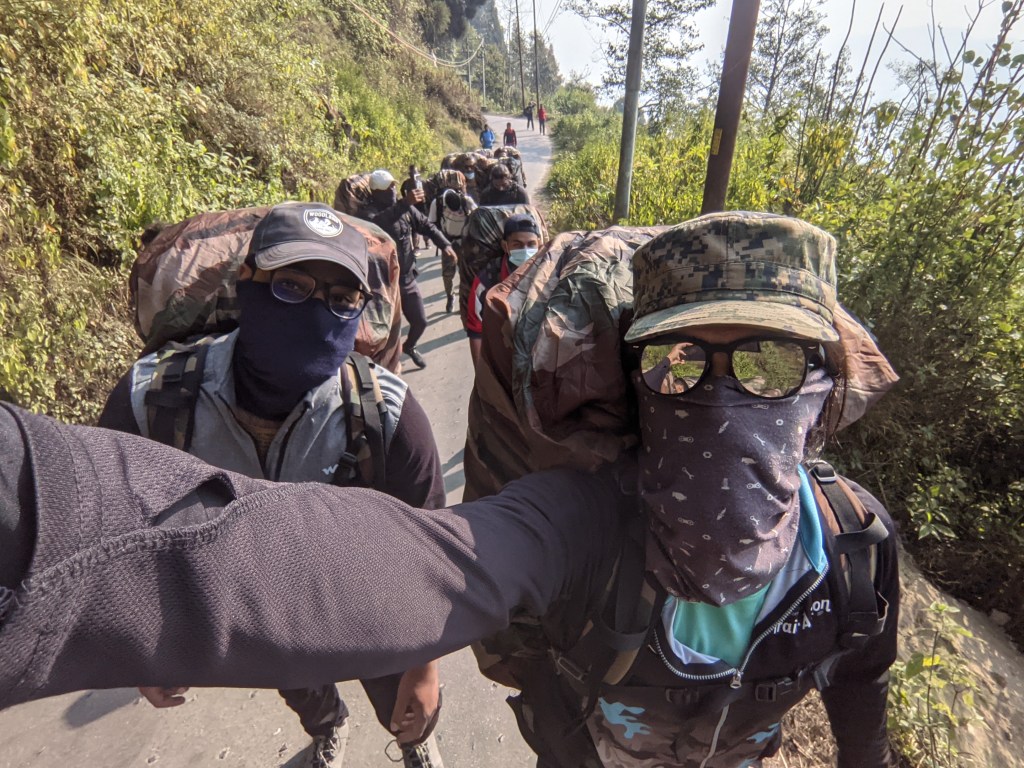
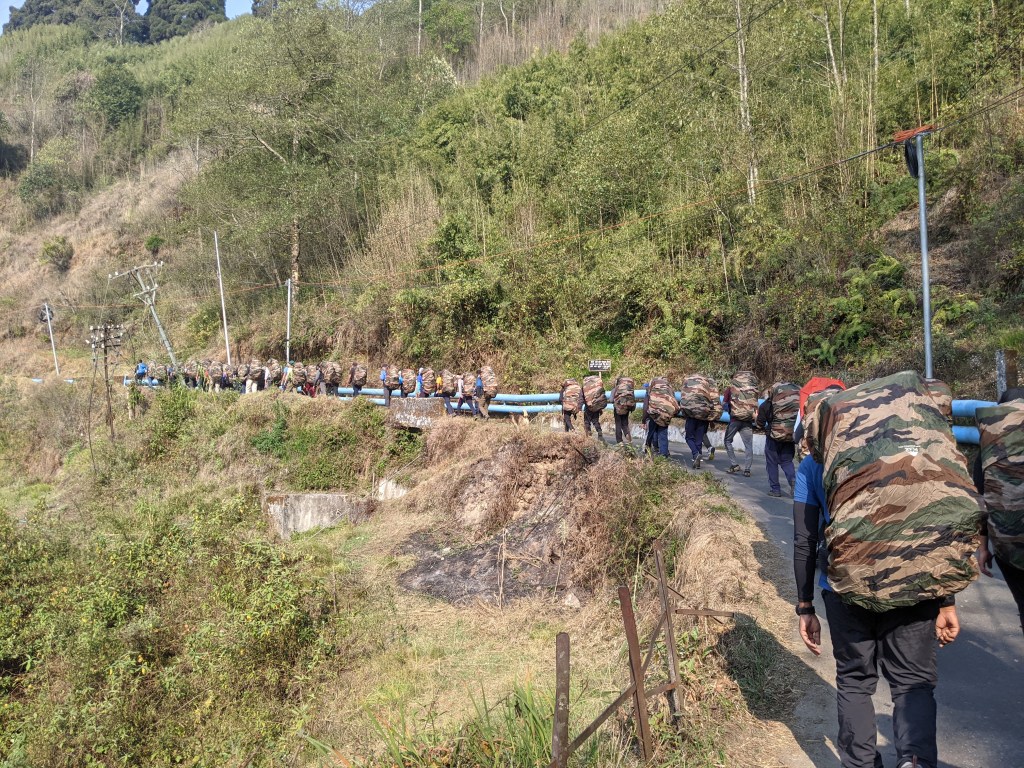
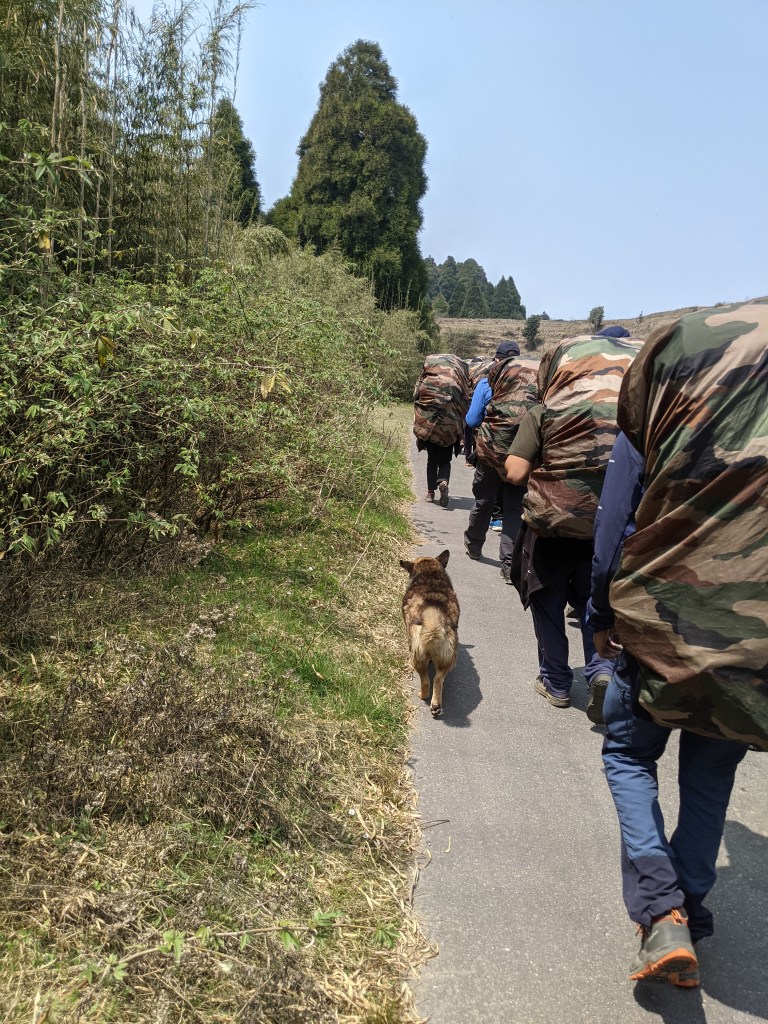
The treks: During the first week, we are made to trek to Tiger Hill with our rucksacks. It’s a 22km trek with an easy pace and everyone makes it comfortably. It’s a warm up session for the test, the Pandam Tea Estate trek which is like a qualification round for the remainder of the course.
The Pandam Trek takes place on the 7th of April, and starts at 6:30am. We need to cover the distance of 14kms with a minimum load of 14kg on our backs within 3 hours. Everyone finishes well in time.
Me and Ashu
70 rucksacks
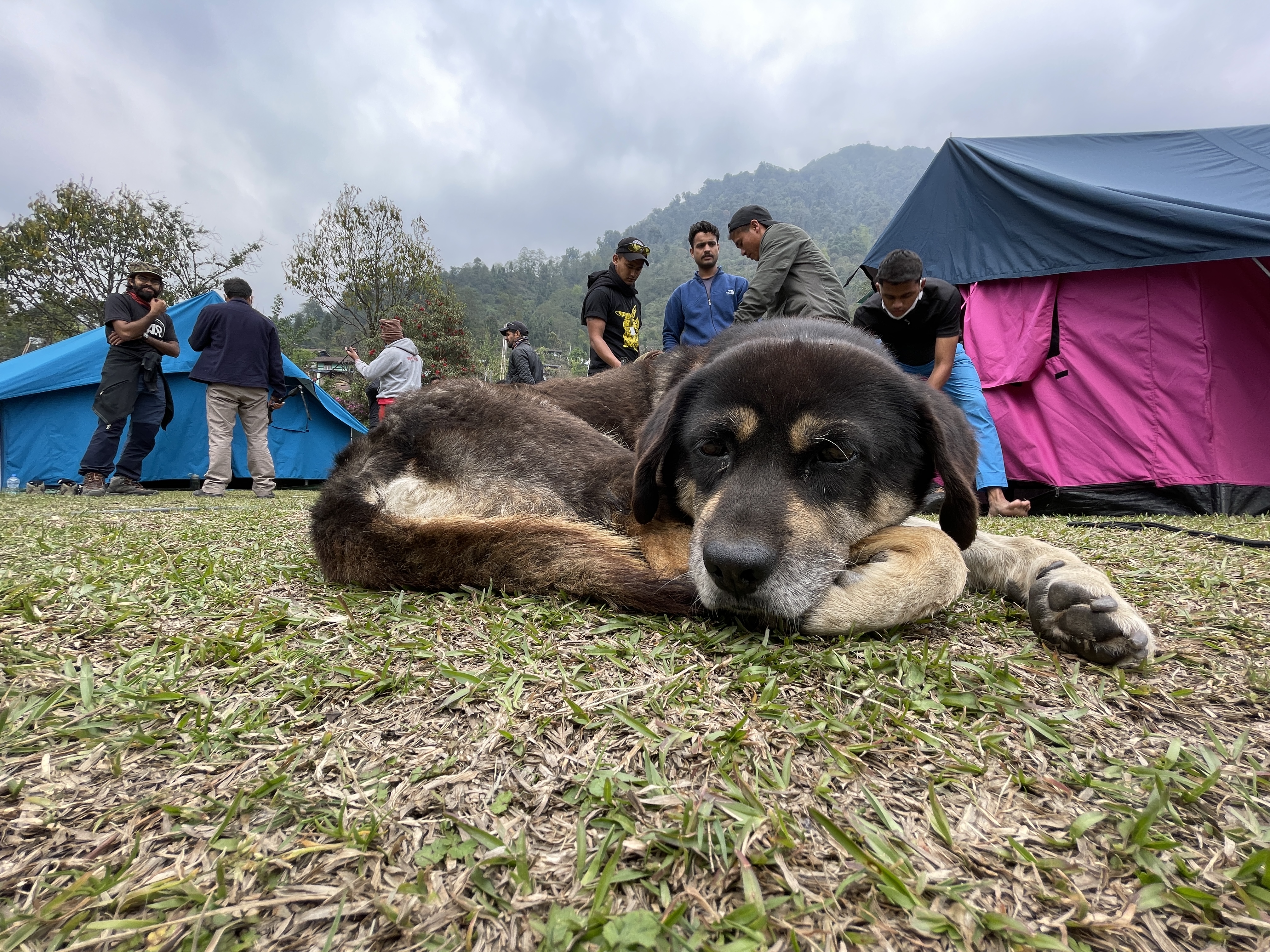
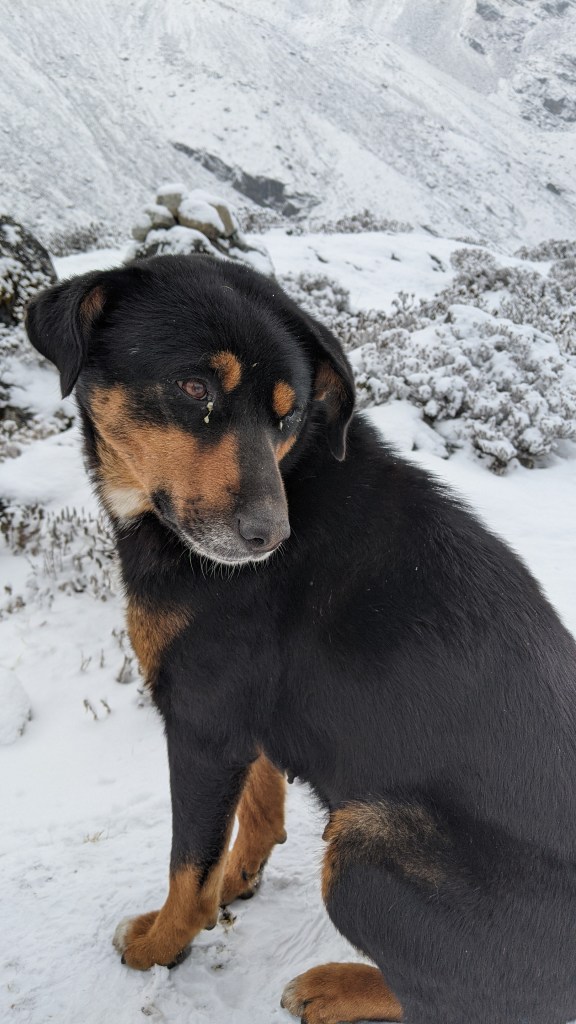
Doggo showing us how it’s done
THE BROWN
On the 9th of April, we finally moved to Yuksom, Sikkim in rented taxis. Our initial plan is put to a halt since there’s a COVID-19 outbreak within the ranks – 4 of our group members turn out positive in their test reports. That leads to waiting for 2 extra days at Yuksom, and with the entire team getting a rapid test done again for COVID-19.
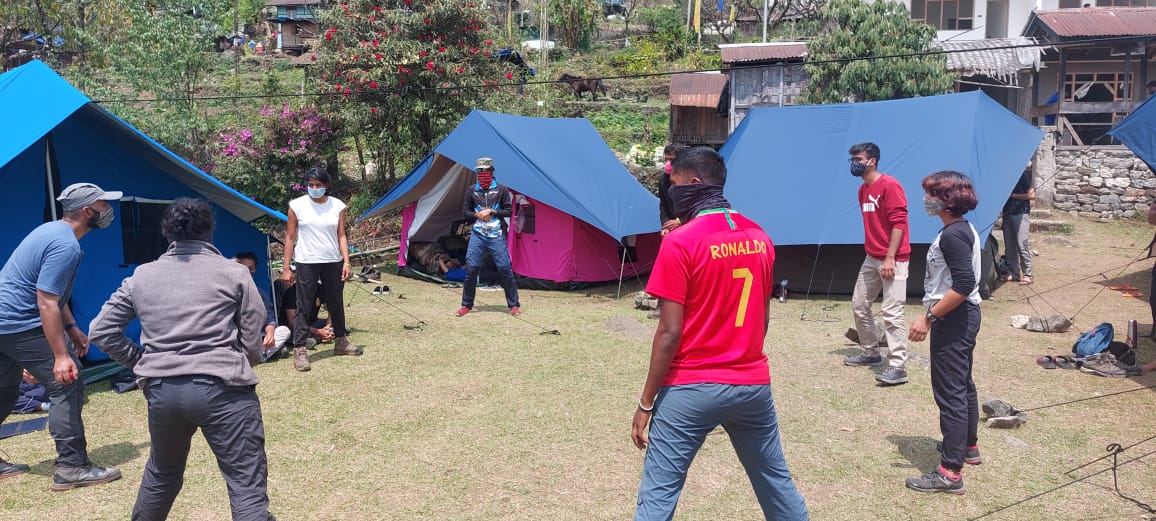
We’re confined to a tiny space, where we spend time playing catch and doing push-ups, trying to keep the overall morale high. On the evening of the 11th we get our test results which turns out to be negative for the entire group, so we move towards Tshoka on the morning of the 12th of April.
Someone else clicked this picture
Koi khaana de do bhai
Playing catch and doing pushups
Spreading love and COVID
Sunset at Yuksom
Day 1: Yuksom to Tshoka, 16kms (5,840 ft to 10,000 ft)
The first day isn’t easy, but it’s not too hard either. My body feels fresh and fully charged, it takes a while getting used to the load on the back, but once the body warms up it’s an easy walk. The flora is still thick and green, it’s like walking in a jungle more or less. As we keep moving up, the flora starts thinning out and the diversity of the species reduces. I end up taking it too easy on day 1 and reach our destination with the last batch of the day. We get to stay inside an old hut, with an additional day of acclimatization at Tshoka.
Groot
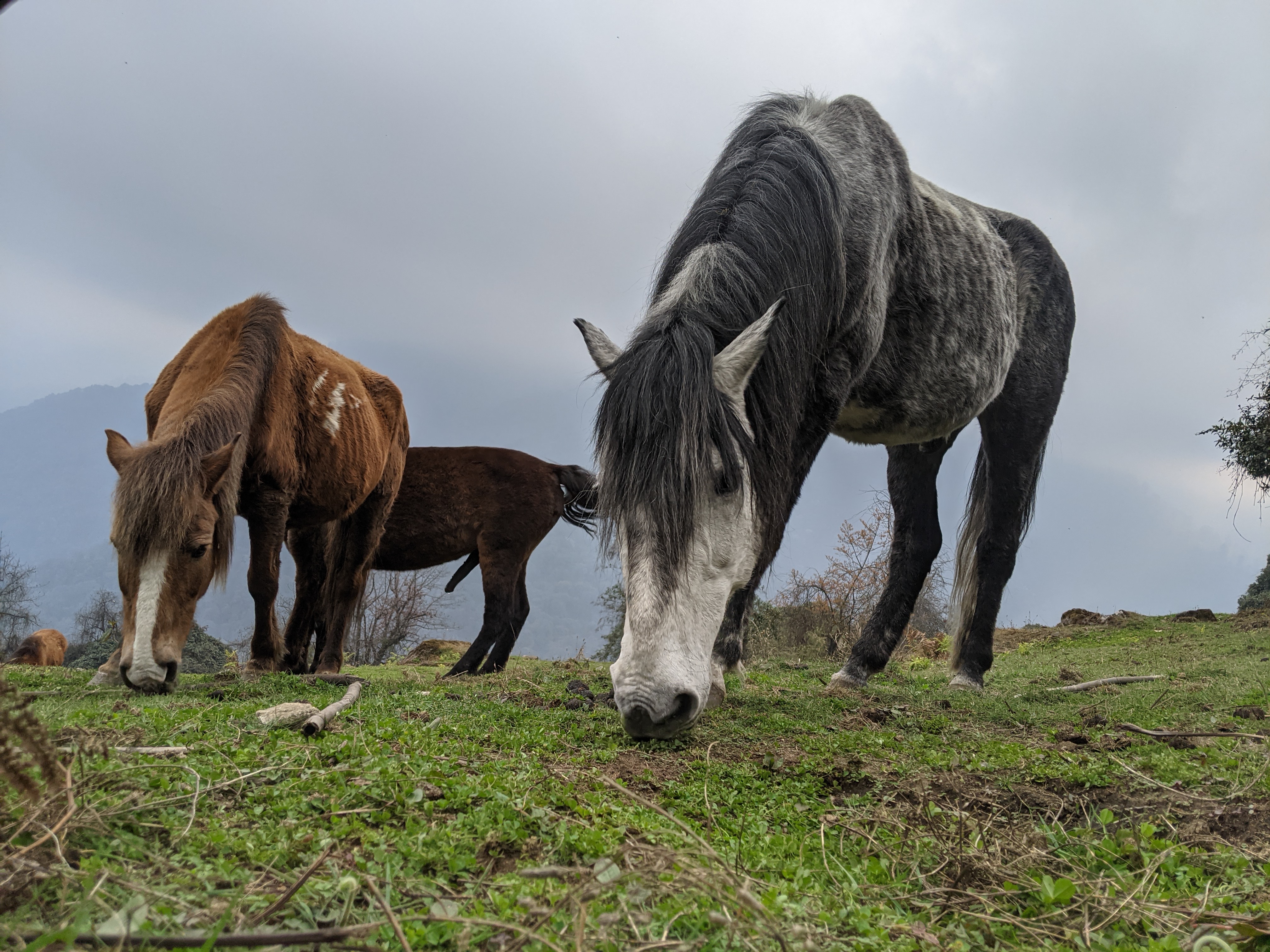
Horseys ❤
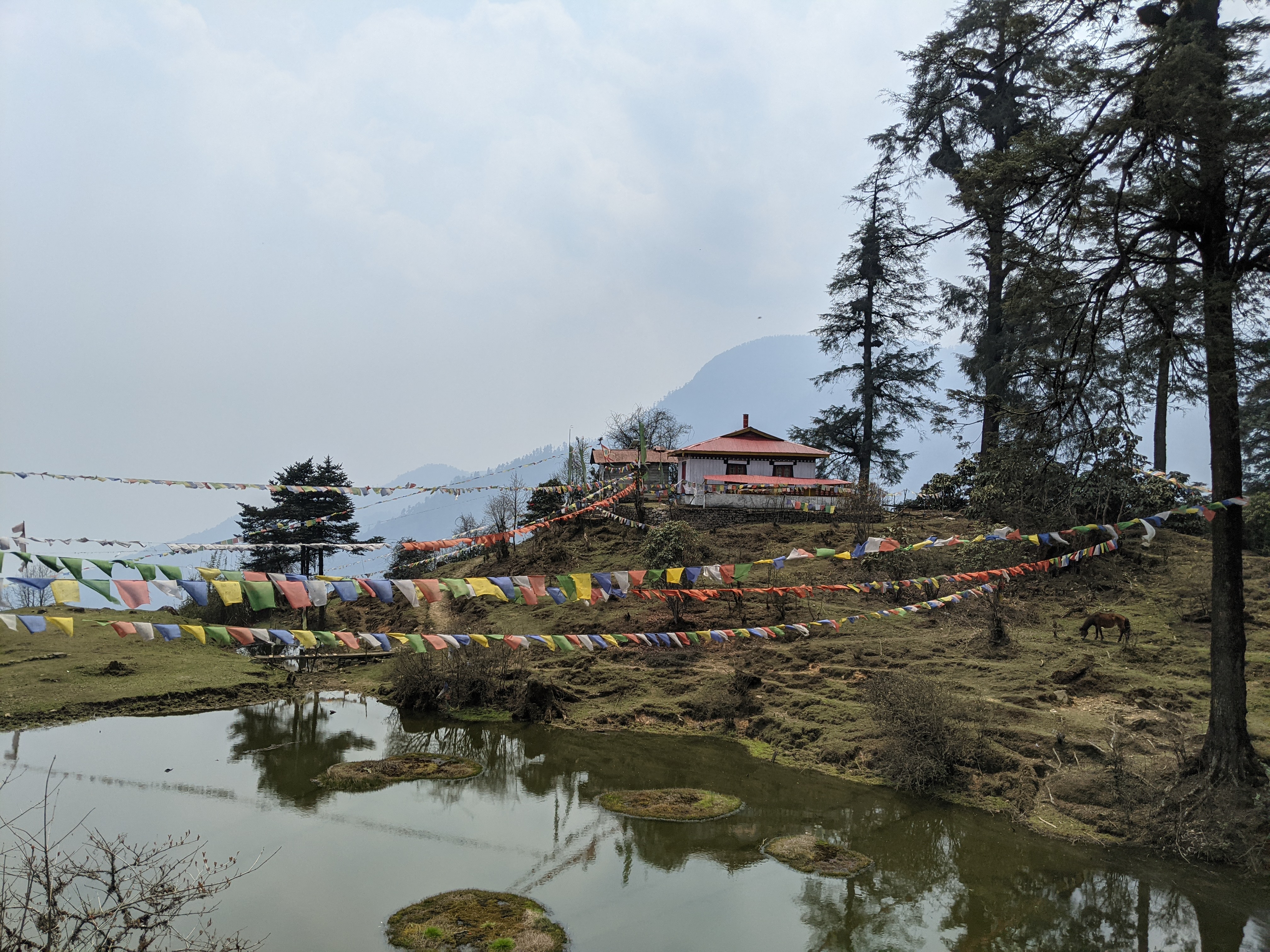
Tshoka’s tiny lake
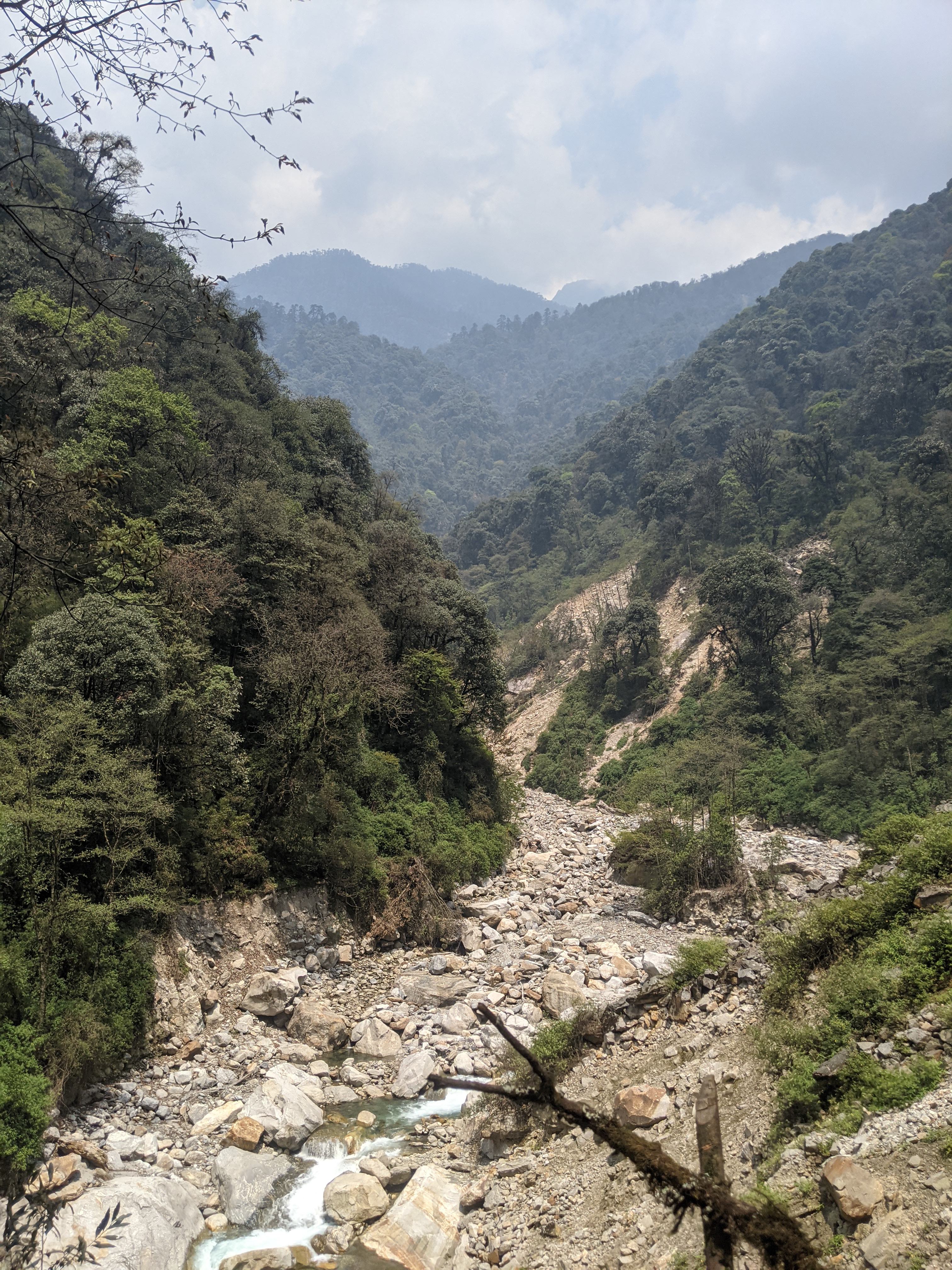
Rivers & valleys
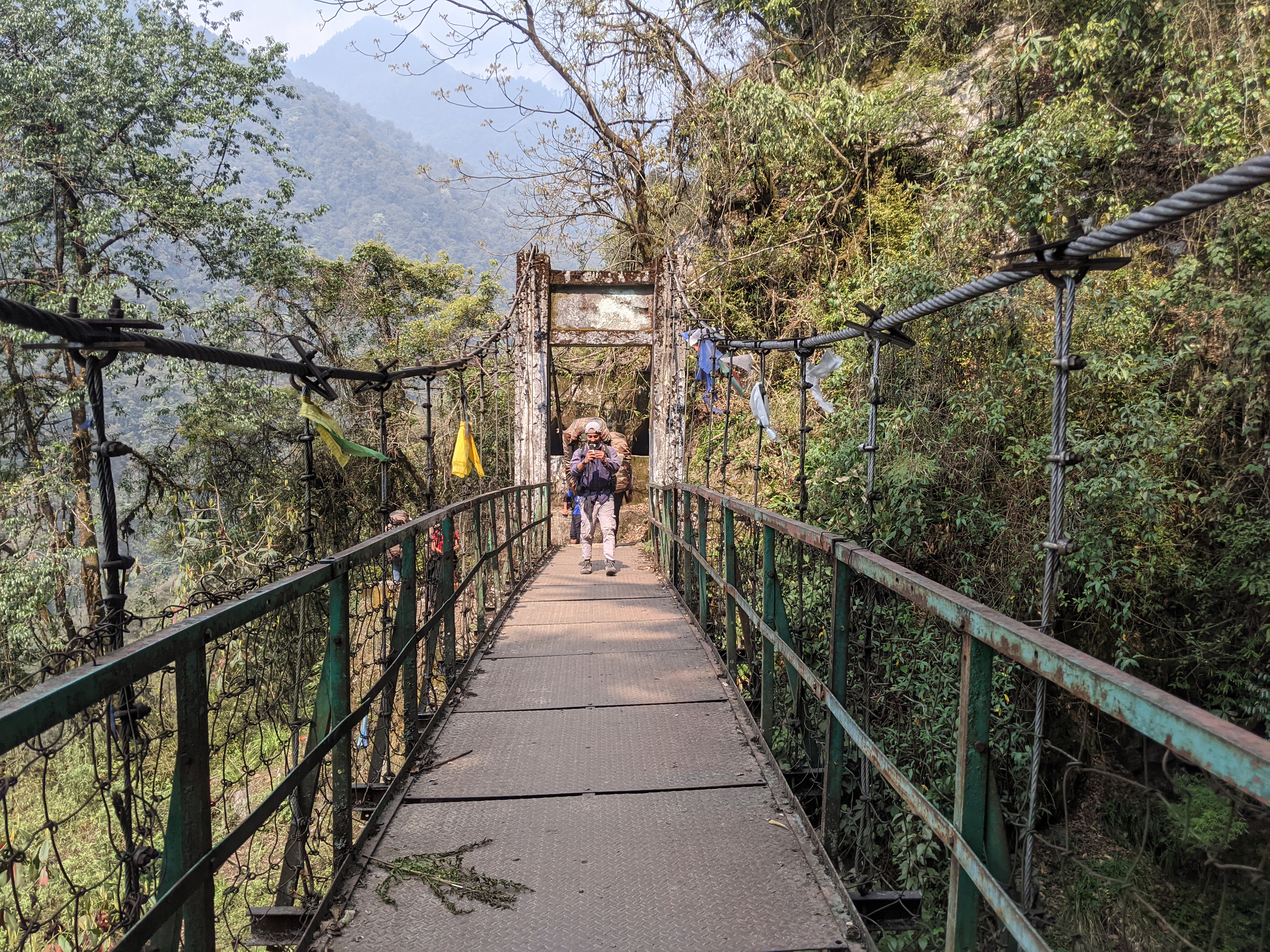
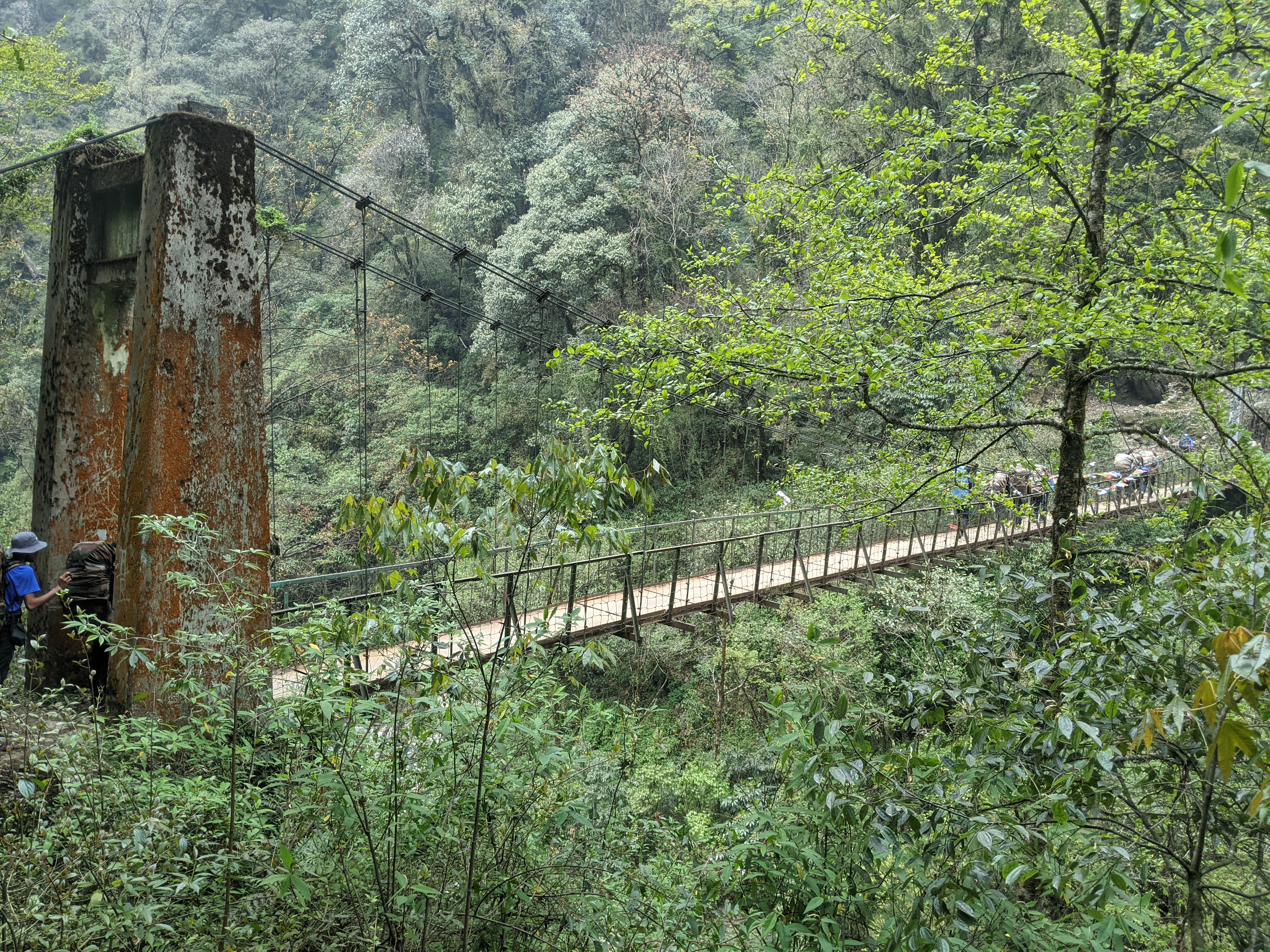
Ali on a bridge
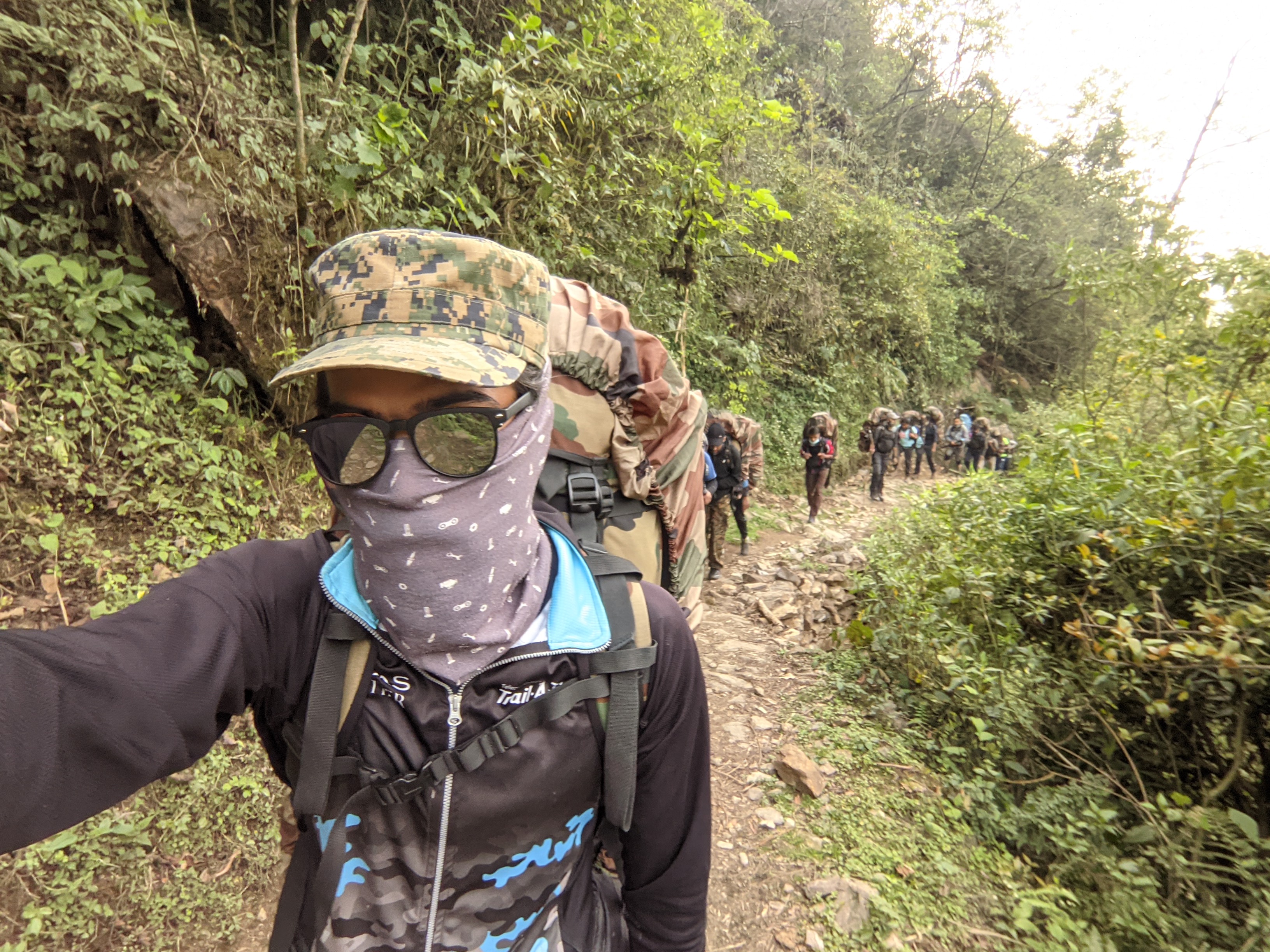
The convoy
The “dreamers”
Sunsets at Tshoka
Bridged valleys
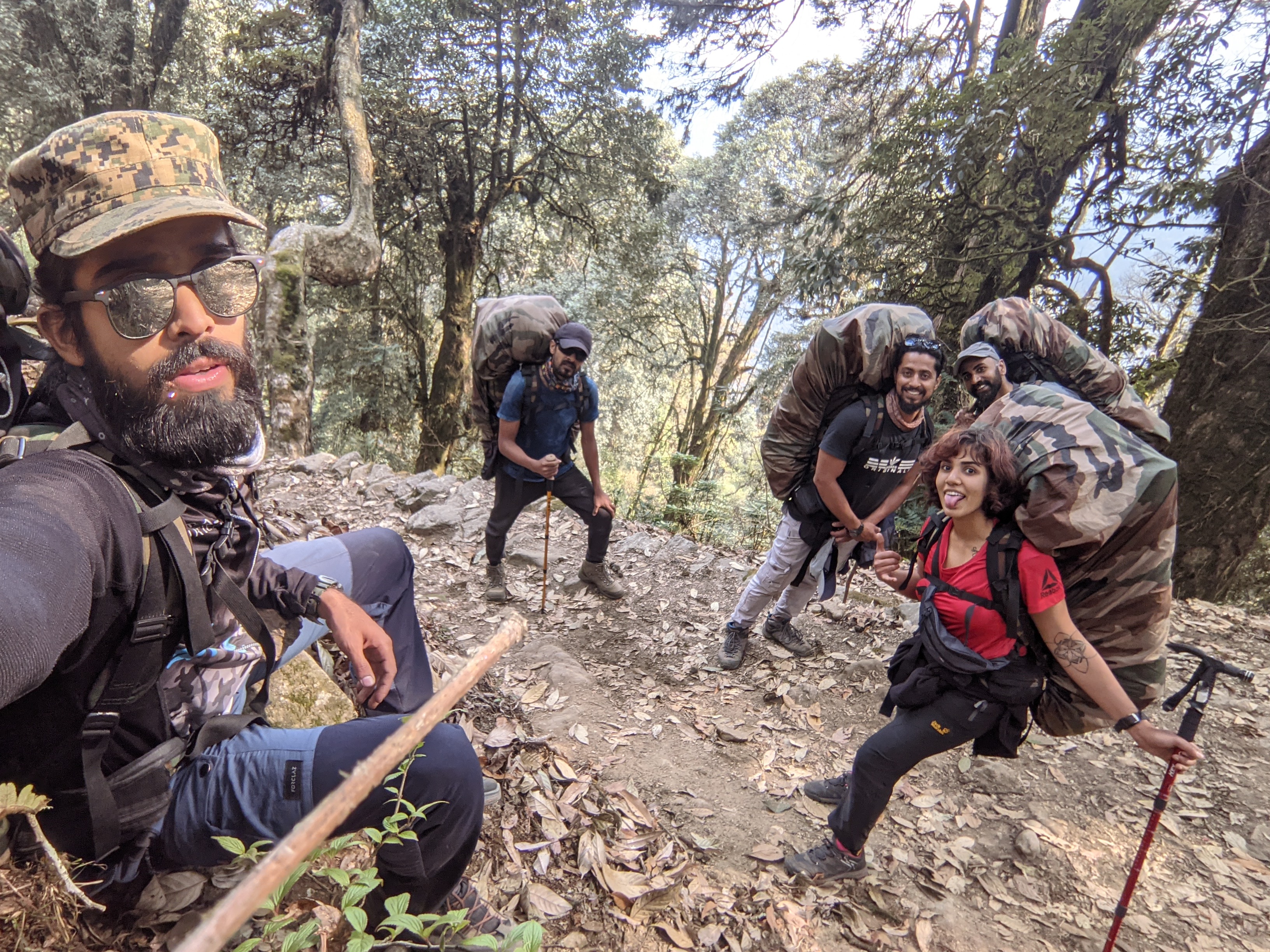
Rope 1: the real OGs
Day 2: Acclimatisation day at Tshoka
Bossman taking an outdoor class
Jhilik doing me a braid
Huts & tents at Tshoka
Day 3: Tshoka to Dzongri, 9 kms (10,000 ft to 13,218 ft)
I decide to start walking with the group in the front, which is usually the same group of guys sticking to the lead instructor for the day.
The pros of walking up front is you get to maintain a steady pace + you get extra breaks, where you can actually take off the load and recover.
It’s hectic staying up front, but it’s good motivation as well. Most of the guys in this group are extremely fit, and it’s a good test just trying to match their pace. The flora thins out, and leaves us only with the silver pine trees and the rhododendrons. We reach Dzongri in good time, and the initial batch is given a tent to pitch and to stay in. It starts snowing as soon as we reach so the 10 of us hurriedly set up our tent for the night. Post lunch, we are taken for a little walk to acclimatise and to learn about the terrain a bit.
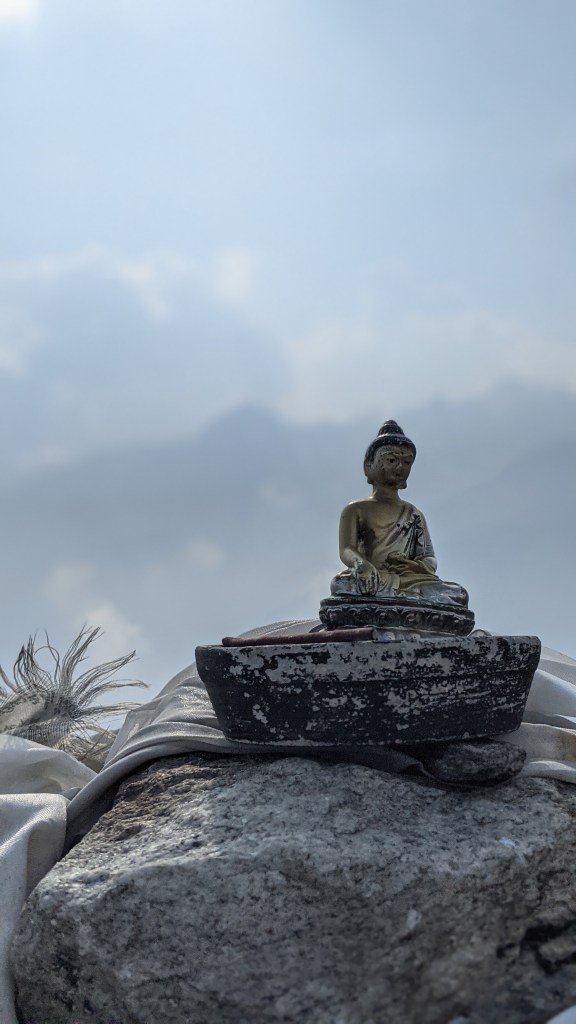
Lord Buddha at Dzongri top
…
Advance party boys
One with room No.6
BMC 343 at Dzongri top
Peeing in sync
view from Dzongri Top, 1.1
view from Dzongri Top, 1.2
view from Dzongri Top, 1.3
Hanging with the advance party
Day 4: Dzongri to HMI Base Camp at Chaurikhang, 13kms (13,218 ft to 14,600 ft)
The third day of the trek is by far the hardest, since the air is thinning out and you can feel the fatigue setting in. The flora has died out more or less, with just brown mountains with tiny green patches all around us. We reached the base camp by lunch, and the first words I said upon reaching were, “guys, if it wasn’t for you, I would have stopped a while ago.” Funnily enough, the guys respond with the same words, that we were just looking at the feet of the guy in front and moving on. There are high-fives all around, while we sit and catch our breath. Our instructor asks us to volunteer to go back down to help the rest of the team with their load, and even though we’re all dead more or less, we decide to go back down. Too much respect for this bunch, seriously.
That’s the entire point of being in the front, you get to make yourself useful in more than one way. Like pitching a tent since you’ve reached early, or going back down to help the others with their load.
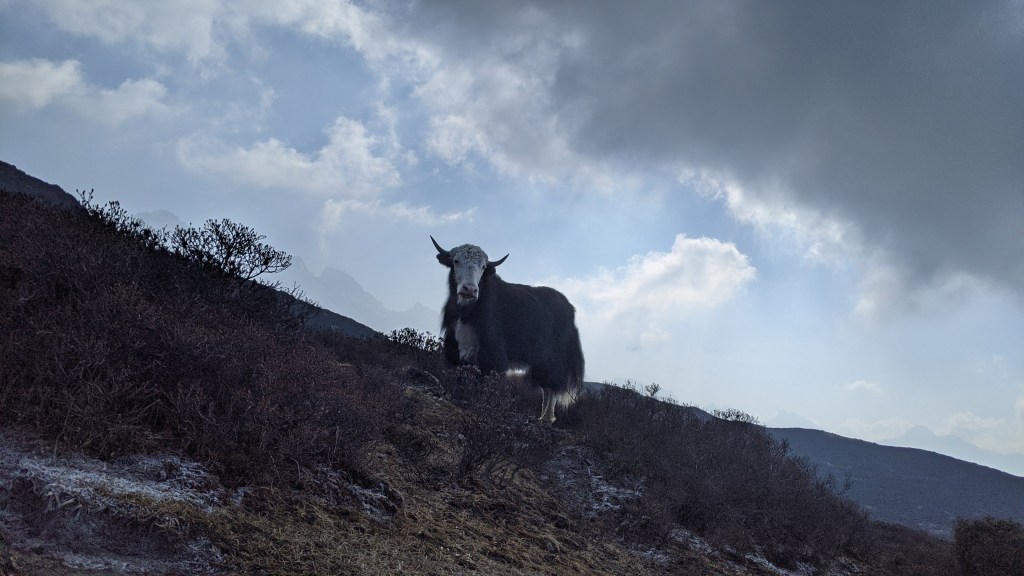
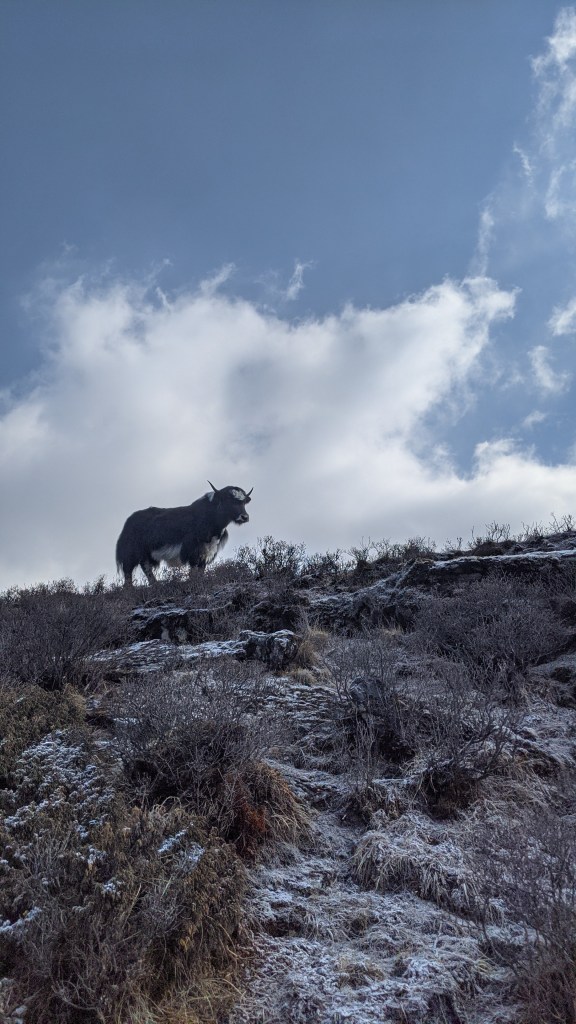
Yak’s distant relatives
Morning views
Yak’s distant relatives
Me & Anirudh, walking together on trails & glaciers alike
…
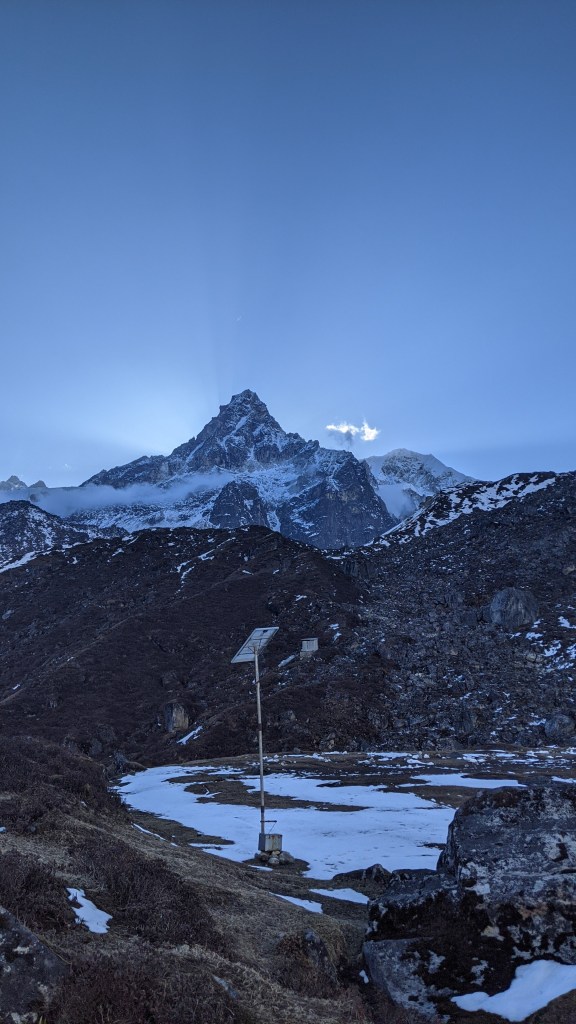
Our HMI base camp at Chaurikhang with Mt. Frey in the background
THE WHITE
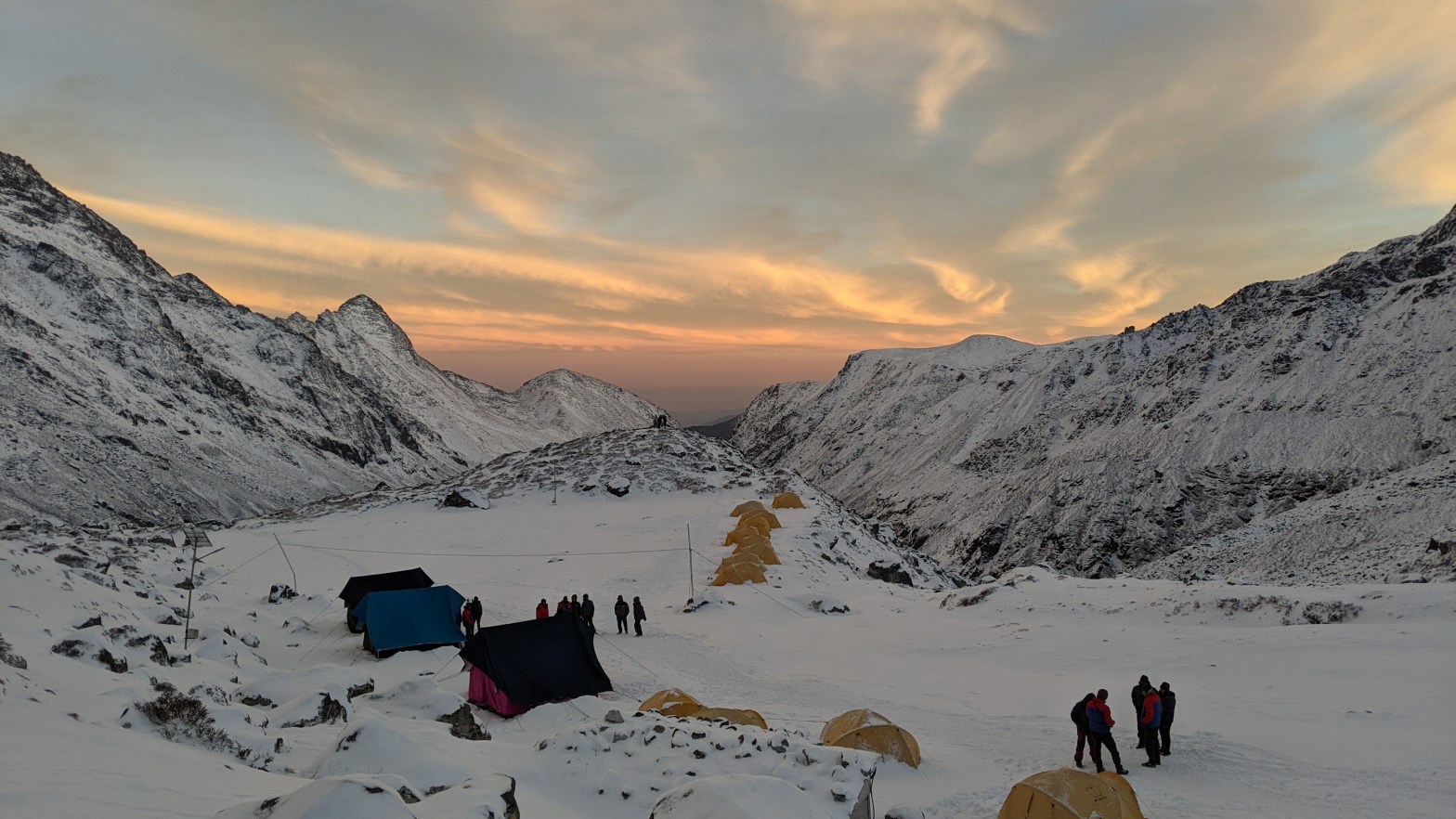
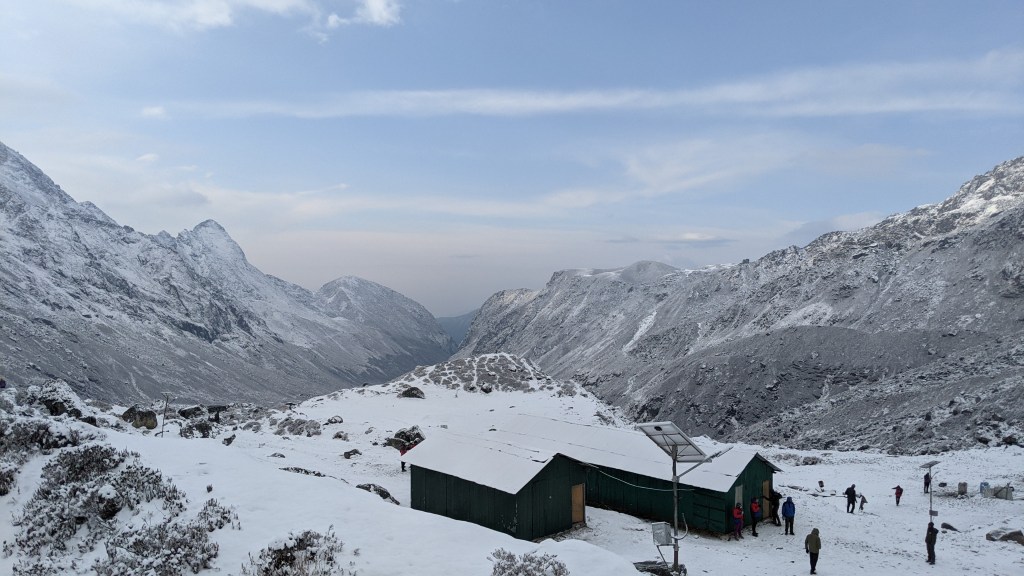
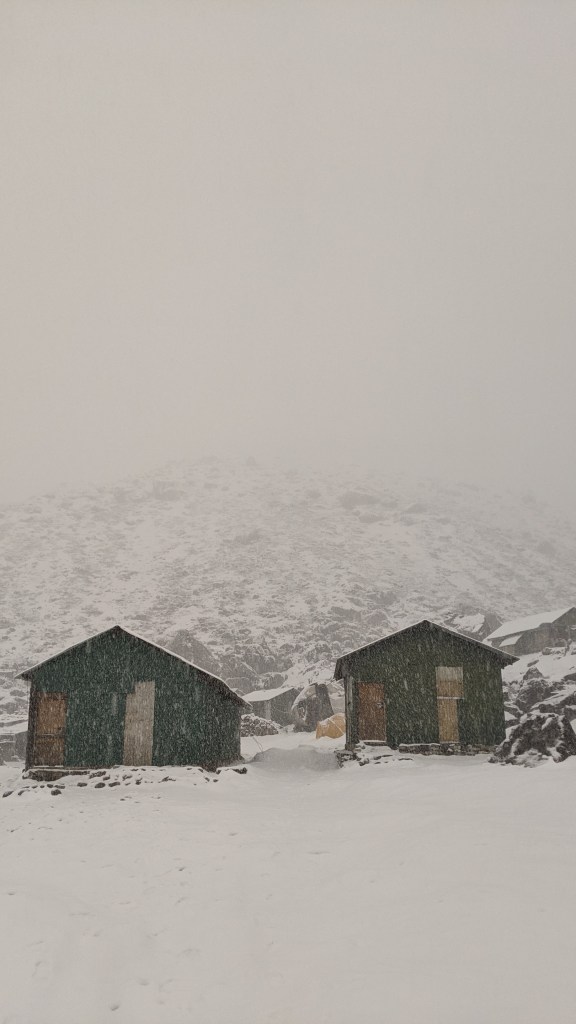
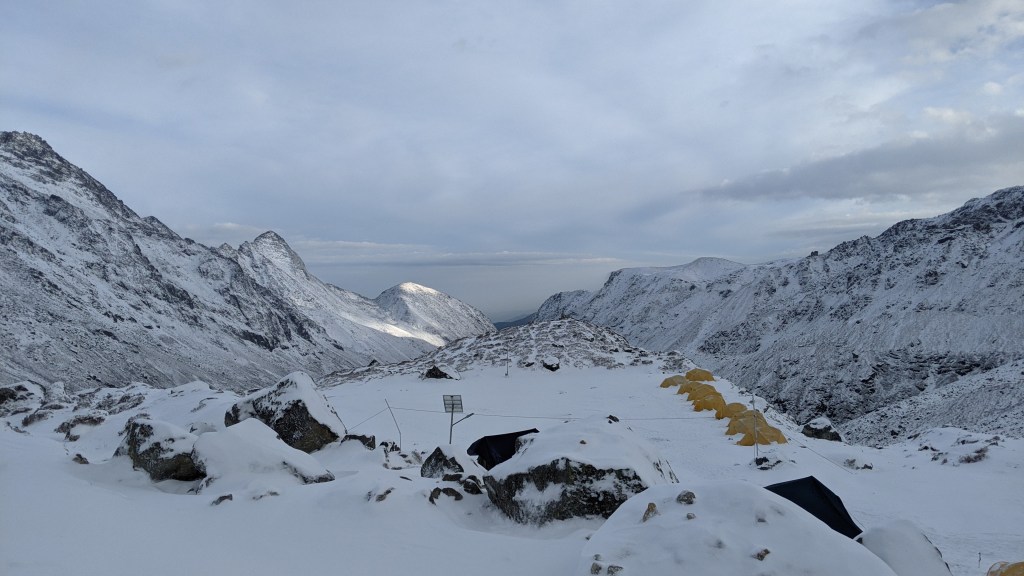
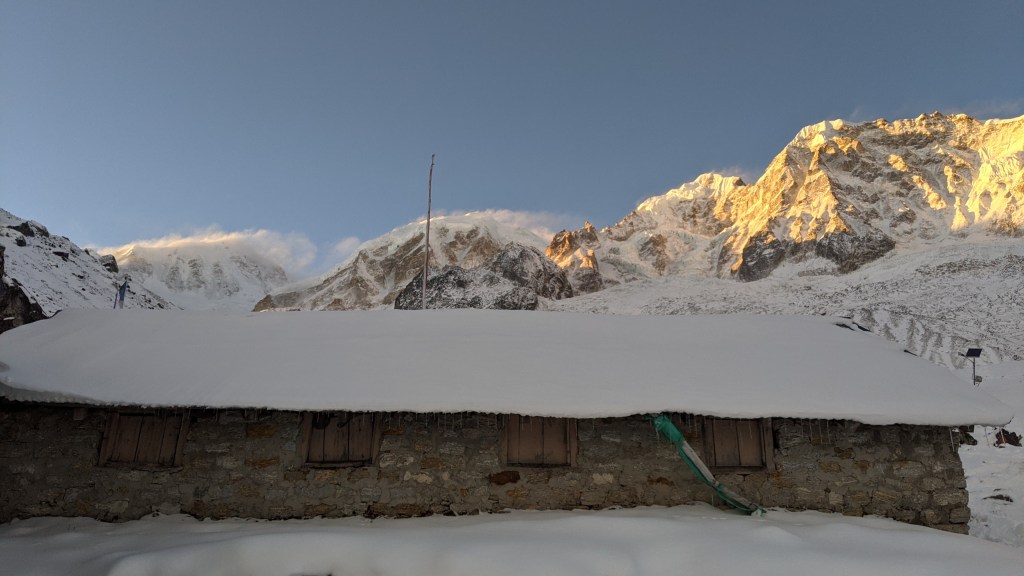
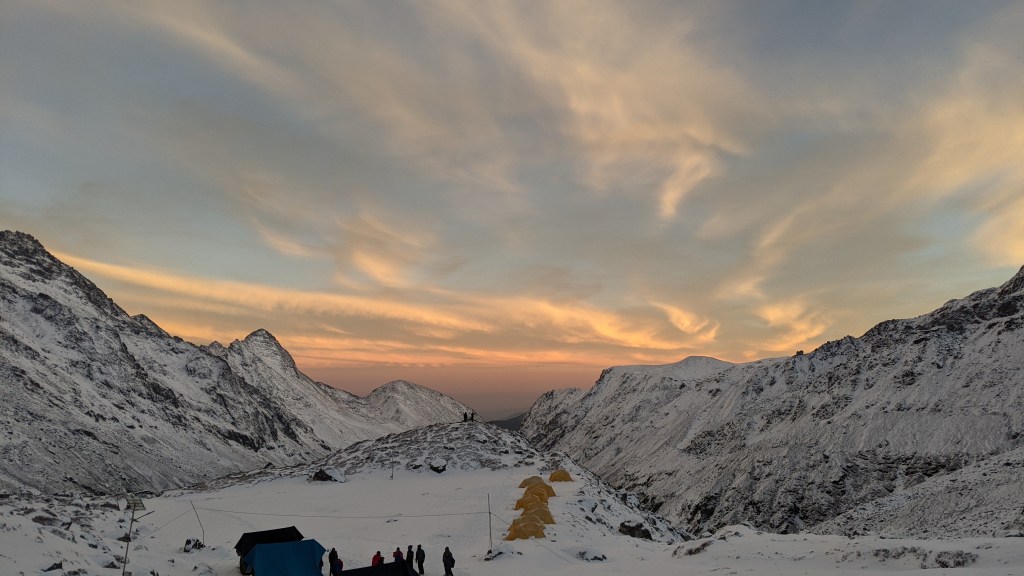
We reached the base camp on the 15th of April, and it started to snow in the evening. We woke up the next day to find our hut and the surrounding peaks engulfed in a blanket of white snow.
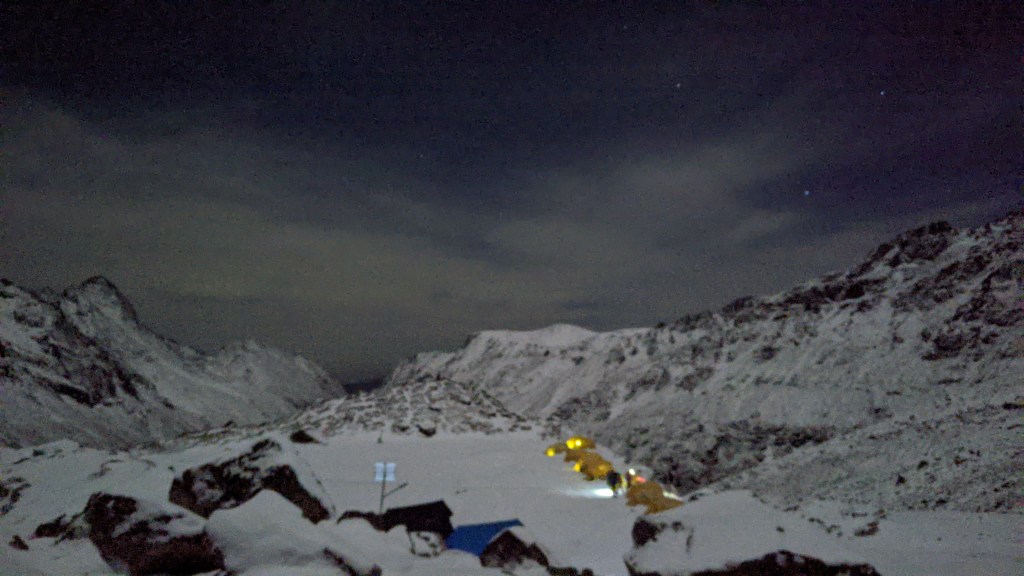
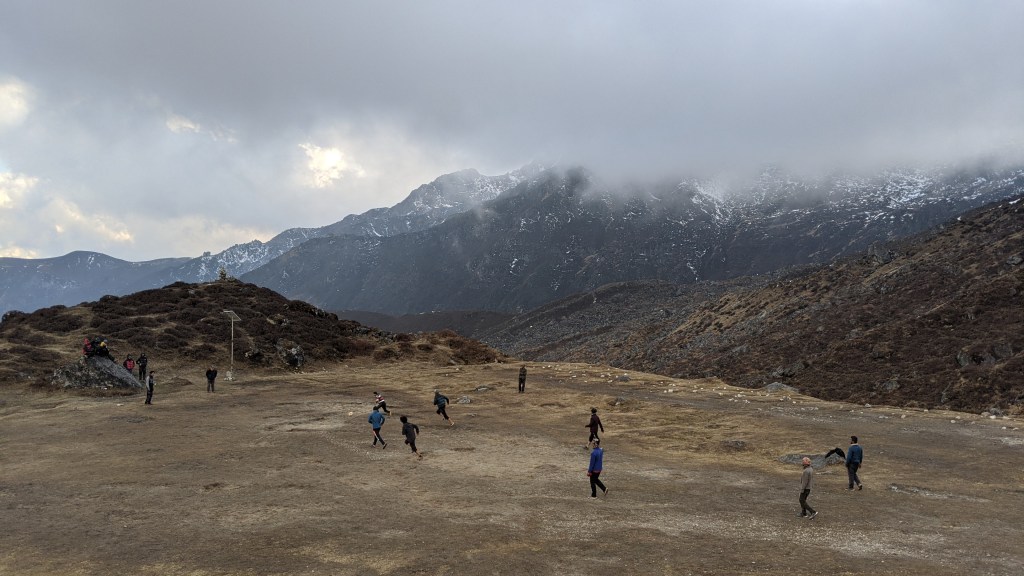
The base camp: comprised of a few huts and tents. Huts for the men & women, separate huts for the instructors, a hut for medical inspections, a kitchen, a store, and a secret cottage of the caretaker living in a hut which supposedly belonged to Sir Tenzing Norgay Sherpa. There was a huge field where we used to play catch (during which I broke a finger), and in the latter days was occupied by playing football.
Vandana, Chandan, Ali, Sid
Me & Ali
Kiran, Sid, Ali, Ani, Dee
Our toilet
Chandan, Ali, Sid, Dee, Vivek Sir
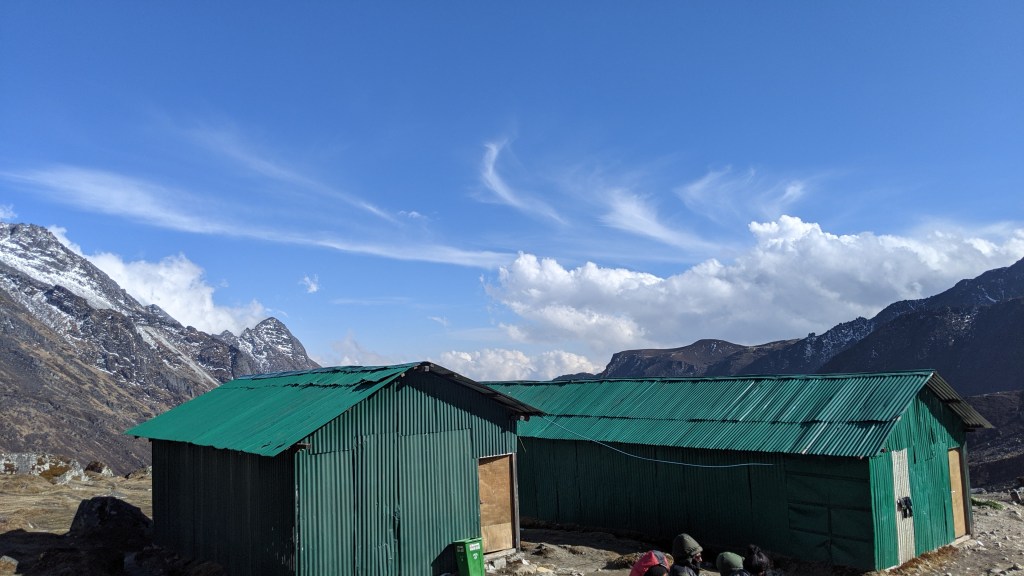
Our huts
HAPO looking for HACO
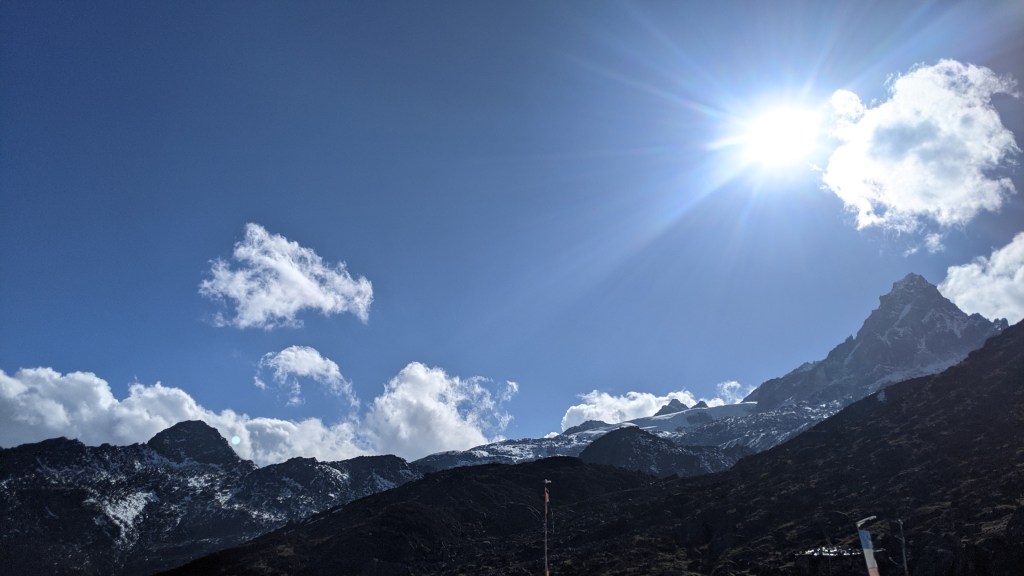
View from the base camp
Favourite ❤
Mt Frey
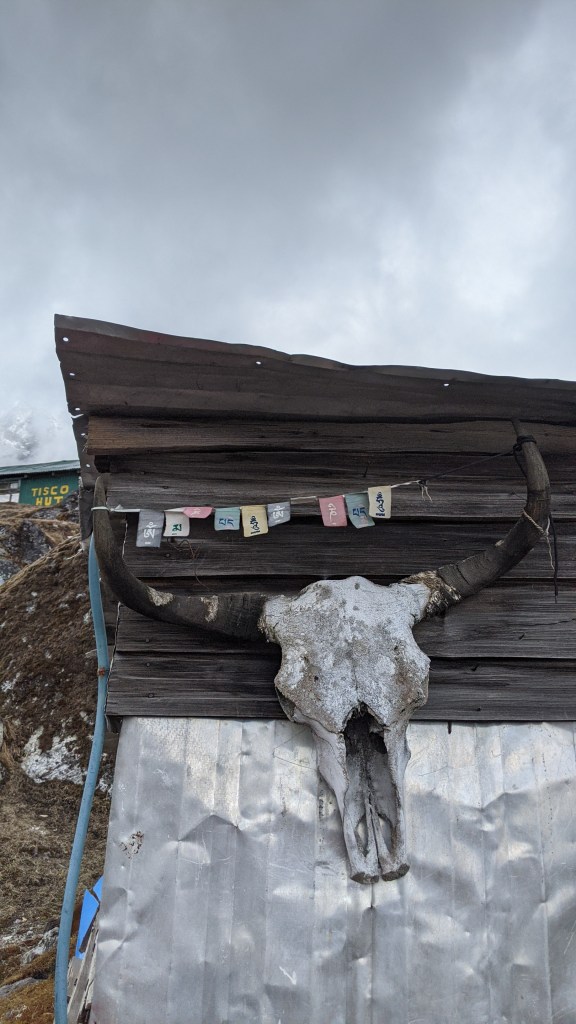
Tisco Hut ❤
Outdoor classes in the snow
AMC’s tents
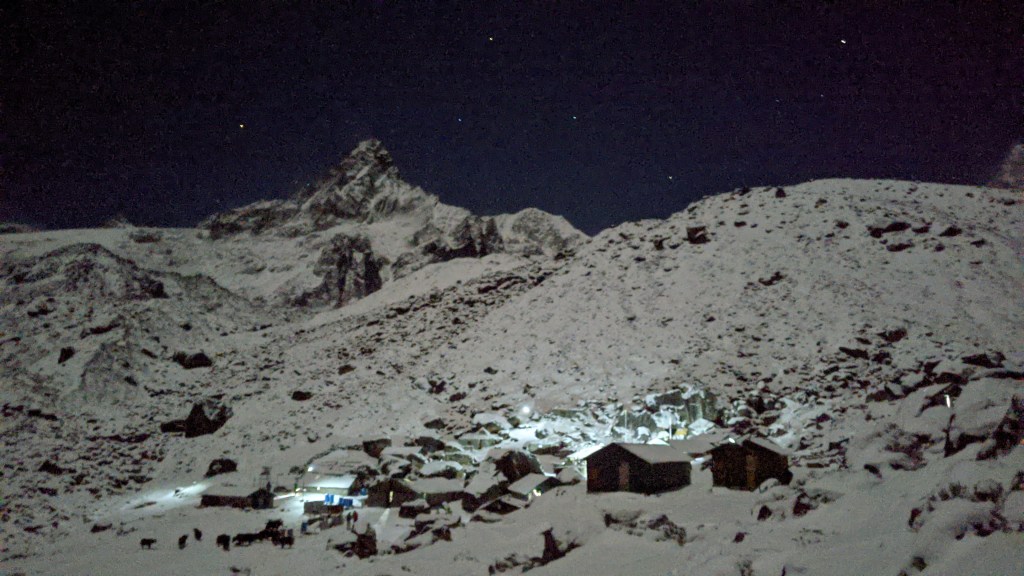
AMC’s tents at night
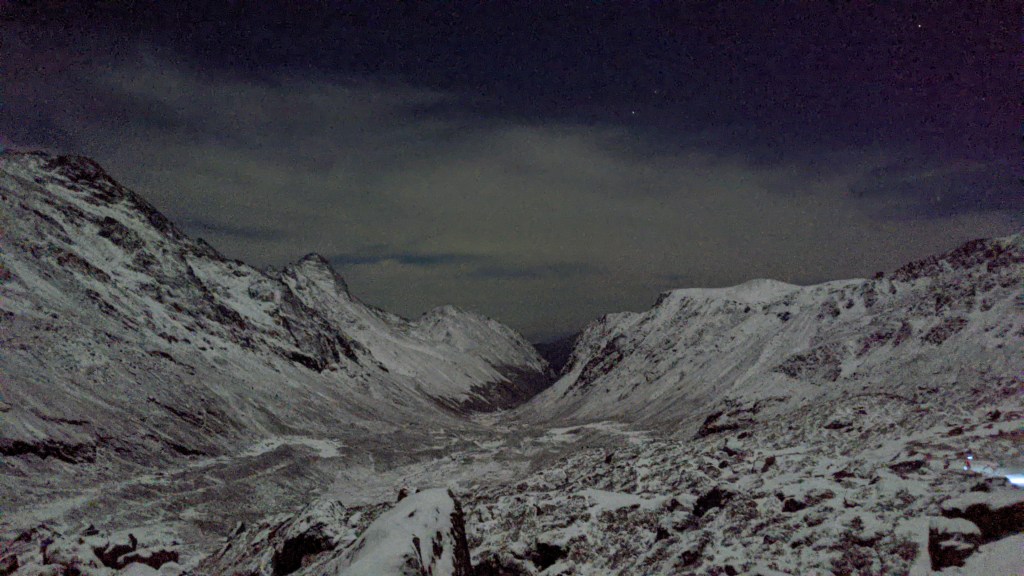
night shot, 1.2
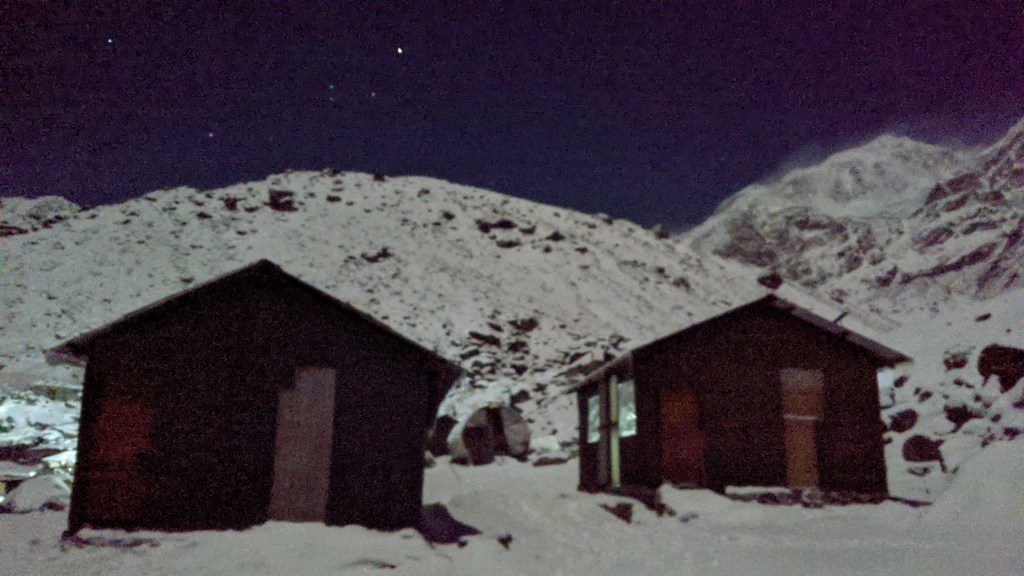
Tisco at night
night shot, 1.1
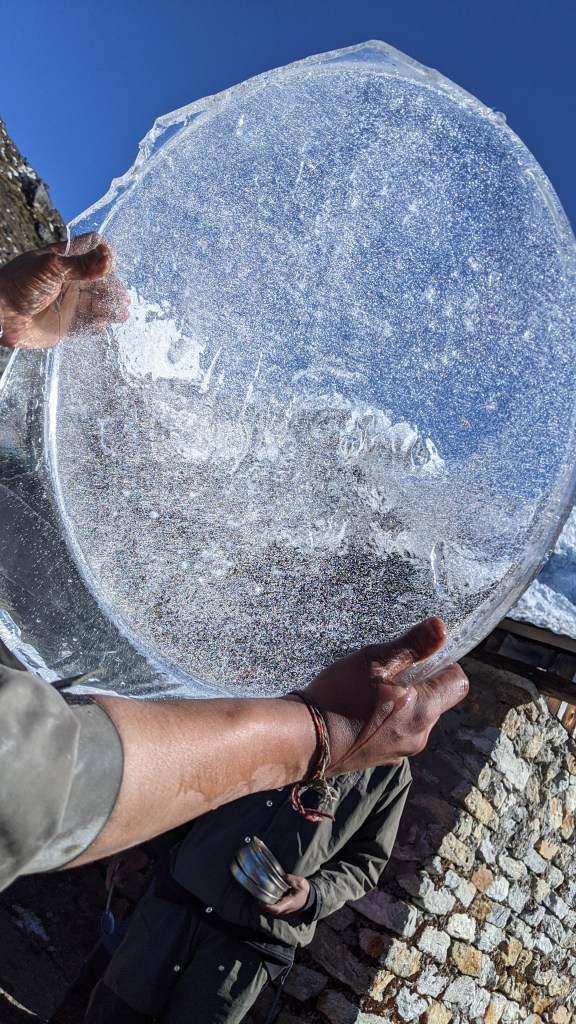
Layer of ice on top of the water cans
Football at the base camp
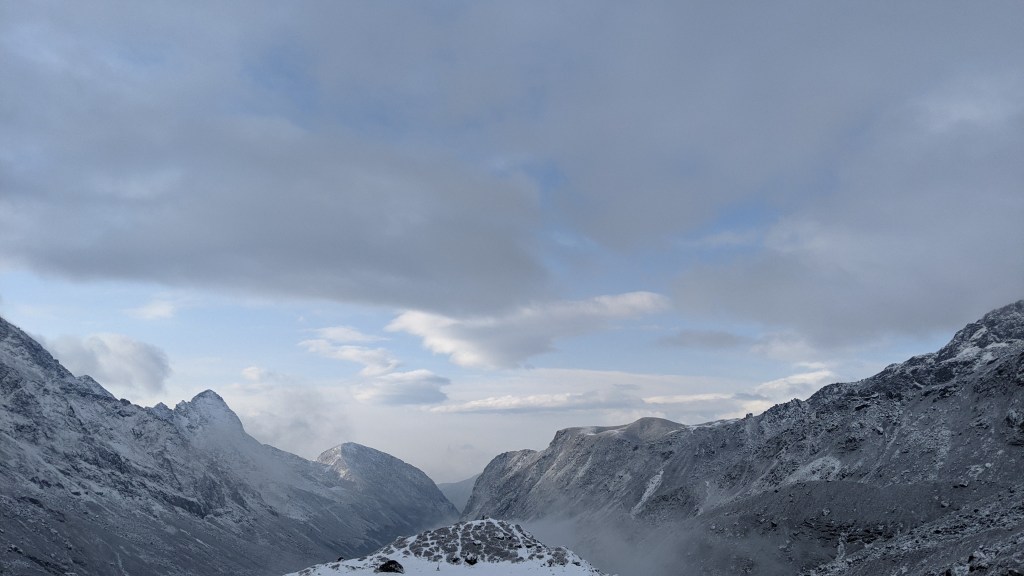
Clouds drifting in from the valley
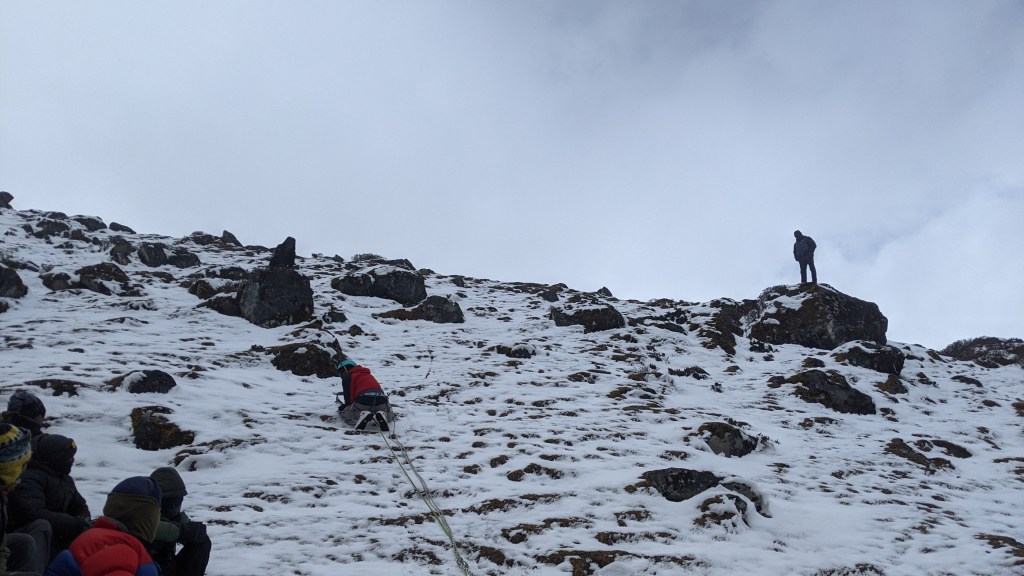
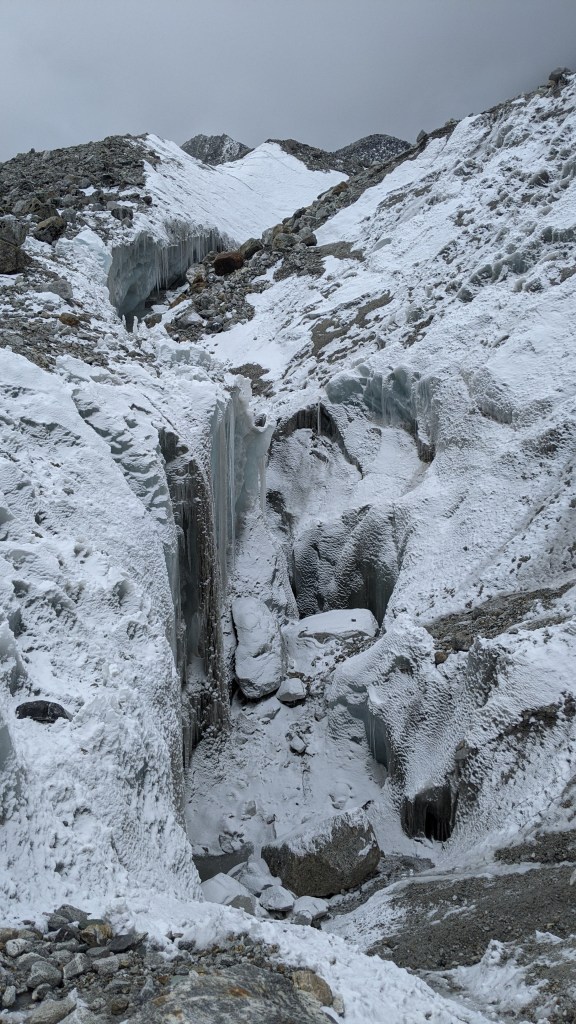
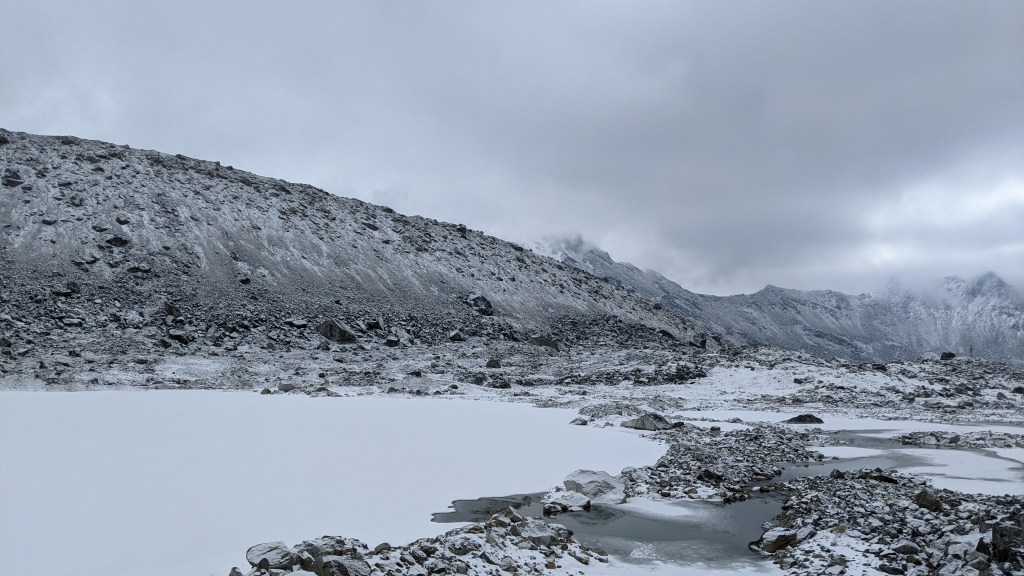
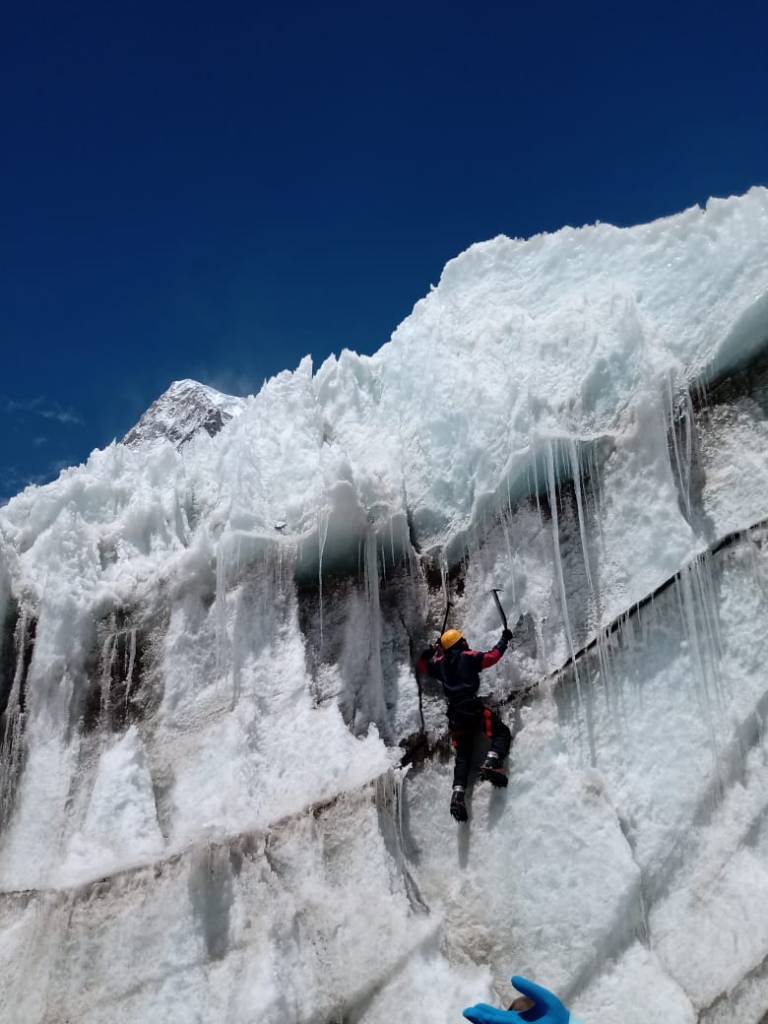
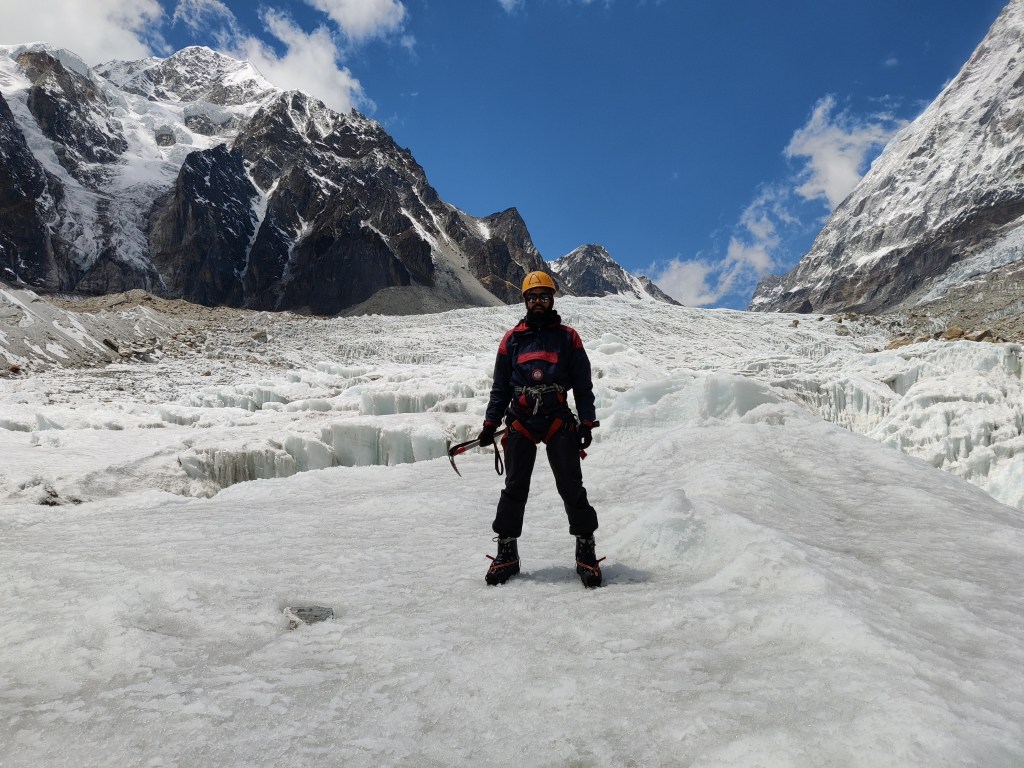
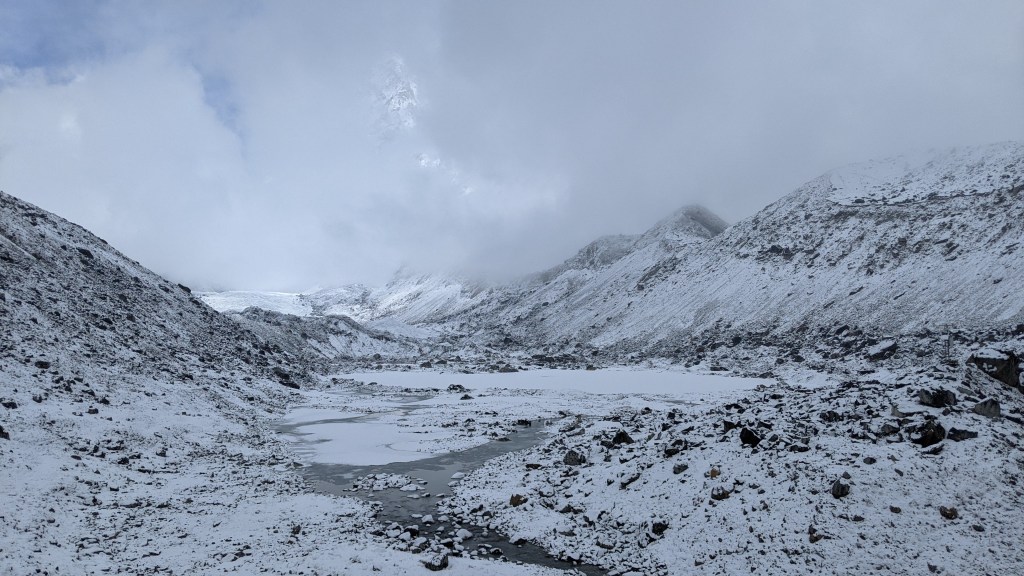
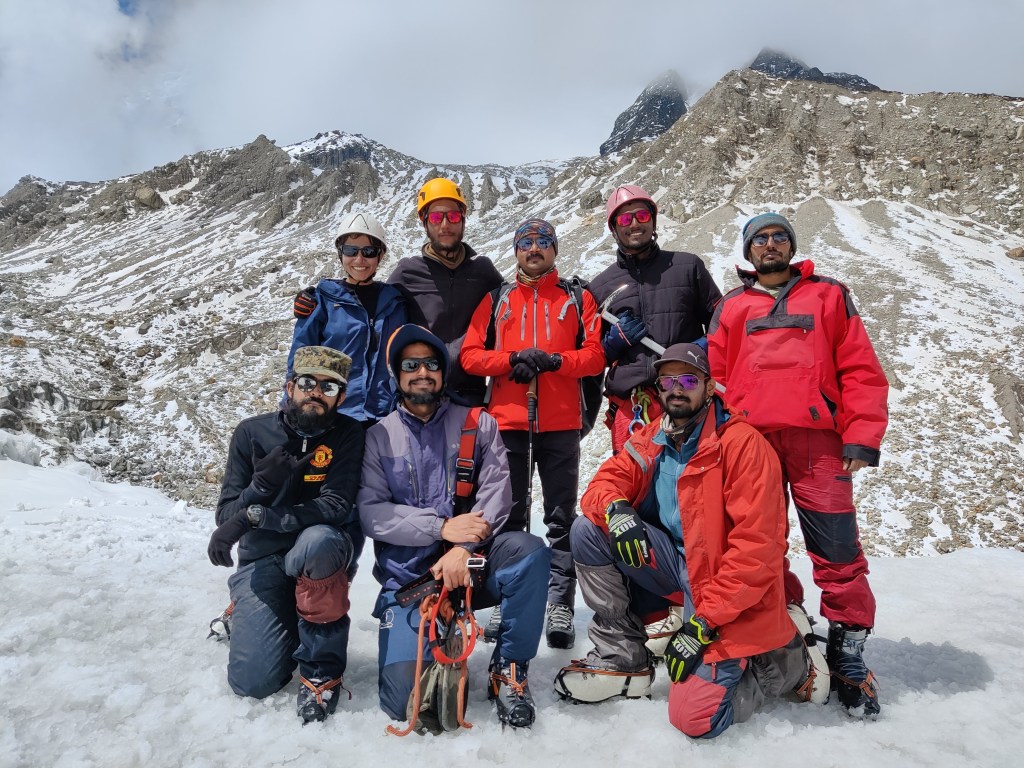
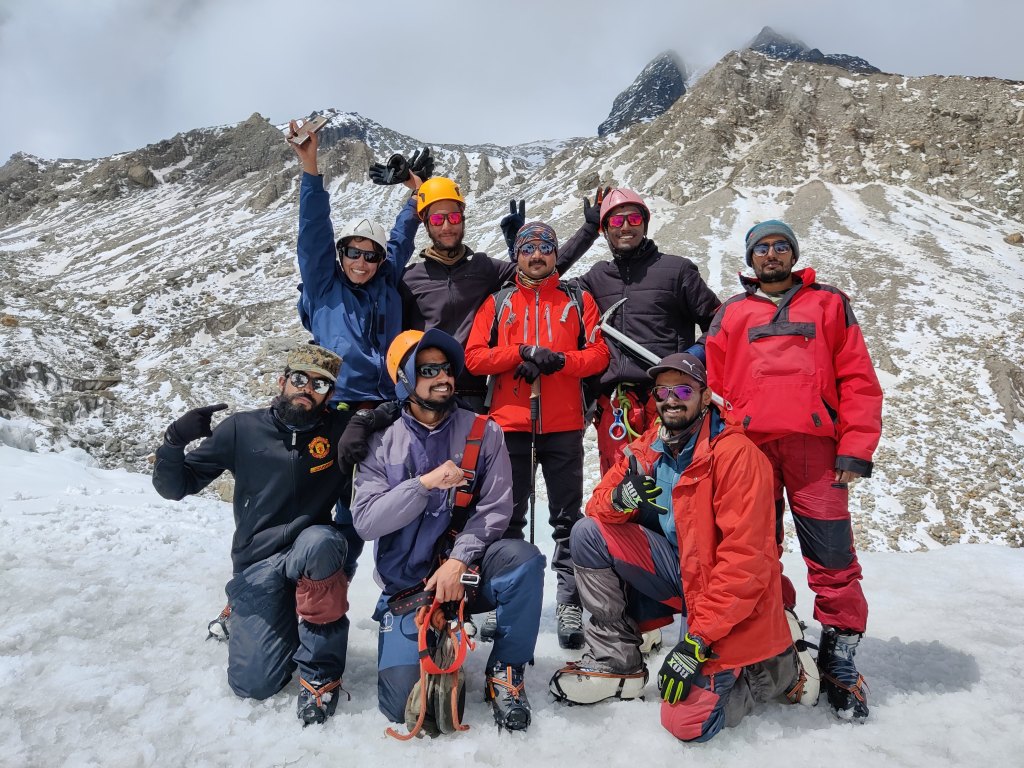
The glacier training: The next few days are assigned for glacier training at the Rathong Glacier. It is the most exciting / adrenaline pumping activity we’ve done so far. The days are spent wearing our crampons and using our ice axe to hack away at ice walls, learning different techniques of climbing, belaying, using our Jumar, and trying not to fall flat on our arse. Ice climbing is quite simply a mix of technique & confidence. Just get your technique right and embrace the ice, get your confidence on point and it’s an easy task. It took me a while to fall in love with the ice, but oh boy – can’t wait to go back for more.
A crevasse
A tarn, 1.1
A tarn, 1.2
Chandan, Vanna Ram, Vivek sir, Ali
Ninja & Ali G
“ab neeche kaise aayu”
One with the boss man
Geared up for war on the ice
Rope 1 dropping the coldest album of 2021
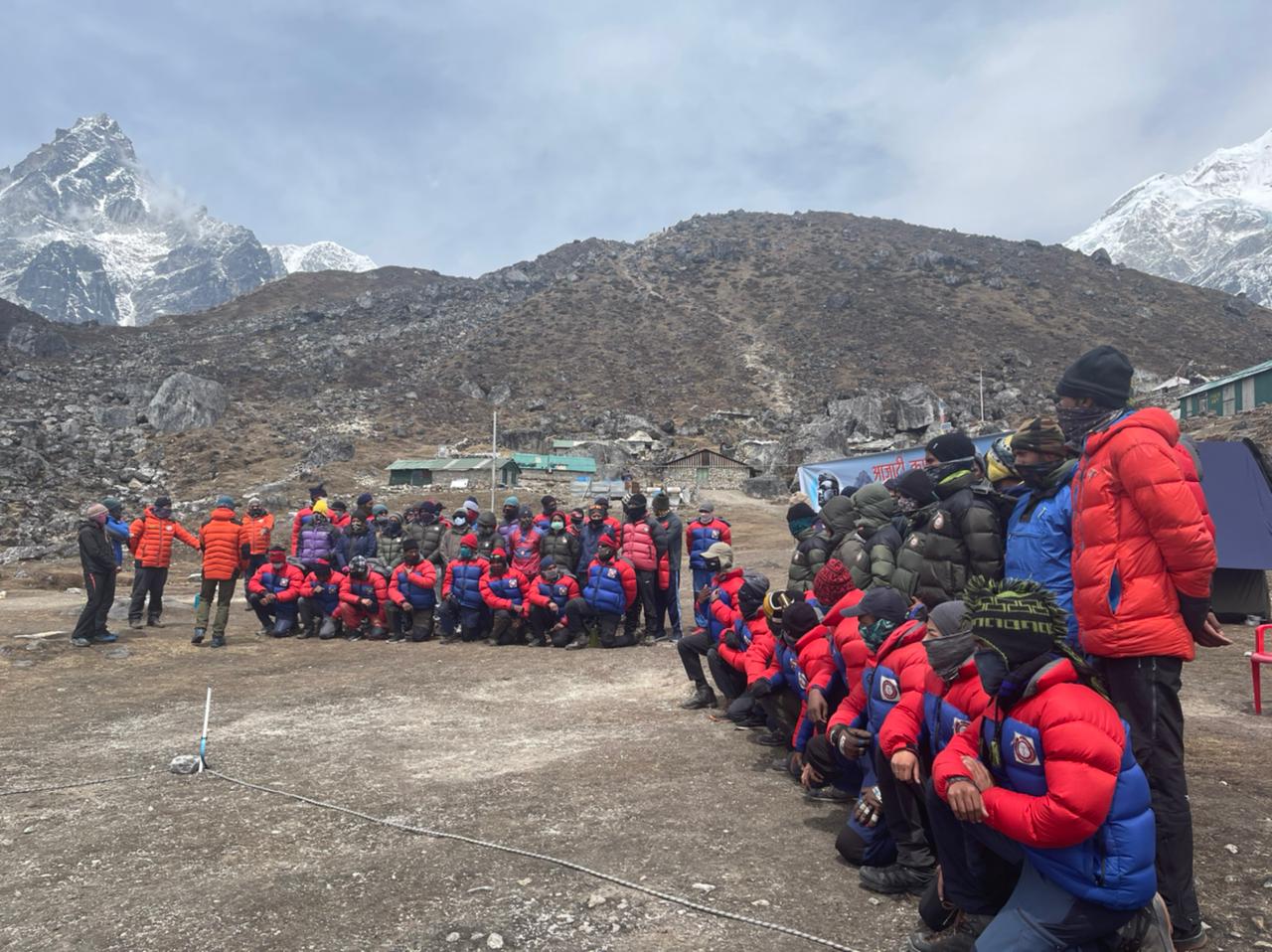
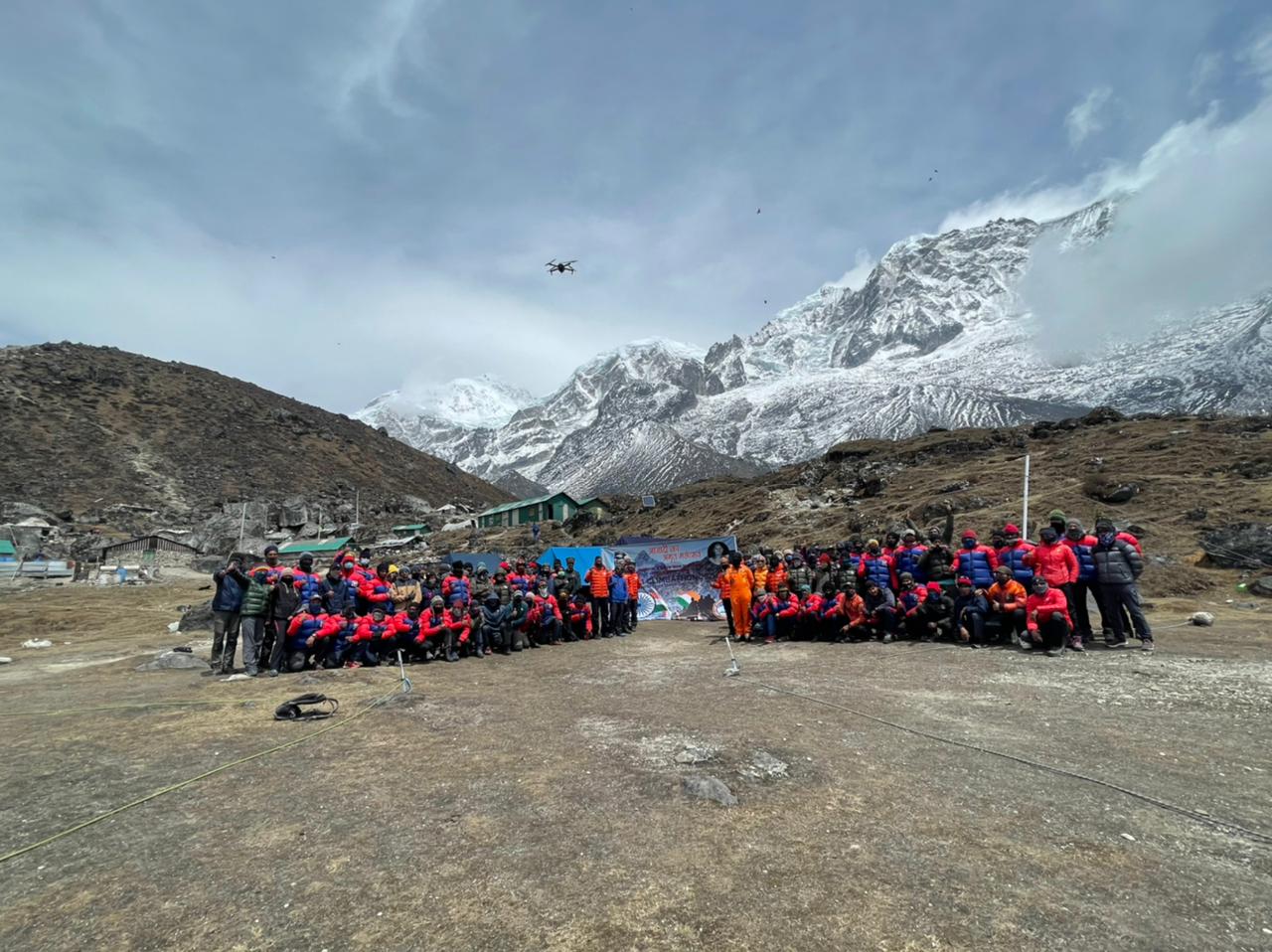
The graduation day: On the 21st of April, we have our graduation day at the base camp. The first of its kind, our batch creates history by becoming the first batch to graduate at the base camp with the AMC group as well. Post graduation, I feel super sick and retire to the Tisco Hut. Late in the afternoon, I’m diagnosed with a fever of 102 degrees. A list is made of students who will be sent down first thing the next morning and I’m topping the list. By nightfall, my fever comes down to 99, and my name is taken off the list (luckily), while 6 of our not-so-lucky friends are sent down the next morning.
The strength of our batch is down to 50 people now, the remaining 20 have either been sent back down because of high fever or injuries.
Rope 1 🙂
Our entire batch, me sitting on the far right with the mohawk
BMC 343 and a drone
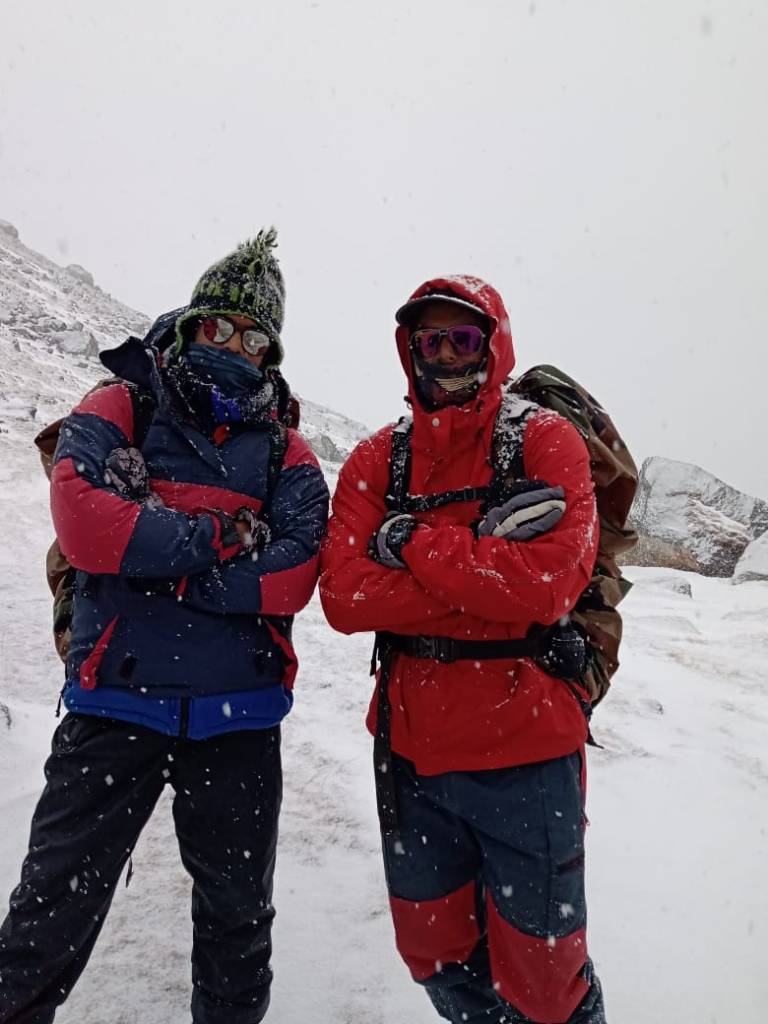
The blizzard: On the 22nd of April, we walked towards the advanced base camp for a long rappelling session. It’s snowing throughout the walk, which slowly turns into a blizzard. We’re an hour away from the rappelling rock, but our course director decides to turn us back (good call). But hey – there’s a surprise waiting for us, our batch needs to ferry the AMC batch’s load back to the base camp. Still recovering from the fever, I hold on to the rear of a ladder while Ani takes up the front, and we trudge back towards the base camp.
I lost count of the number of times I slipped and fell that day. Slipping and sliding and throwing the ladder down the slopes, we finally make it to base camp. Some people carried gas stoves, gas cylinders, and what nots back to the base camp. Mad respect for them.
This was by far the hardest day of the course, we basically got to experience an expedition that day. It was also the most beautiful day of our course, the storm cleared up in the evening to beautiful golden skies and a starry night.
Me & Ani posing before the blizzard struck
Our pretty little hut
Me and Dee
The golden sunset
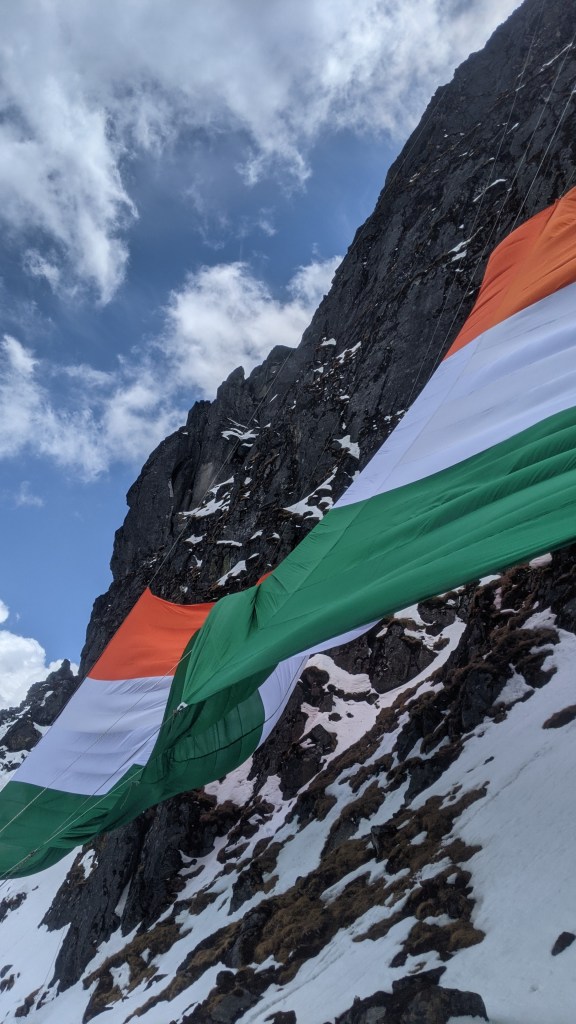
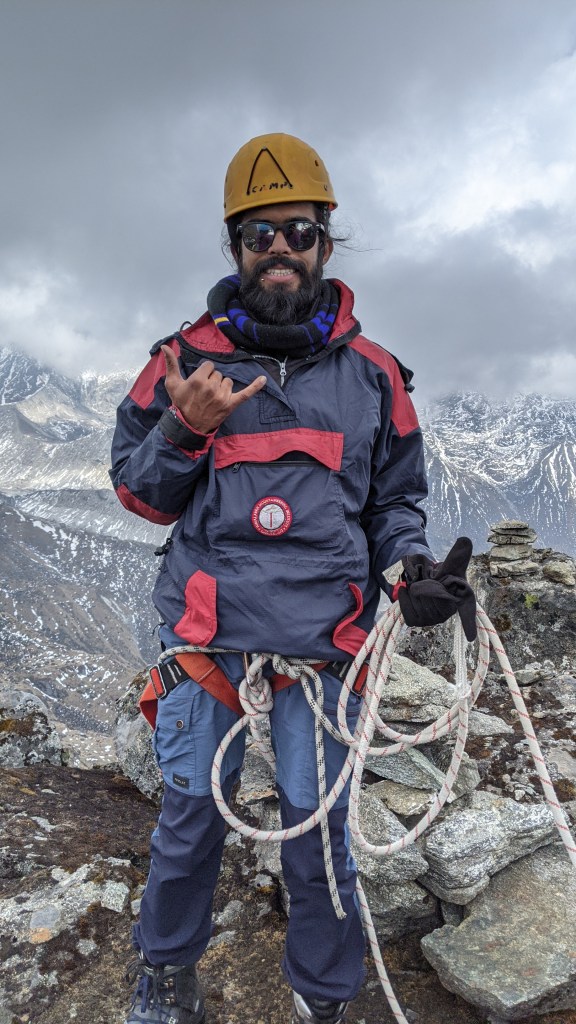
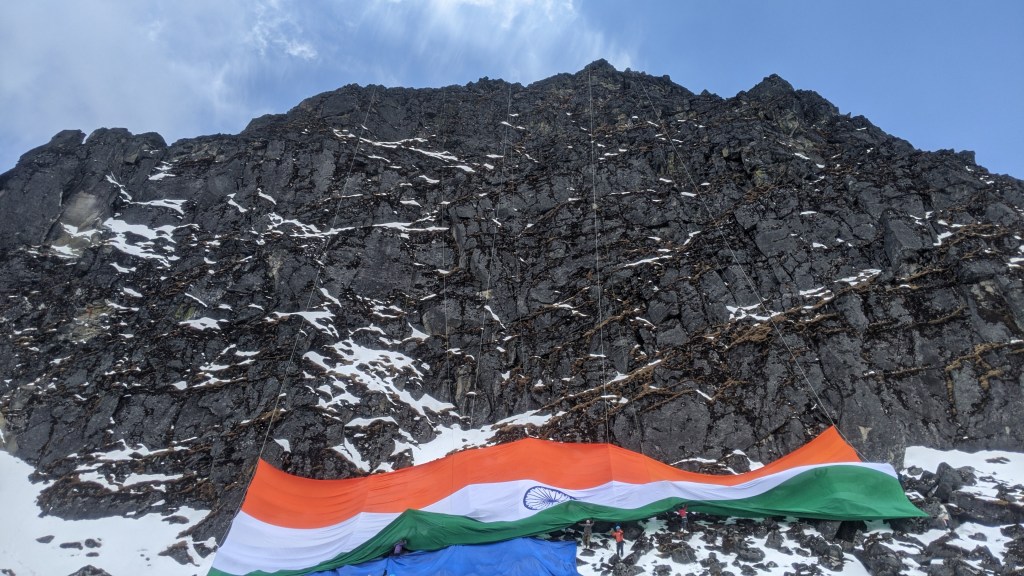
The summit day, 25th April: The BMC batch got to summit Mt Renok which stands at a height of 16,500 ft. It was a fun day, the climb was easy and also marked somewhat of an end to our course. Apart from the summit, we also got to unfurl a massive Indian flag at the base of the mountain, which seemed to be a greater task than summiting the mountain itself. I would personally have climbed Renok twice, rather than spend time and energy unfurling giant flags for social media validation.
Unfurling a giant Indian flag atop Mt Renok
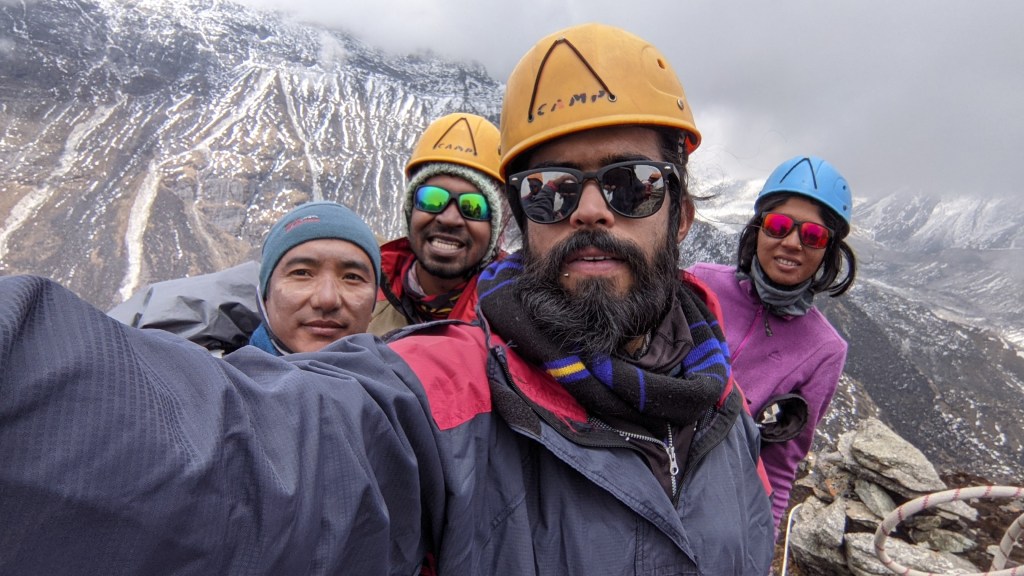
At the summit
❤
With Umesh sir, Lt. Abhijeet and Vandana
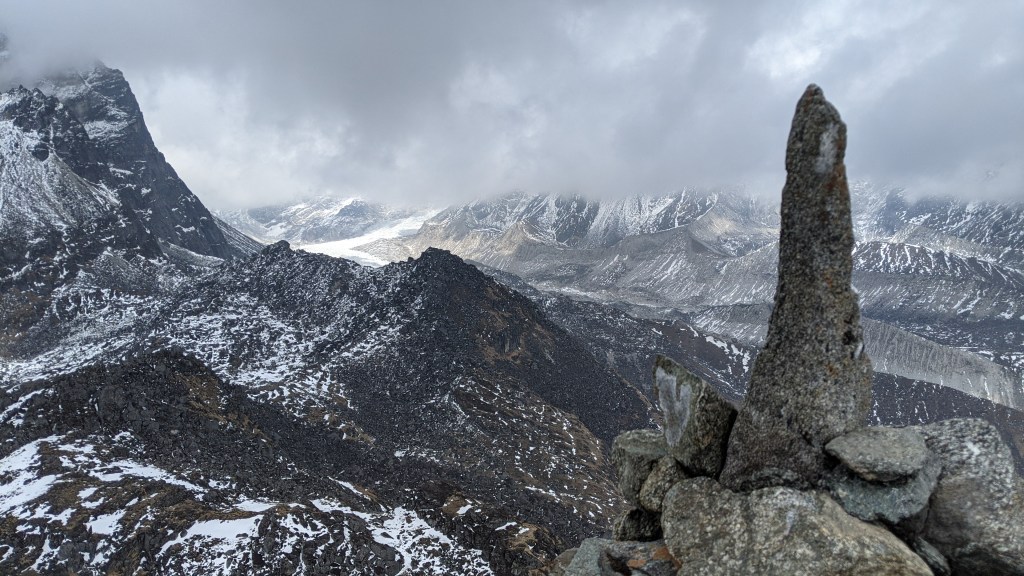
View from the top of Mt. Renok
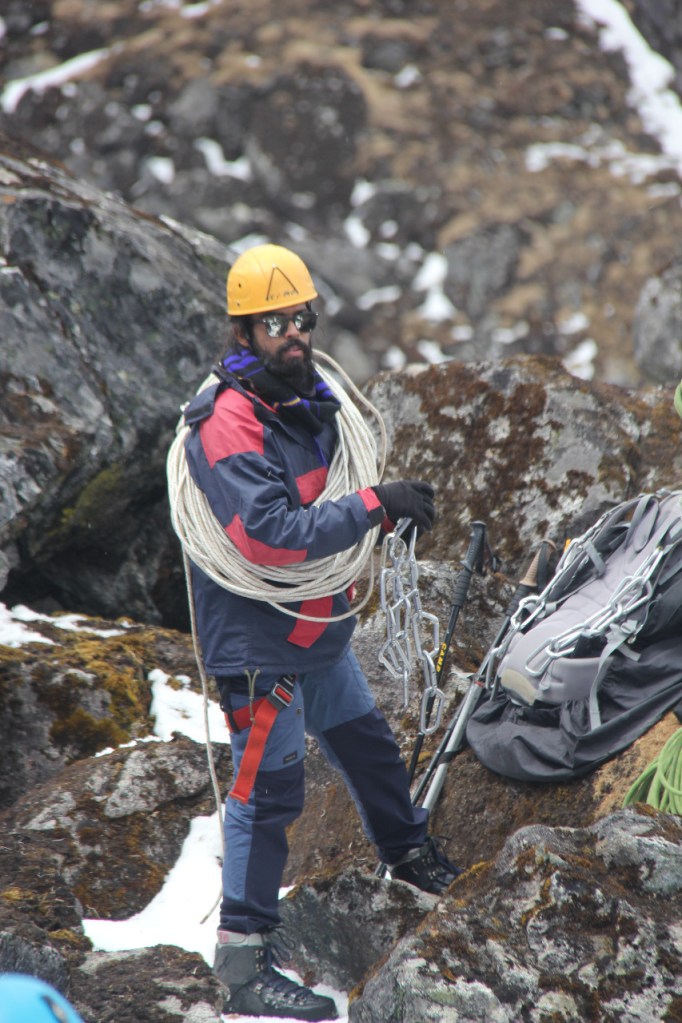
Coiling a 100mtr rope for the flag
THE COLOURLESS
On the 26th of April, we start the walk back to Tshoka, a total of 22kms. Walking downhill is the worst, too much pressure on the knees which start to hurt eventually. Also, there’s no real motive or drive that leads me on. This is by far the worst day of the course for me. The rucksack feels heavier, and the body seems tired, but still I try to stick with the group at the front. We make it to Tshoka early in the evening, and everyone gets busy calling up their families and friends.
During the 2 weeks that we were up in the higher mountains, the pandemic went raging across the country with active numbers jumping to 4,00,000 per day. The mood is quite tense.
The hut at Tshoka
This picture captures the true essence of the walk back
Tshoka’s tiny lake
On the 27th, we leave Tshoka for Yuksom. The first batch reaches Yuksom around noon, and it’s a full blown party with Coke and chips and high fives flying around. There’s a sense of achievement and relief. Relief that we won’t have to carry that goddamn rucksack anymore. People are still pouring in an hour later, and we have our final lunch at Yuksom and move back to HMI in our rented cabs.
Vivek sir & me
Me with Vanna Ram, Ani & Shivam
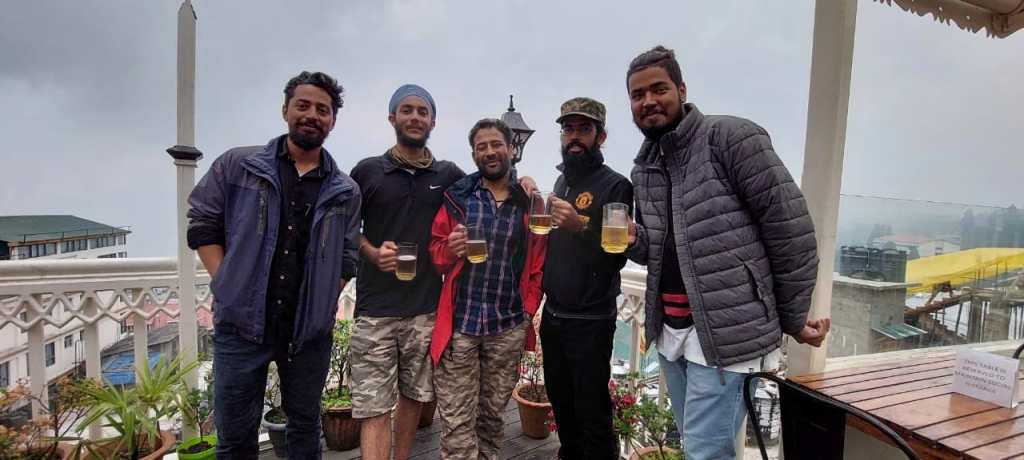
The institute makes sure all the students leave the next morning, largely due to the pandemic which is at its full blown capacity outside the gates of the institute. We say our hurried goodbyes, submit our final equipment and head out for a chilled beer.
Riding out of the institute
the empty room no.6
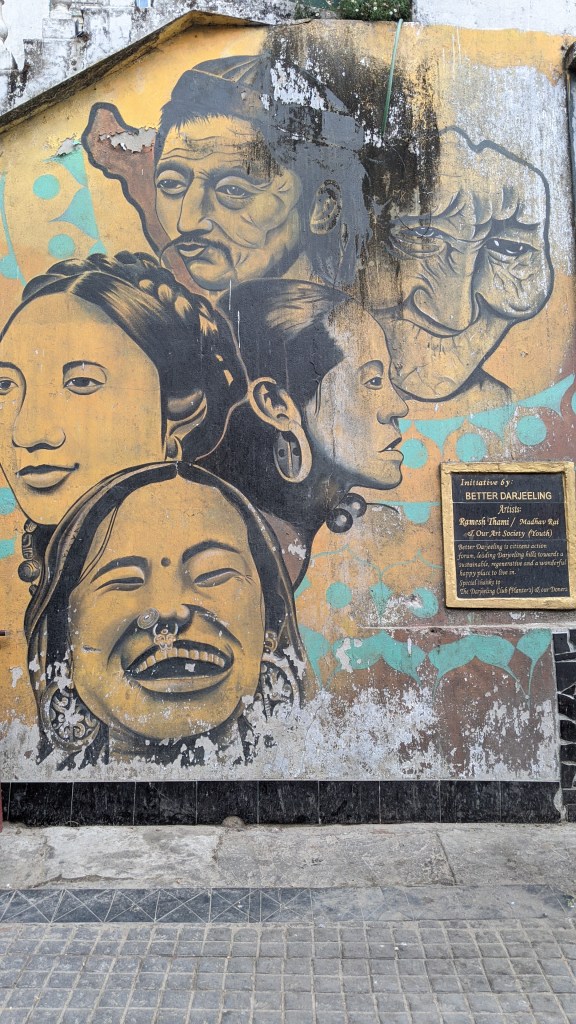
Wall art of Darjeeling
Final day at Glenary’s
BMC 343 will be remembered as the only course to graduate at 14,600 ft at the base camp, and a course which went through in spite of the COVID-19 pandemic. Although a few of our comrades had to return midway due to contracting the virus, 50 of us were able to complete it. There was a lot of love, and memories that will be shared for years to come. Met a lot of amazing people who were like family.
Sharing a space with 50-odd people for a month isn’t easy you see, especially if people don’t change their socks much (you-know-who-you-are).
The OGs
My favourite picture of our batch and HAPO, at Dzongri top
Day 1 – Delhi to Shimla, 351 kms (Saturday, 10.08.19)
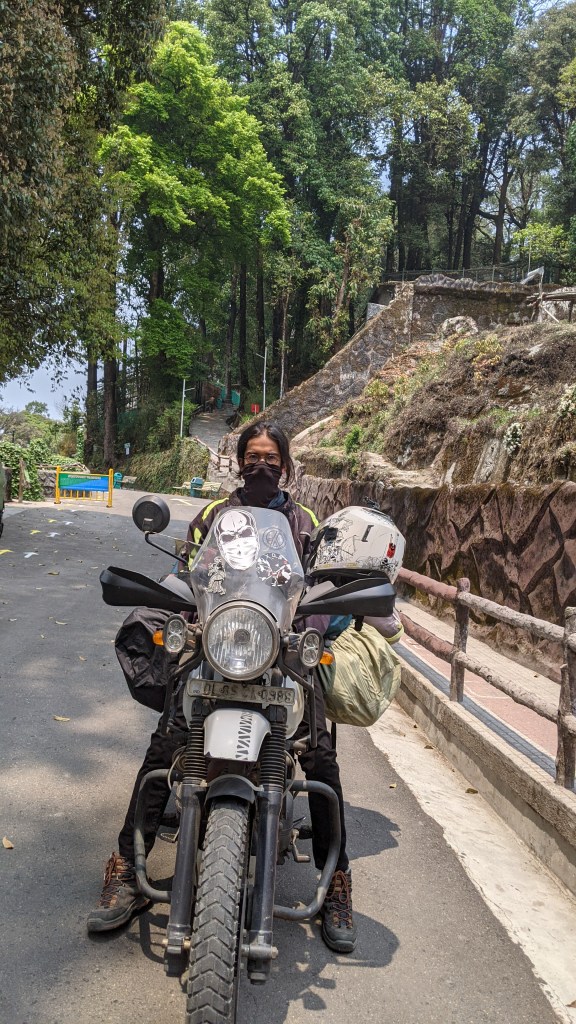
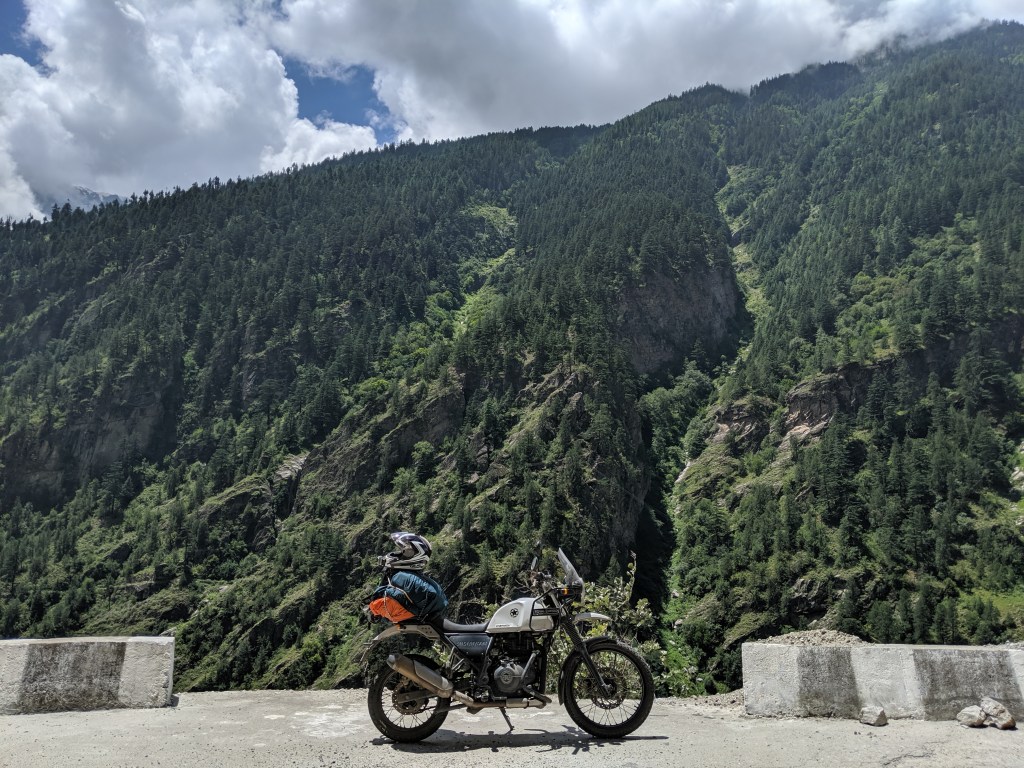
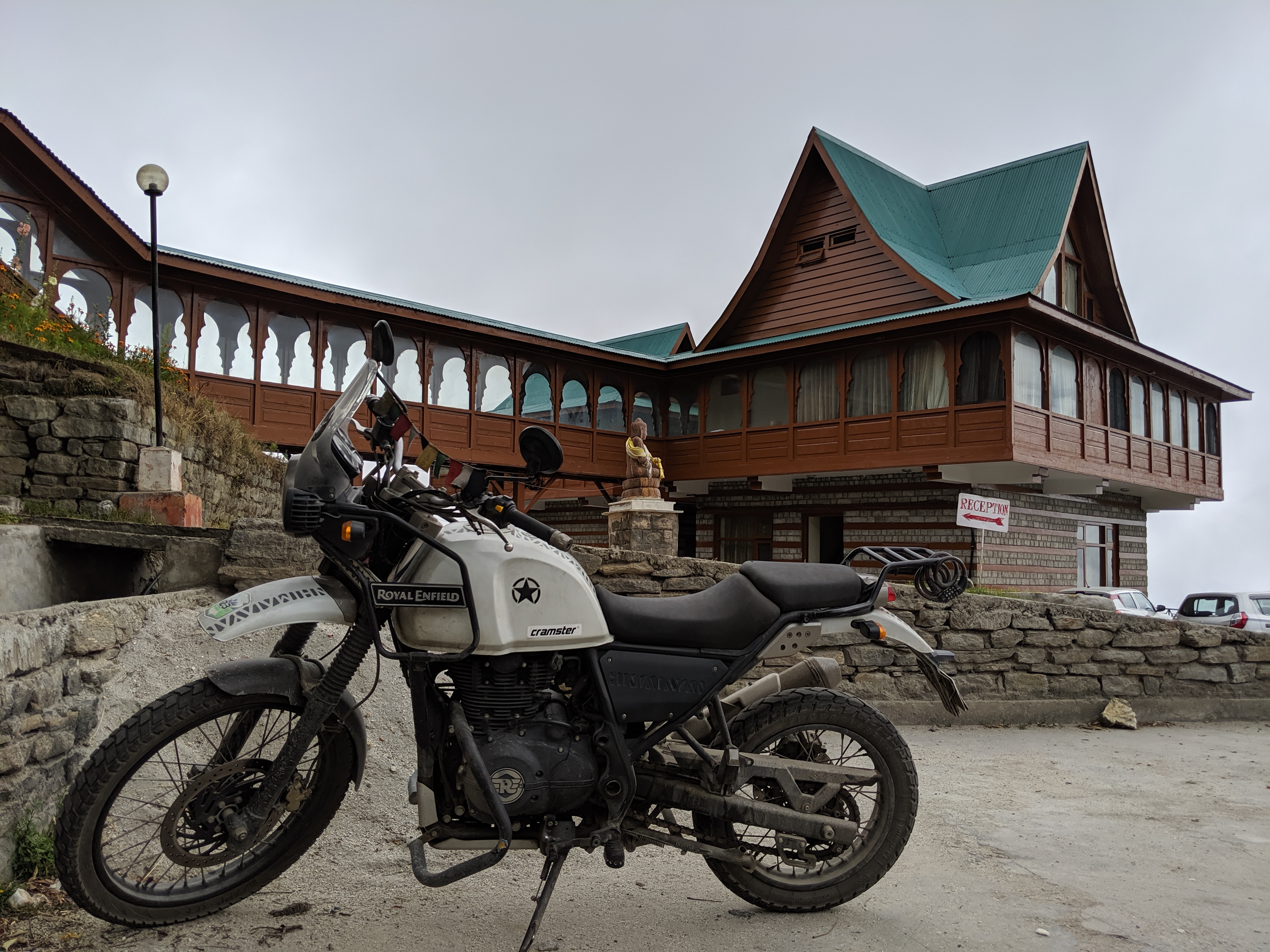
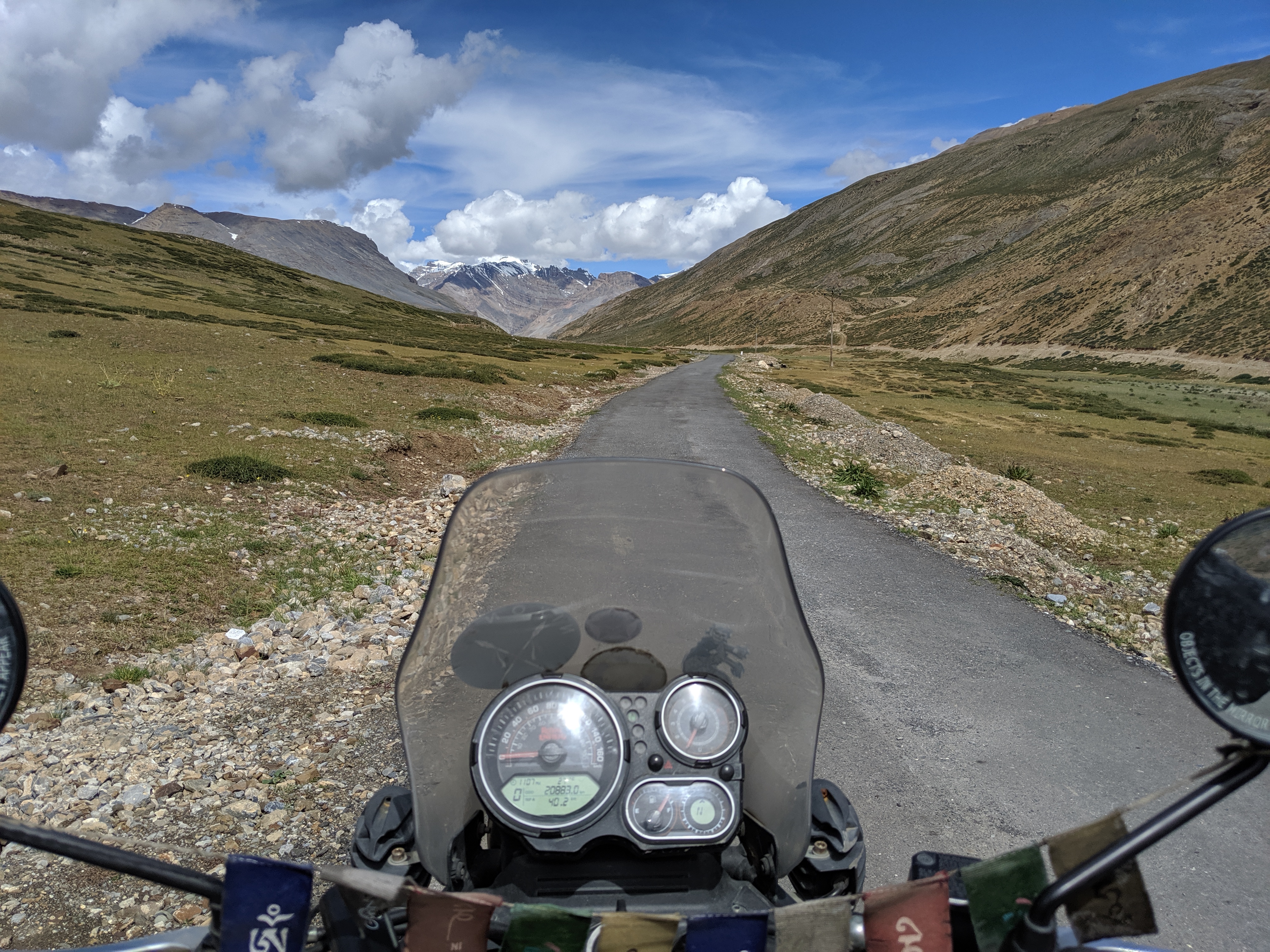
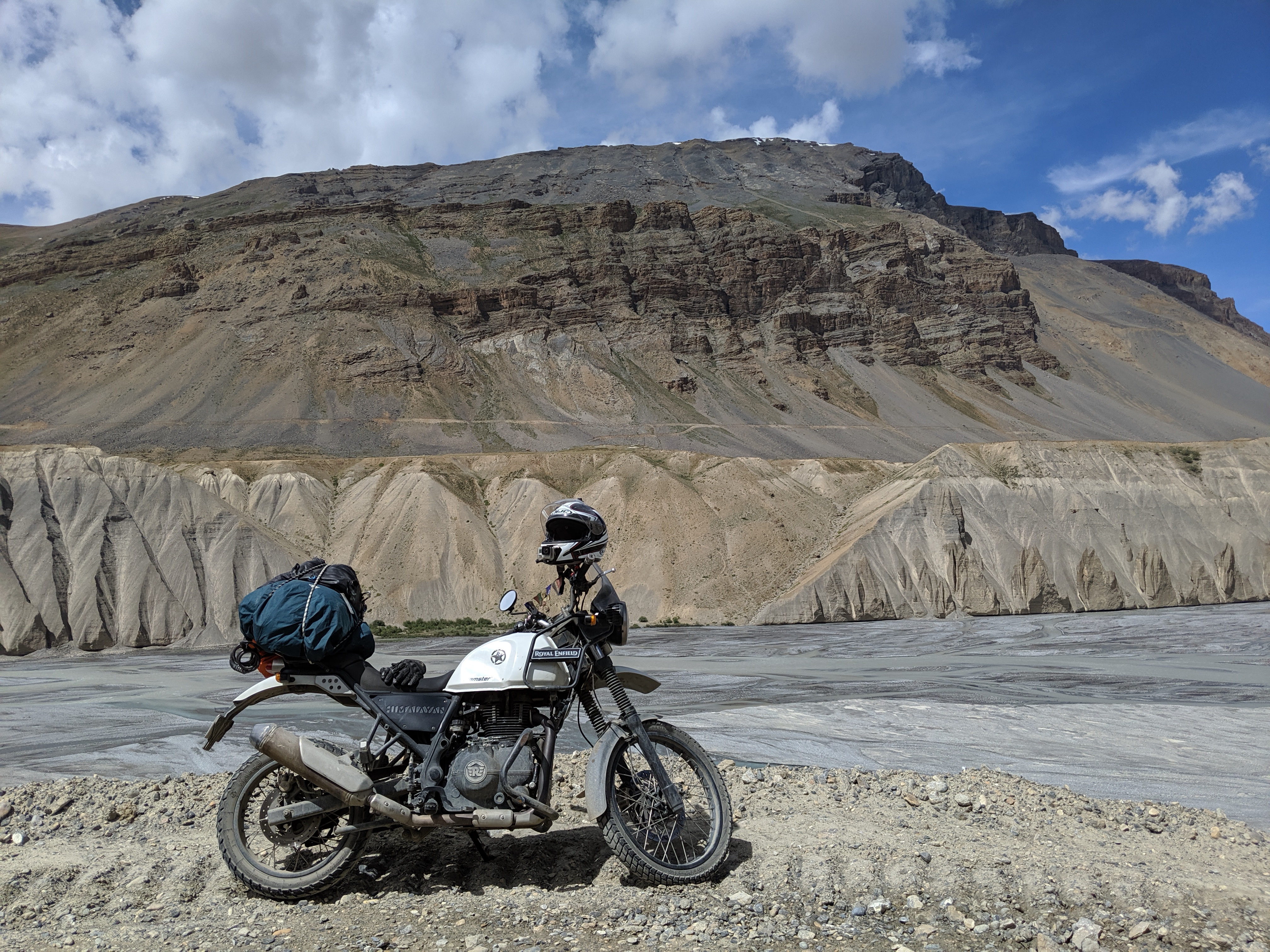
I’m up early, super excited, yet nervous. We (me and Eskimo, a Royal Enfield Himalayan) ride out of the city soon taking breaks occasionally. Orange juice by the Delhi-Chandigarh highway acts as good fuel for the body.
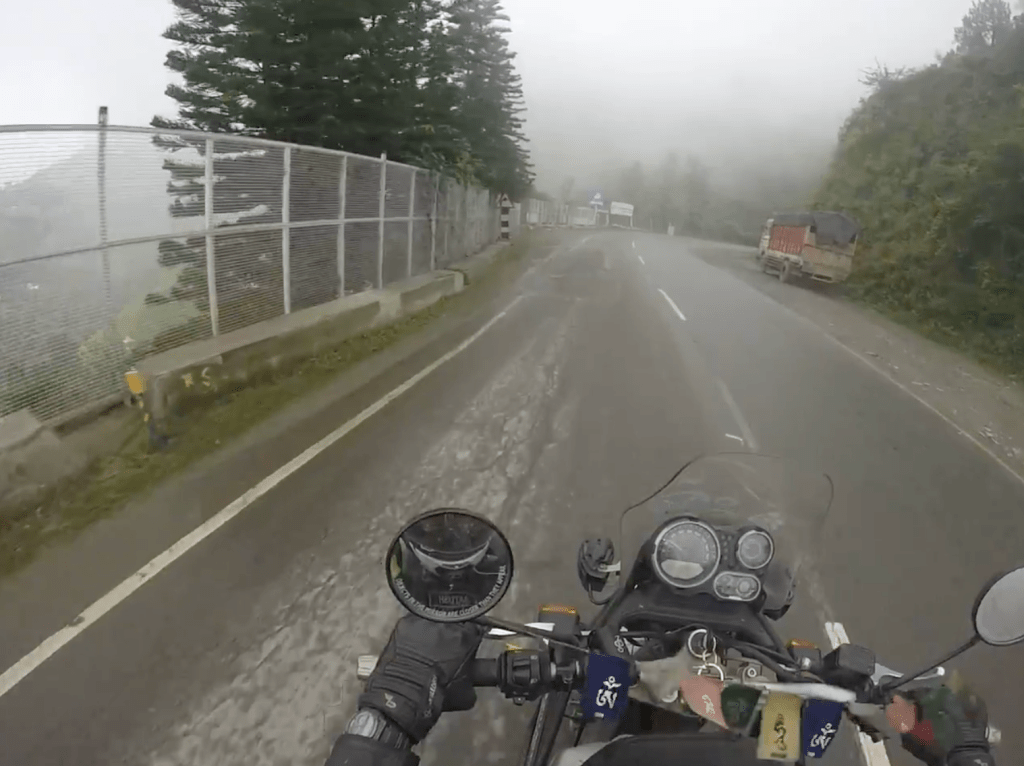
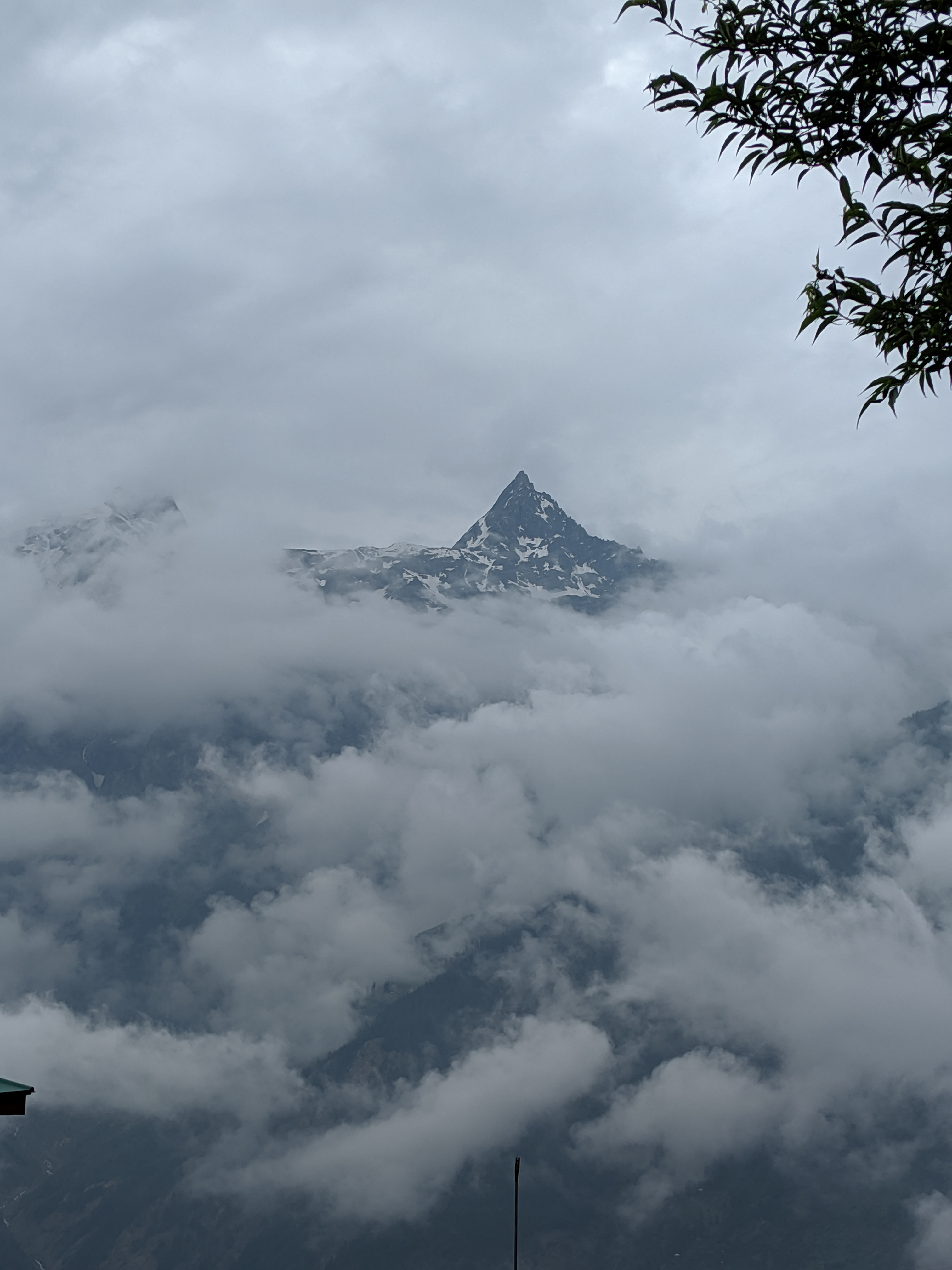
Welcoming the misty clouds right before Shimla
My first stop is around 1pm – the simple aloo paratha break. A swarm of around 10-15 people come and start posing with the bike. Around 2:30pm we enter into the mist and very light rain. Shimla isn’t too far now, and I reach my friend’s place around 4pm. Back at his place after 11 years, how time flies.
The evening follows with momos and beer, and home-cooked food to end the day. A good start to the ride.
Day 2 – Shimla to Chitkul, 245 kms (Sunday, 11.08.19)
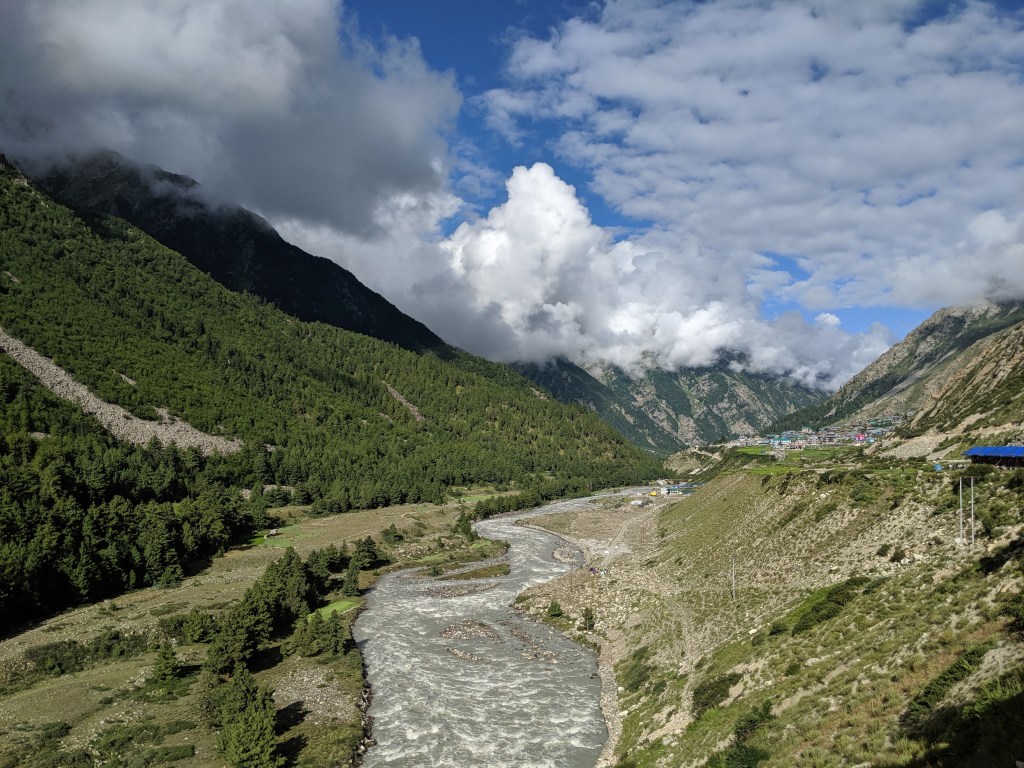
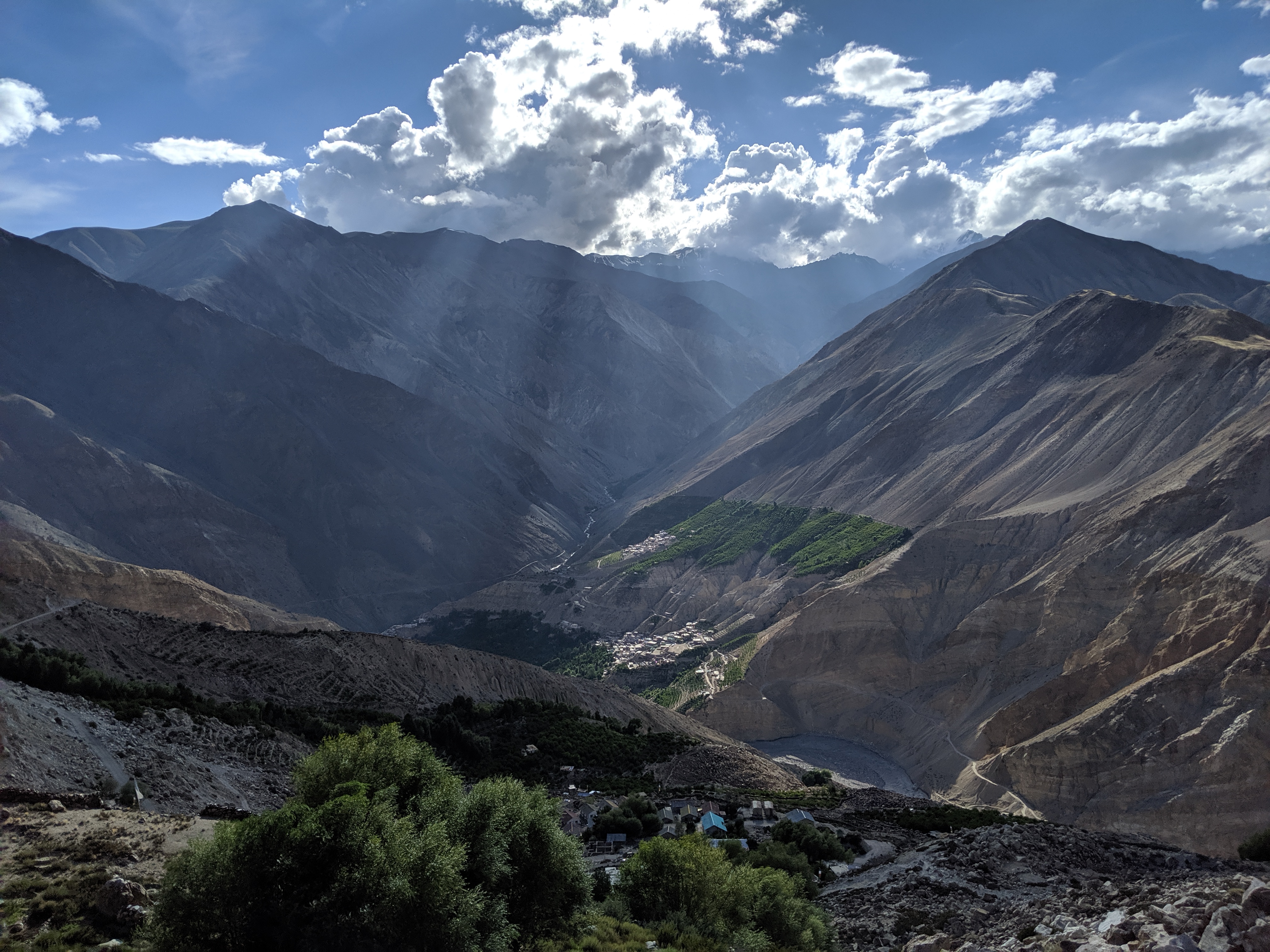
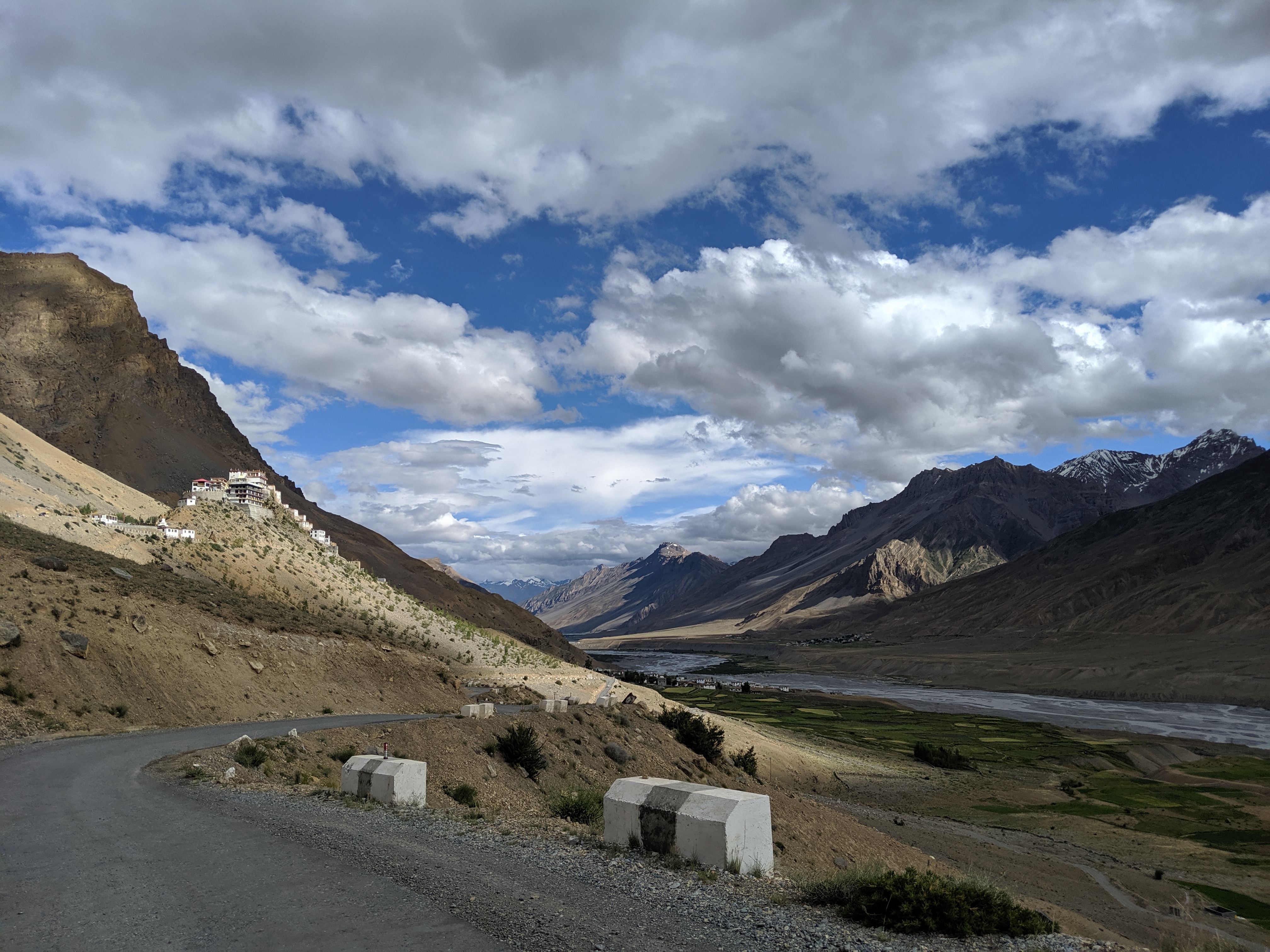
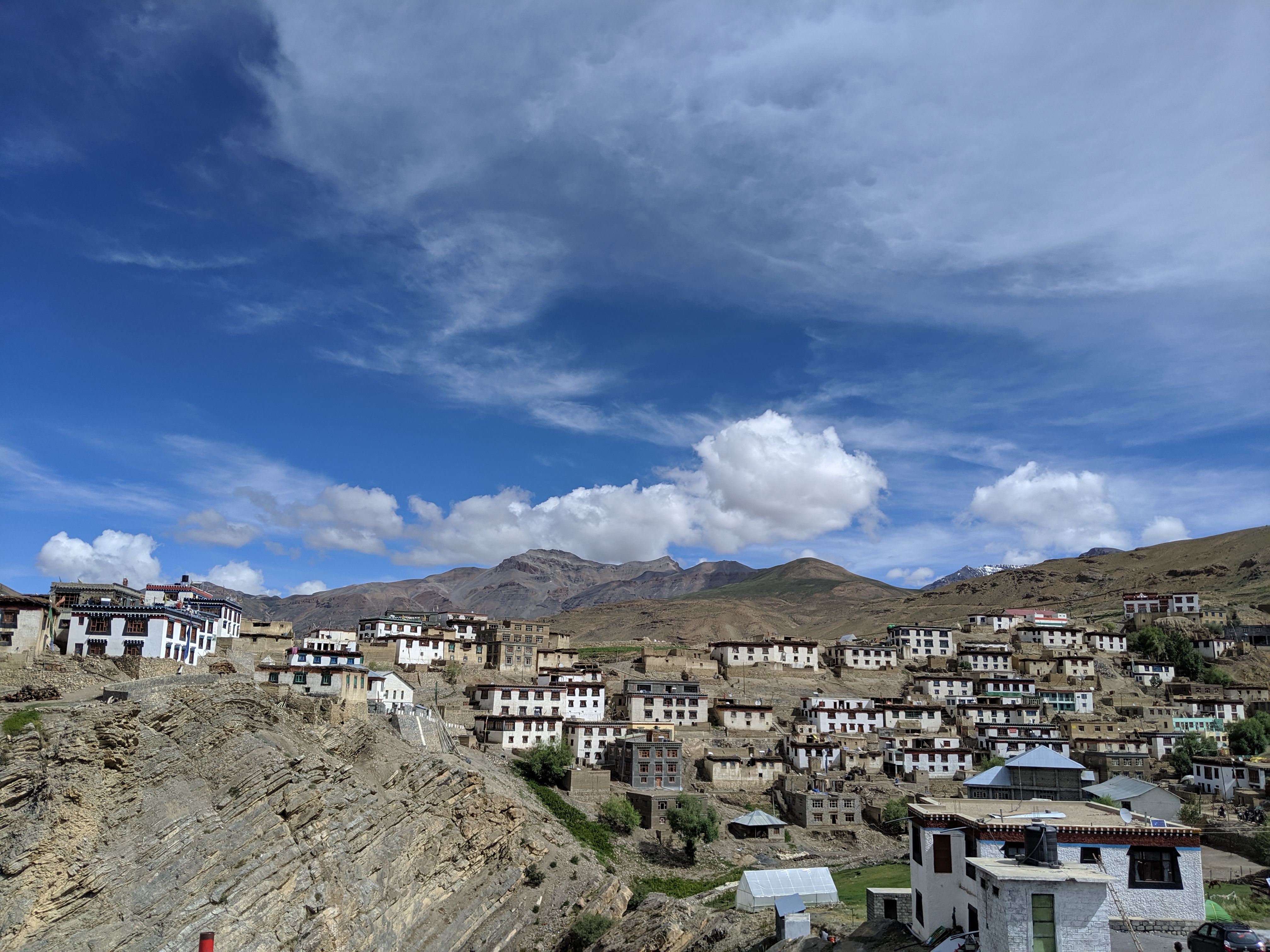
We leave Shimla at 8:30am, and reach Narkanda around 10:20am. The roads are quite nice so we can maintain a steady pace. Post Narkanda, I take my first break for the day at 11am. We cross Rampur at 1:30pm and end up reaching Sarahan, but somehow change my mind midway and come back down to head to Sangla instead. Reaching Sangla around 4pm, we take an hour long break soaking in the view from the tiny viewpoint hut just beyond the village.
Reached Chitkul around 6pm, and luckily get myself a tent to stay in, just beyond the village. My friendly next-tent neighbours offer me whiskey so I joined them for a couple of drinks. People seem to be genuinely intrigued by solo riders I guess.
We talk about life that night where they tell me about their friendship of almost 25 years, of how they never chased their dreams, never switched their jobs, that I’m lucky to do what I’m doing. To do what I want to, to travel the world and to live a life that they only ever dreamt about.
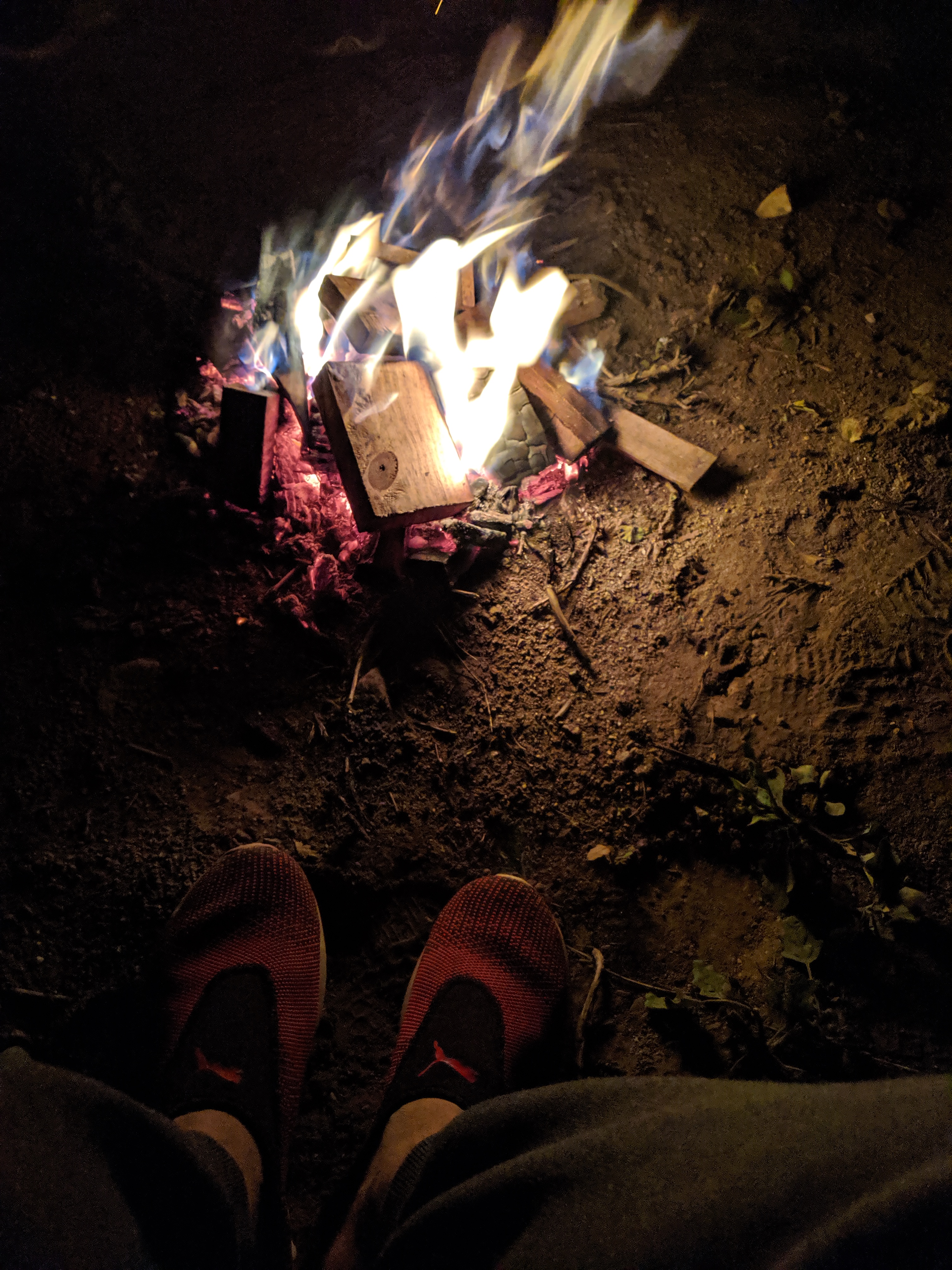
A simple dinner (dal, chawal, roti, sabzi) follows and I take leave. I warm myself up as much as I can next to the bonfire and I retire for the night.
Day 3 – Chitkul to Kalpa, 70 kms (Monday, 12.08.19)
The next morning, post breakfast, I pack my bags, and head to the army Checkpost about 1-2 kms ahead of our campsite. Made the mistake of wearing my motorcycle gear and walking, and I start to sweat within 5 mins. I can’t make it to the Checkpost because of the heat, so I stop at a distance – from where I can see the end of the road and spend some time with two super naughty / sweetest kids. Walk back to the tent, pick up Eskimo and head towards Kalpa now.
We reach the petrol pump before the detour for Rekong Peo around 12:45, and now Eskimo doesn’t start. Fucking hell. The ignition wire is cut, and it snaps off whenever I twist the handlebar. I end up getting help from another group’s recovery van. Get my bike started, and move up towards Kalpa. There’s a traffic light in the middle of nowhere and I end up missing it, and get fined Rs. 500.
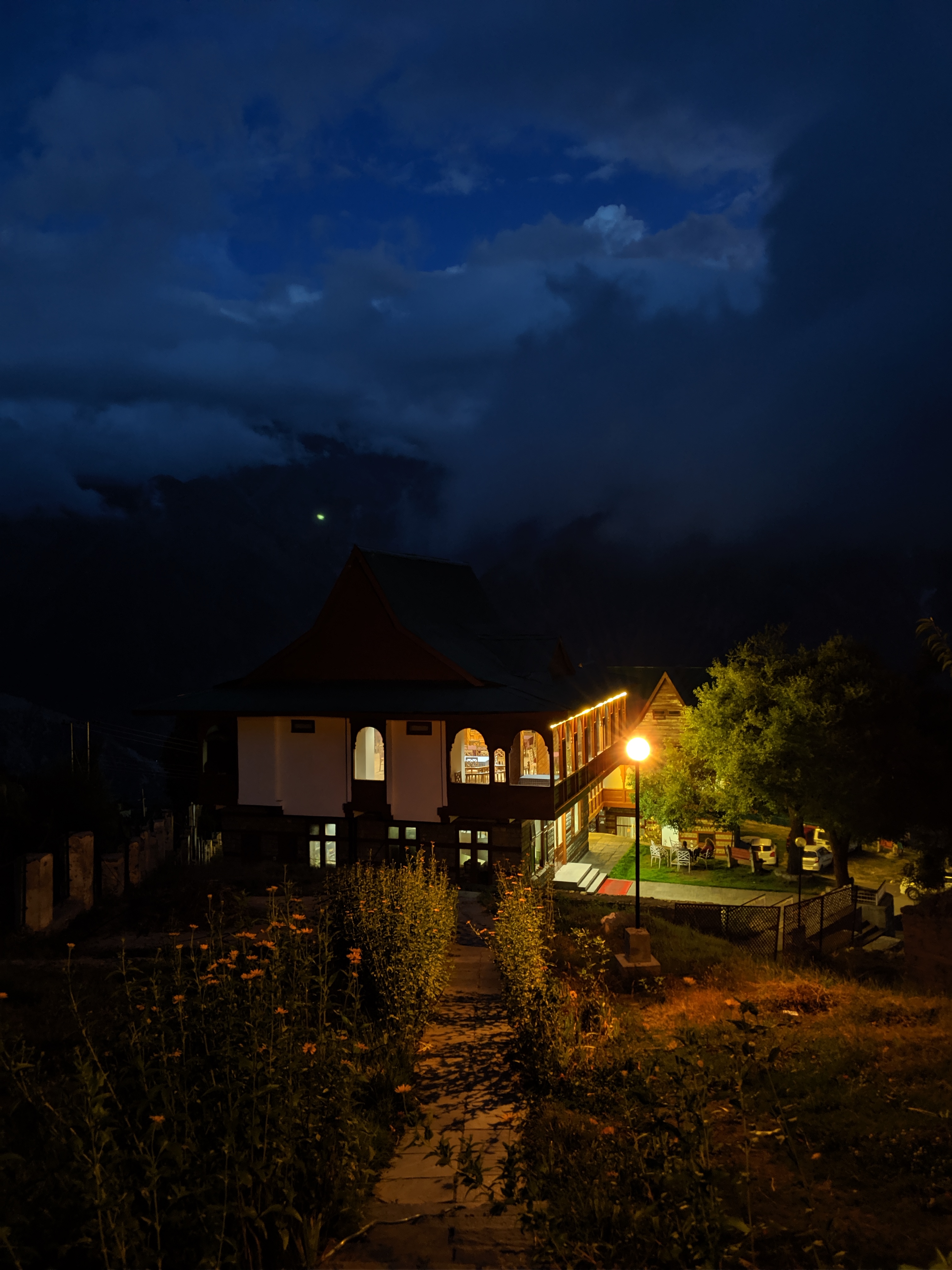
Finally head up to Kalpa and reach the HP tourism guesthouse which is quite a nice property, perched up at the top of hill.
Day 4 – Kalpa to Kaza, 204 kms (Tuesday, 13.08.19)
Woke up early planning to head to the picturesque “suicide-point” at Roghi. But Eskimo doesn’t start again, ignition wiring cutting loose and ending up with a circuit failure blowing the fuse out. I spend 4 hours just trying to fix it enough to reach Rekong Peo where the mechanic is.
Finally reach Peo to the mechanic who gives it a quick fix, and then I head down to the petrol station. Power cut at the station means another 10-15 minutes wait to get the fuel. Finally, start for Kaza at 1:15pm.
Stopping for lunch at 4:20pm at a standalone dhaba – with a group of bikers from Bangalore who are resting at Nako for the day. Their group leader tells me Kaza is impossible to reach tonight, as it’s too far. But instead of backing down, I make up my mind for Kaza, it has to be done now. We cross Tabo around 6:30-7pm, and then we say hello to the rain.
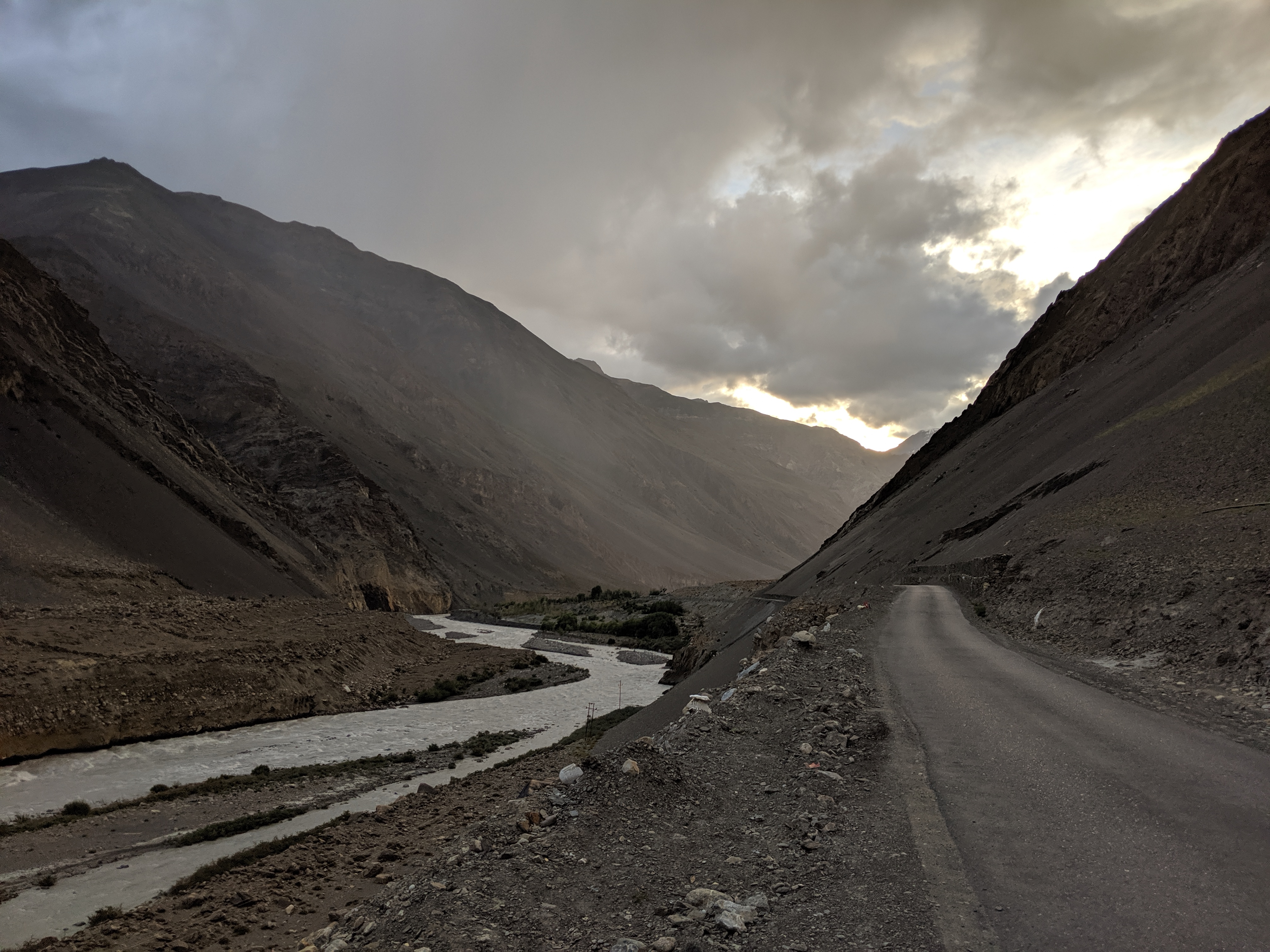
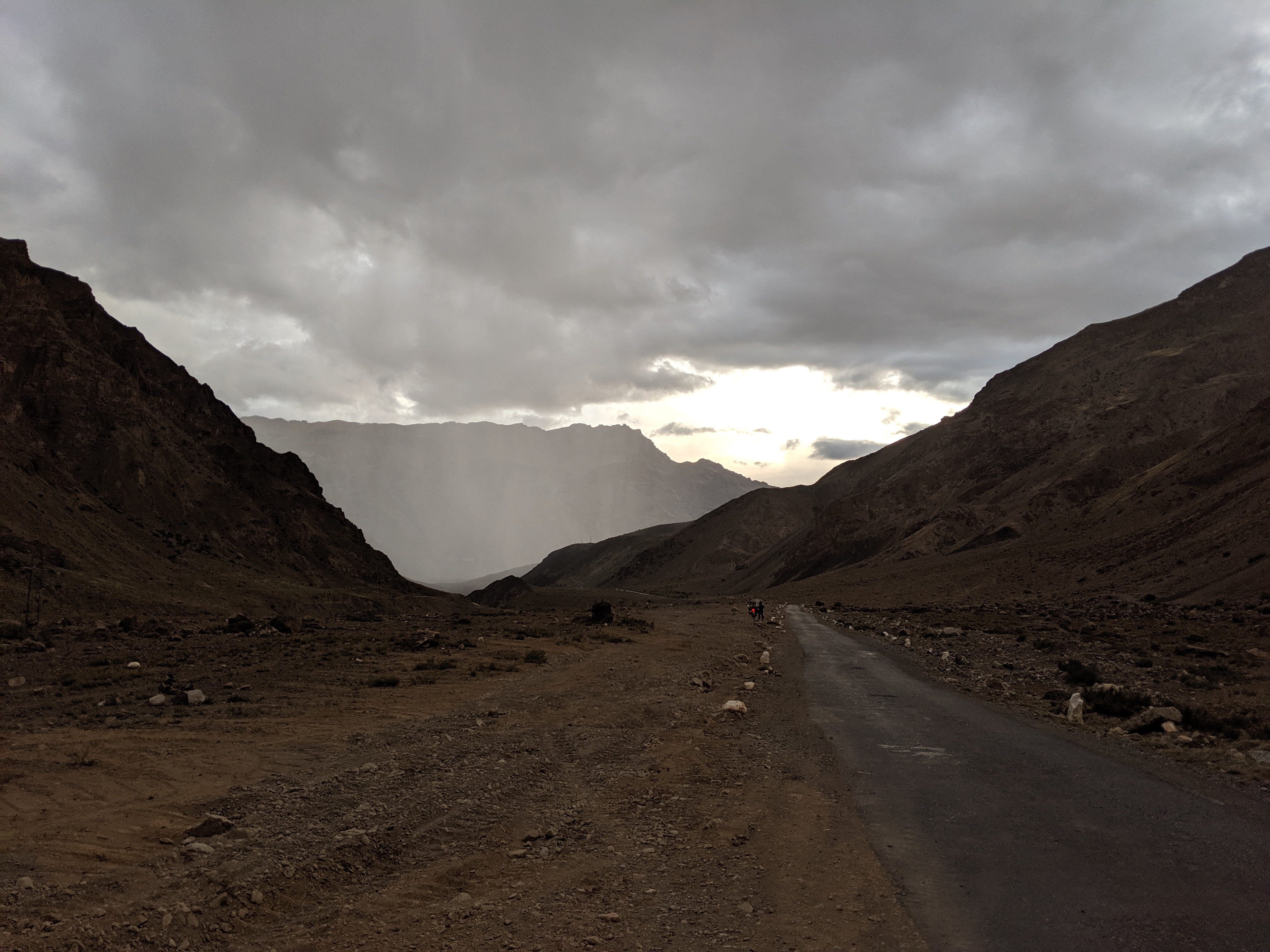
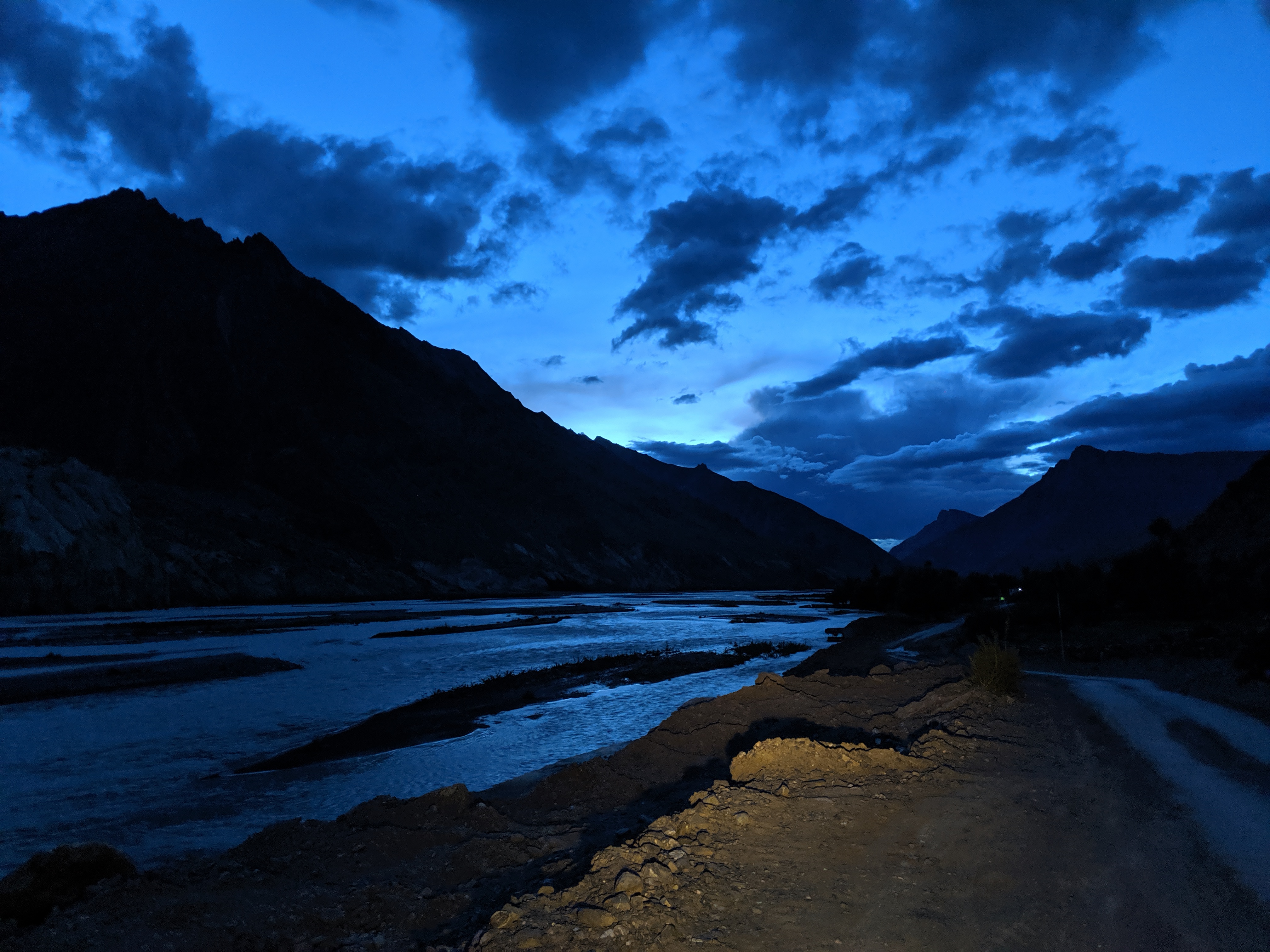
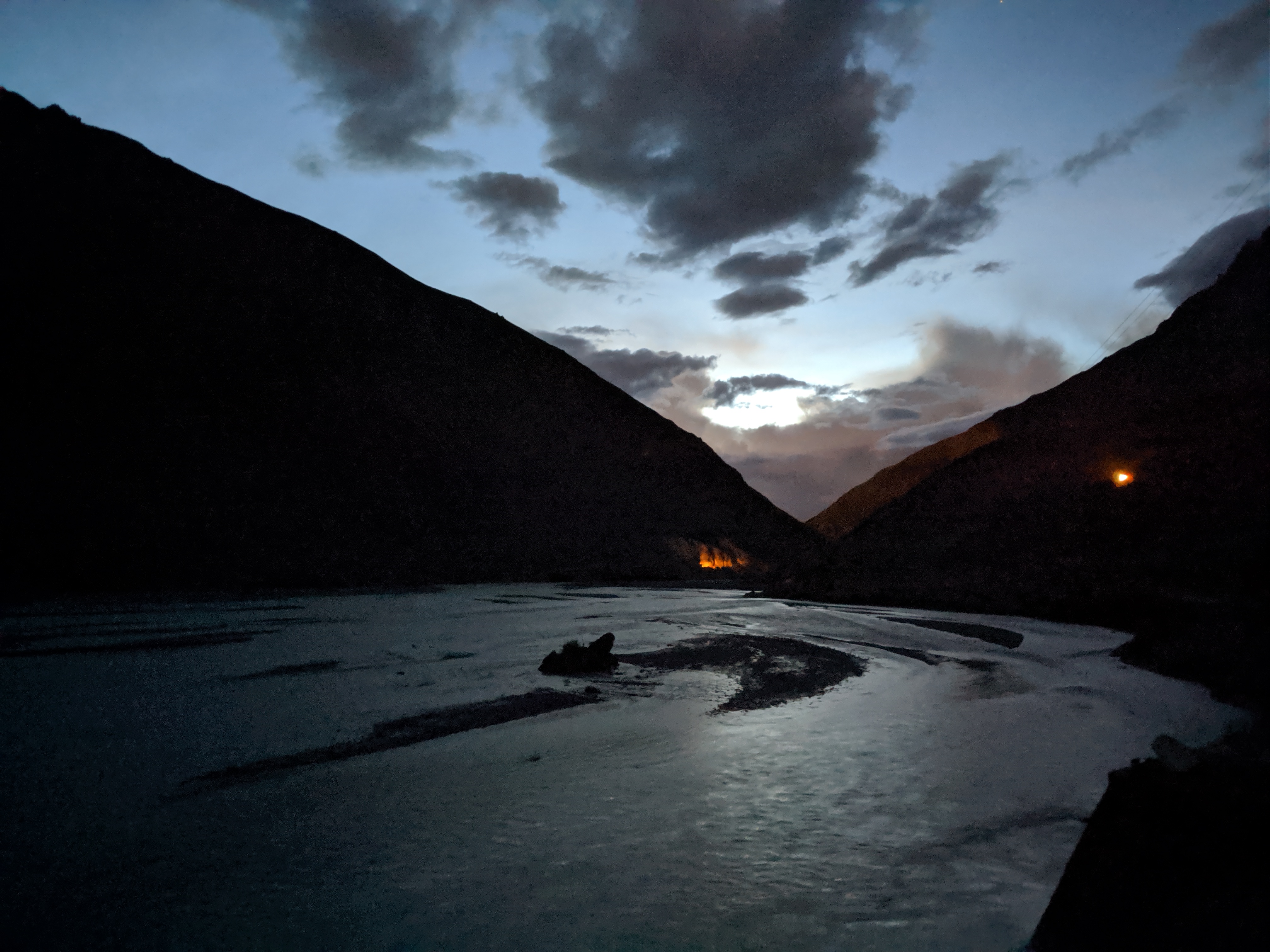
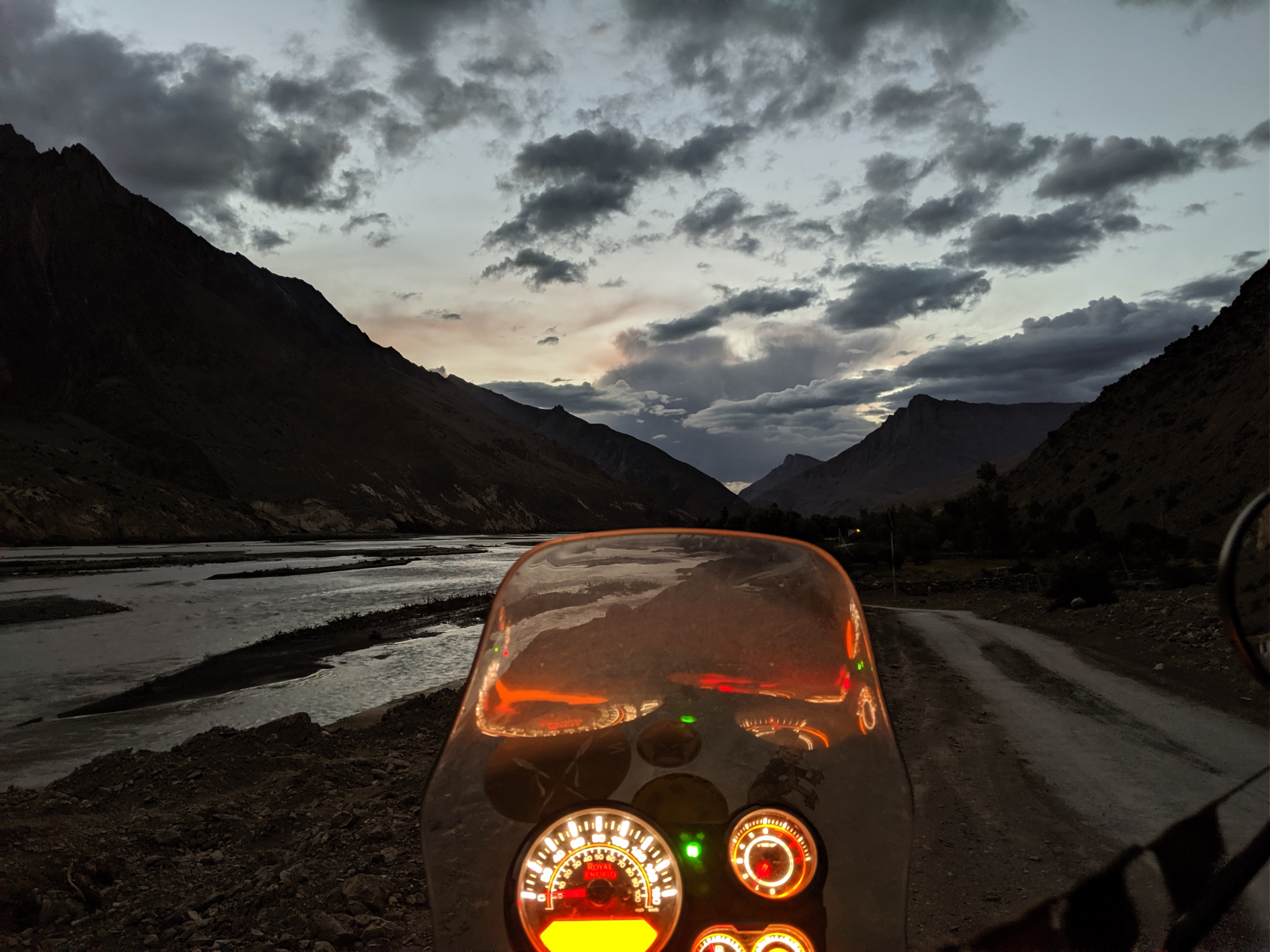
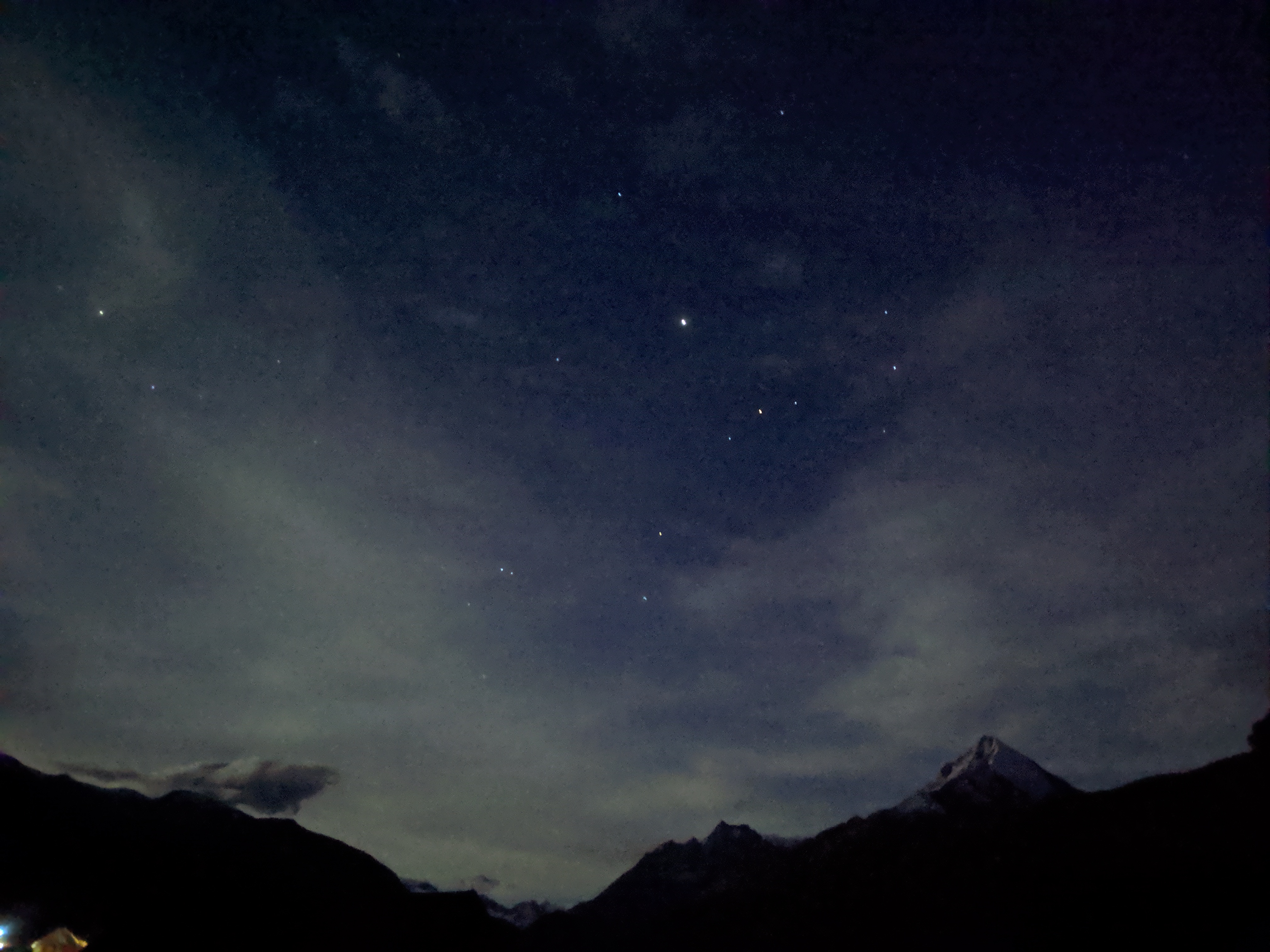
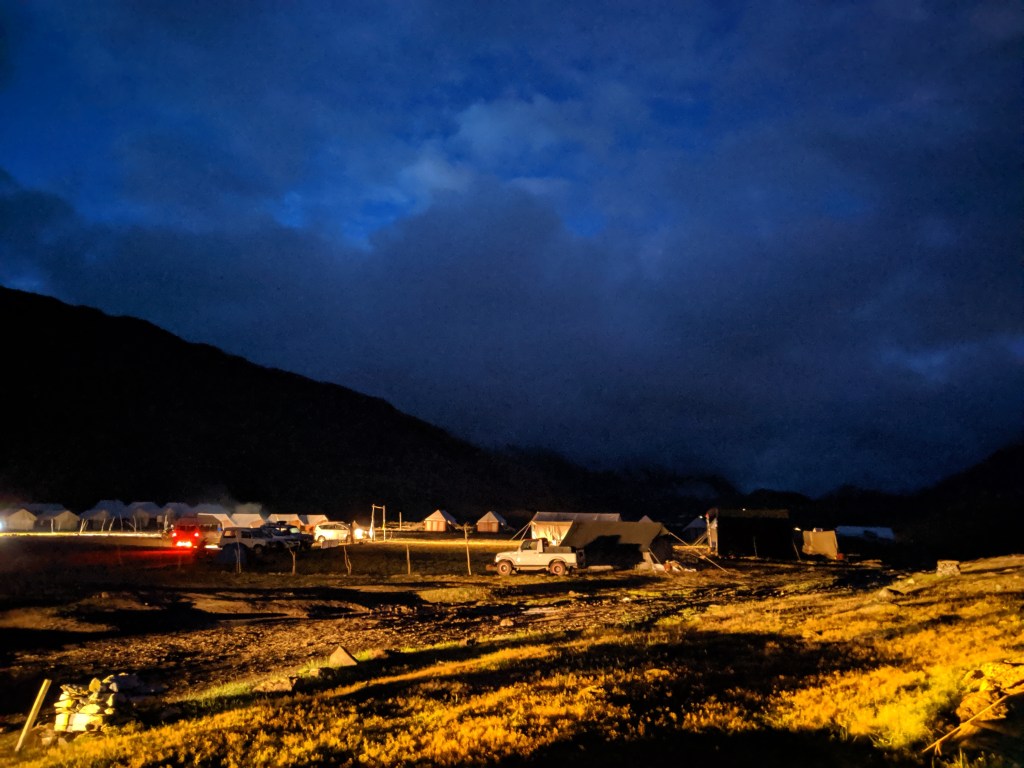
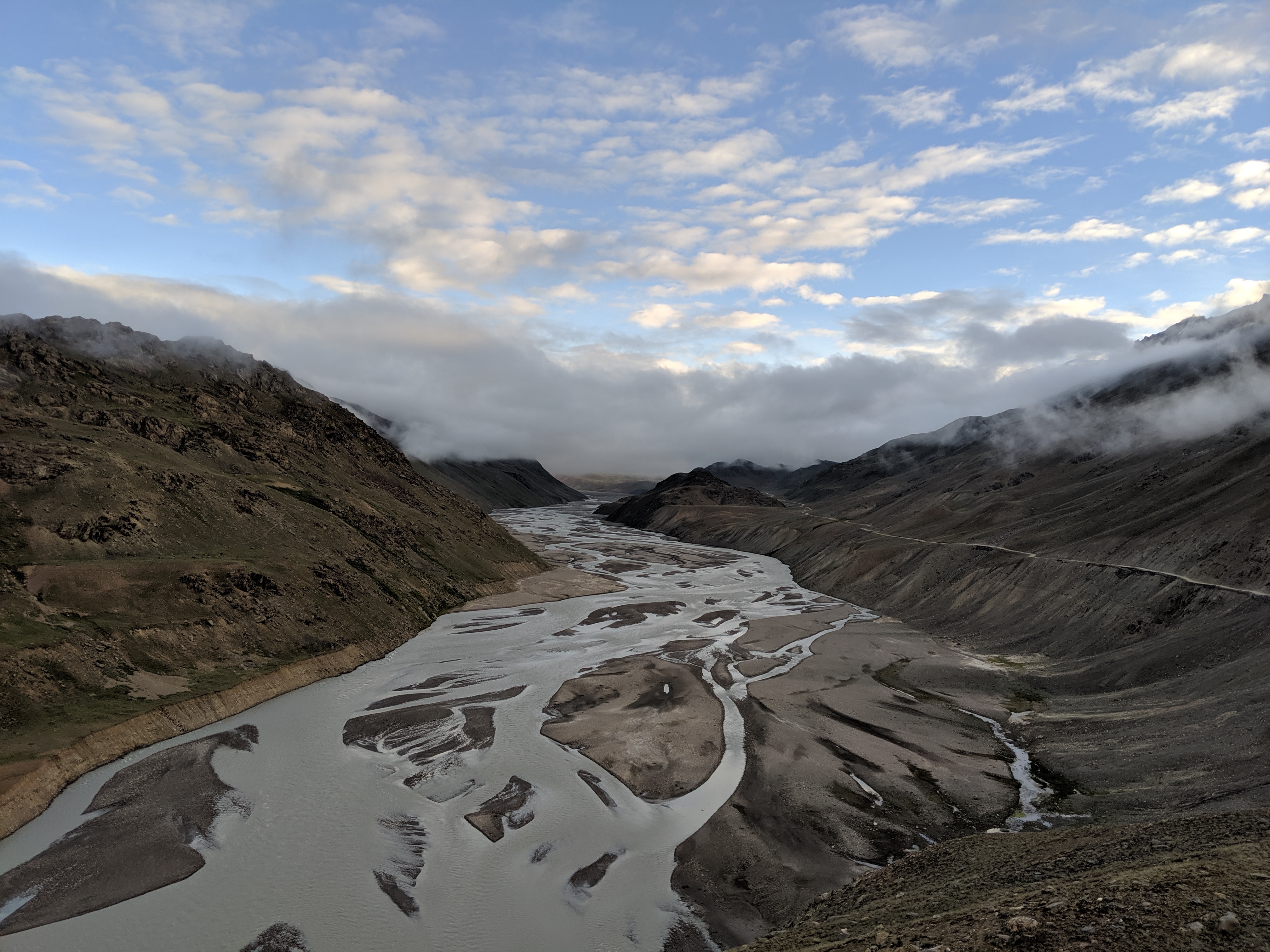
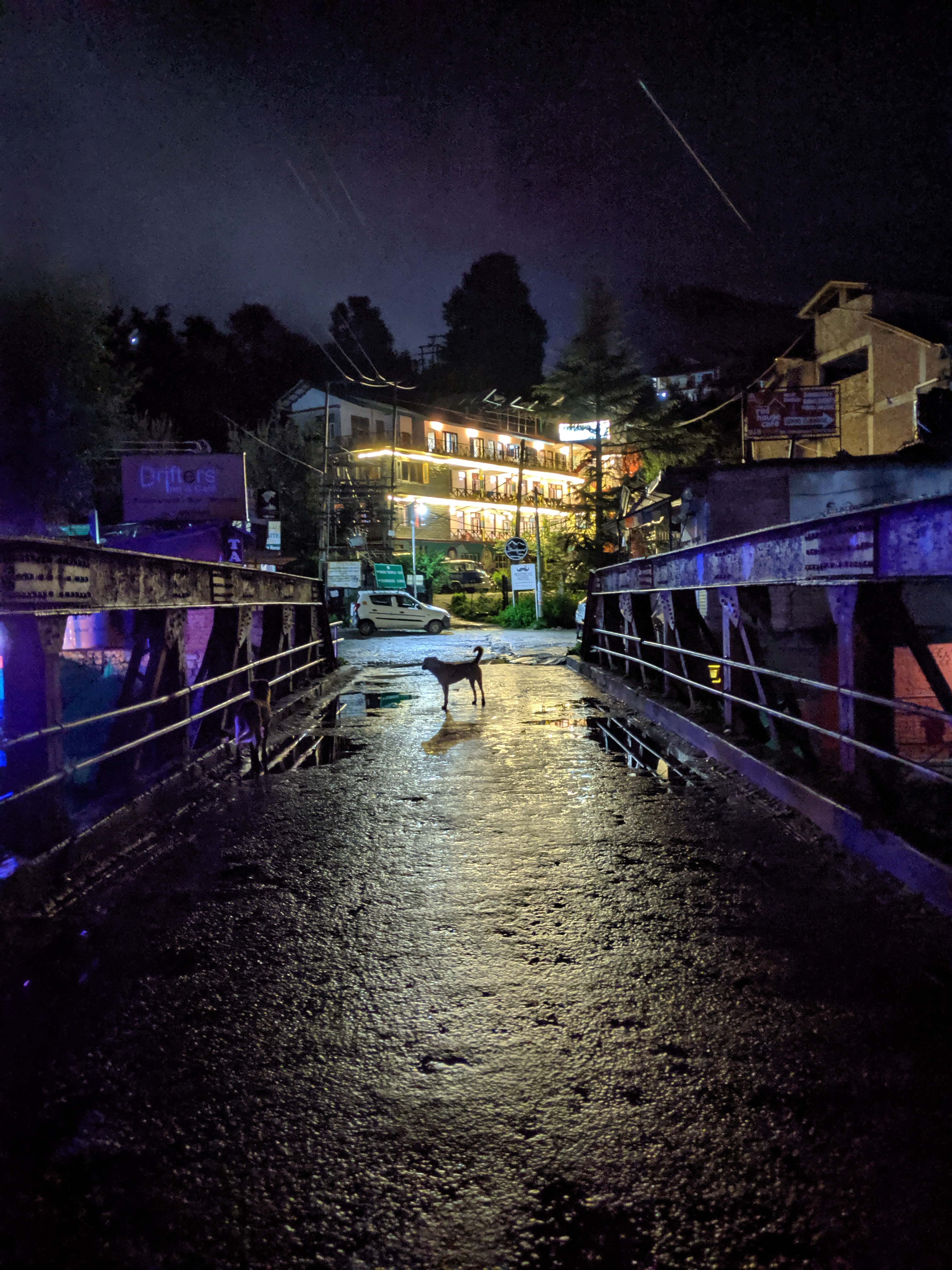
Me and 3 KTMs, we ride together in the rain. There are rocks falling from the slopes, it’s quite dangerous to be honest. But riding with the bikers makes it easier, since there’s company. We leave the KTMs behind and head towards Kaza now. Around 7:15pm, the lights are failing now but I’m riding next to the Spiti river which is shimmering blue in the night sky. Best time to stop and use the night mode for the Google Pixel, right? Surprisingly, I have no fear of getting late, or riding in the pitch black at all. Kaza is just a short while away, maybe an hour or so, so I stop and take as many pictures as I can.
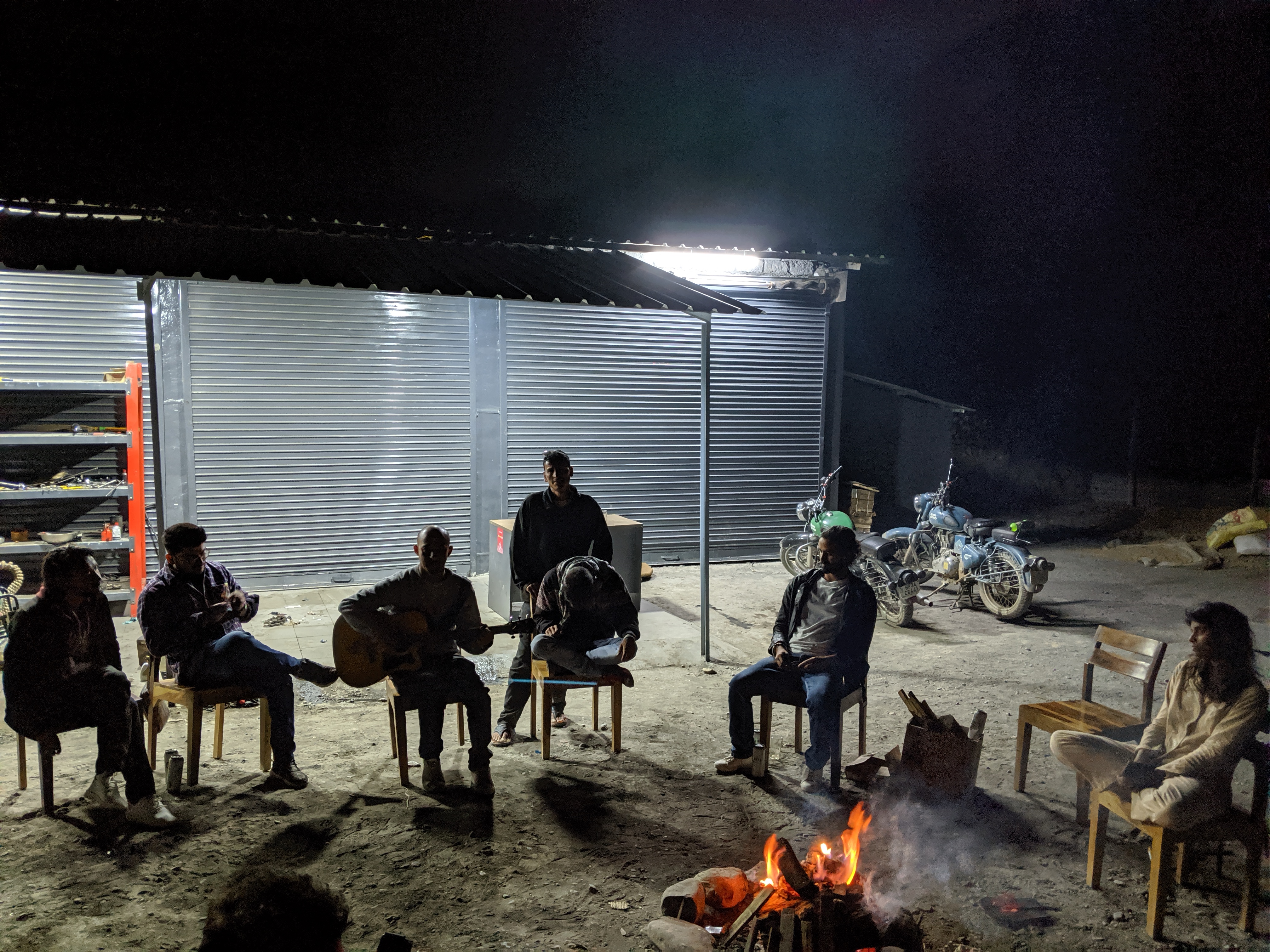
Finally reach Kaza at 8:30pm, the first building on the left has a number of Royal Enfields parked outside, so I stop there, just to find out that it’s an RE service centre with an adjoining hostel, Moustache hostel. Rohit – the super friendly owner of the hostel, promptly gets me a bunker bed while Mohit – another solo traveller walks in, Rohit meets Mohit (lol). Bonfire, beer, live music – that’s how the night goes. I’m fortunate enough to reach the hostel on a night where they are having a bonfire, while singing songs under a starry night bringing in one of their friend’s birthday.
Day 5 – Kaza to Key, to Kaza (Wednesday, 14.08.19)
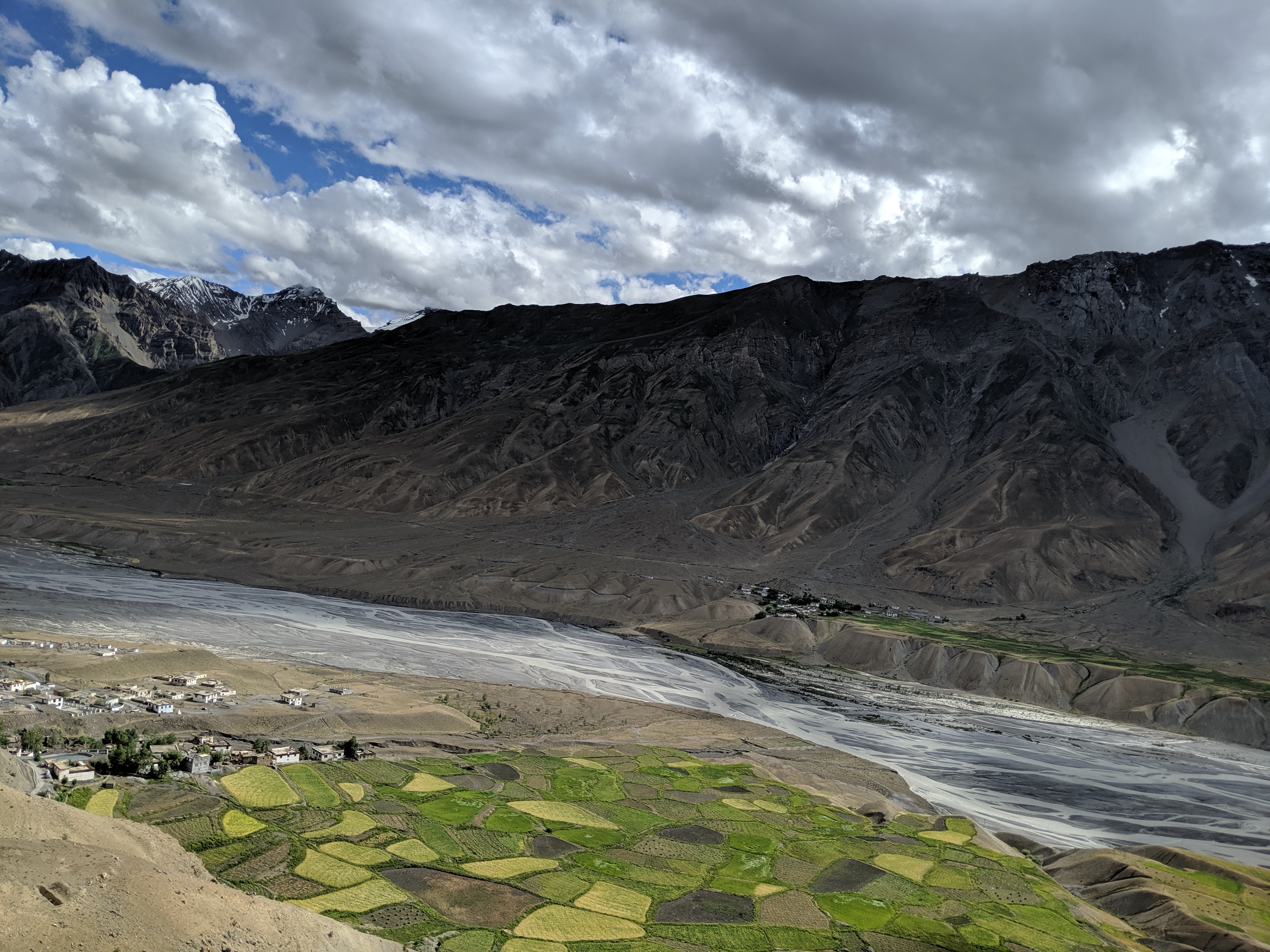
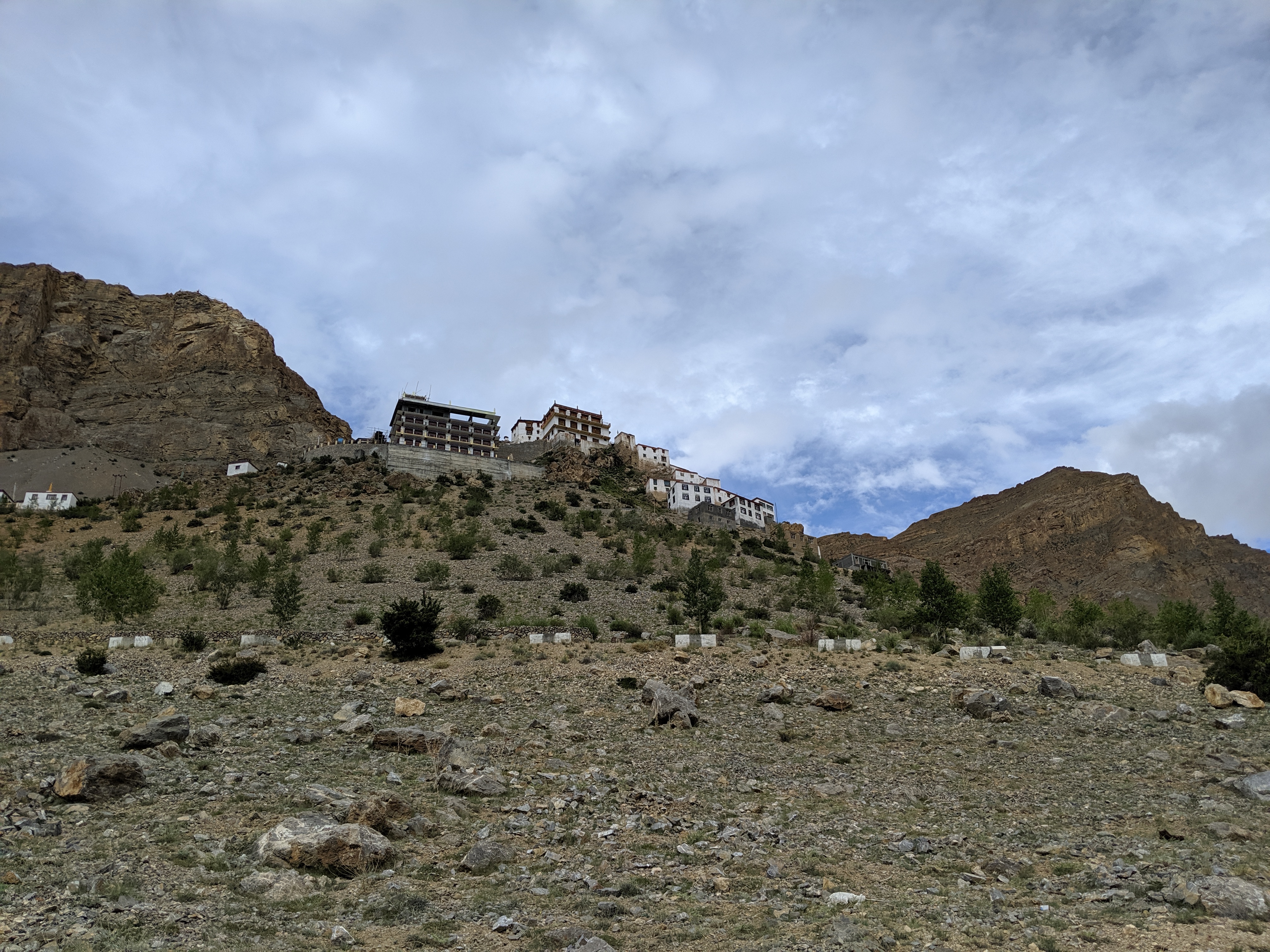
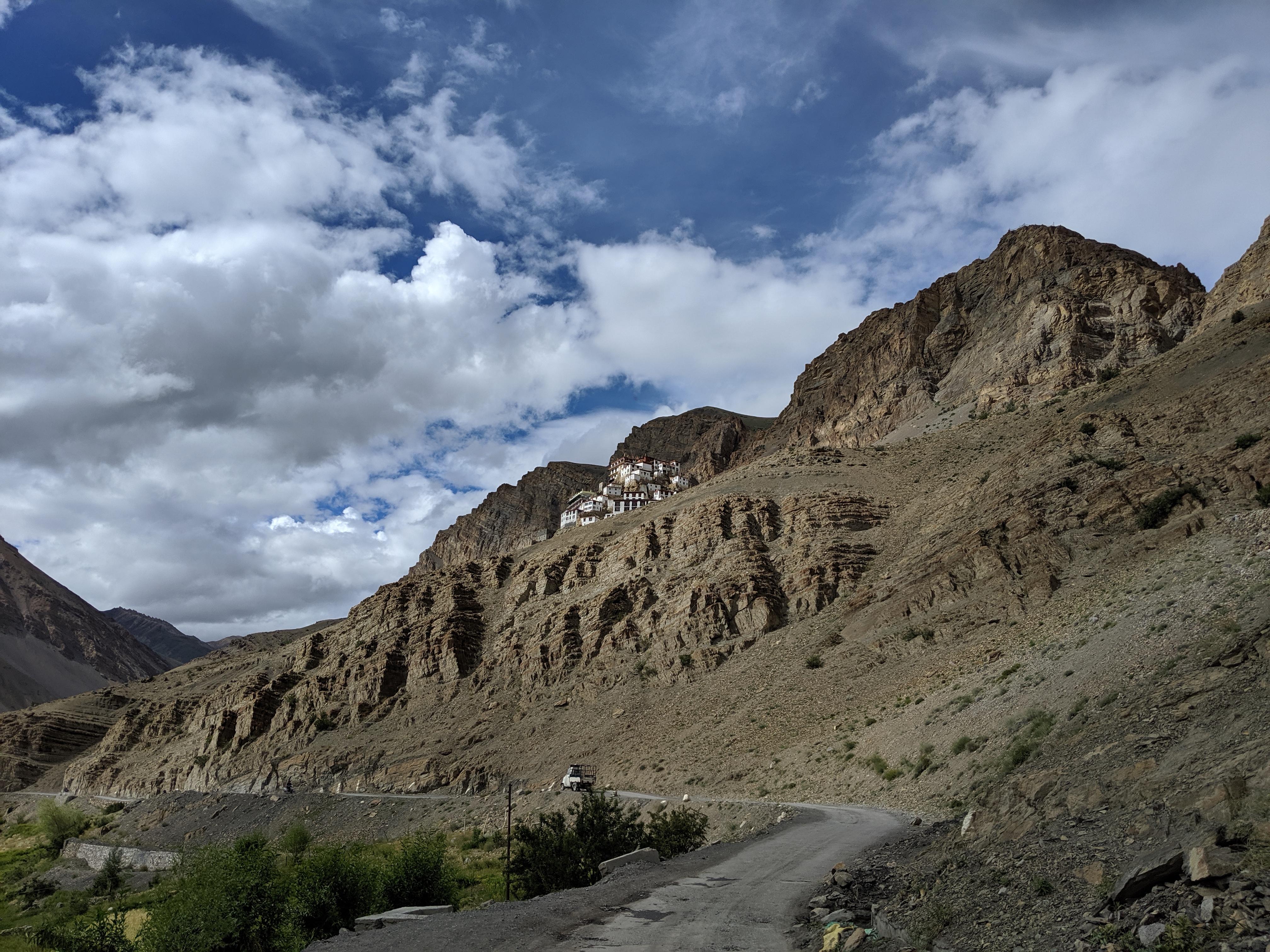
I decide to rest during the day with plenty of hot ginger and honey tea, sketching and reading for a bit. Around 3pm, I finally venture out till the Kaza market for some hot soup and momos and a trip to the Key monastery. Mohit accompanies me on his bike, but we part ways from the monastery.
Another night of chilling with the locals. I’m sitting next to Durgesh, and we get talking. I ask him – what do you do, brother? Nothing, and he laughs hysterically. He tells me he does nothing, but he codes sometimes to get the money to do nothing. And when he ends up finishing all his money, he goes back home once in a while (gharwalo ki gaali khaane). He asks me my plan for tomorrow and tells me that I can take the route to Chandra Tal via Kibber as well. (It’s important to note here that this entire trip was done without phone or internet connectivity, and such tips are highly important).
Day 6 – Kaza to Chandra Tal, 90 kms (Thursday, 15.08.19)
Wake up early, as usual and wait for the kitchen guys to wake up and prepare my breakfast. Finally leave around 9am. Riding via Key, we reach Kibber in no time. Stop, take pictures, move again.
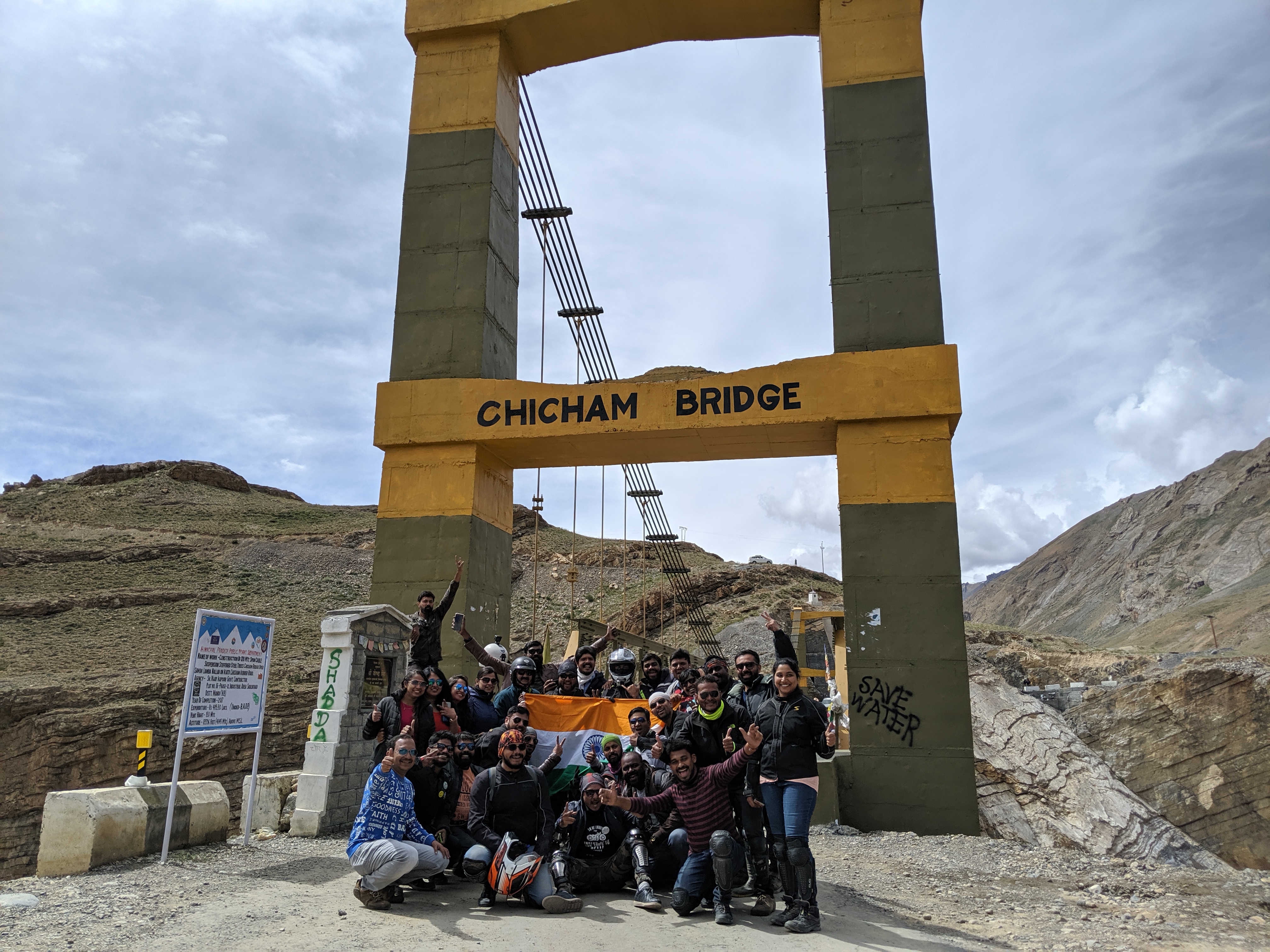
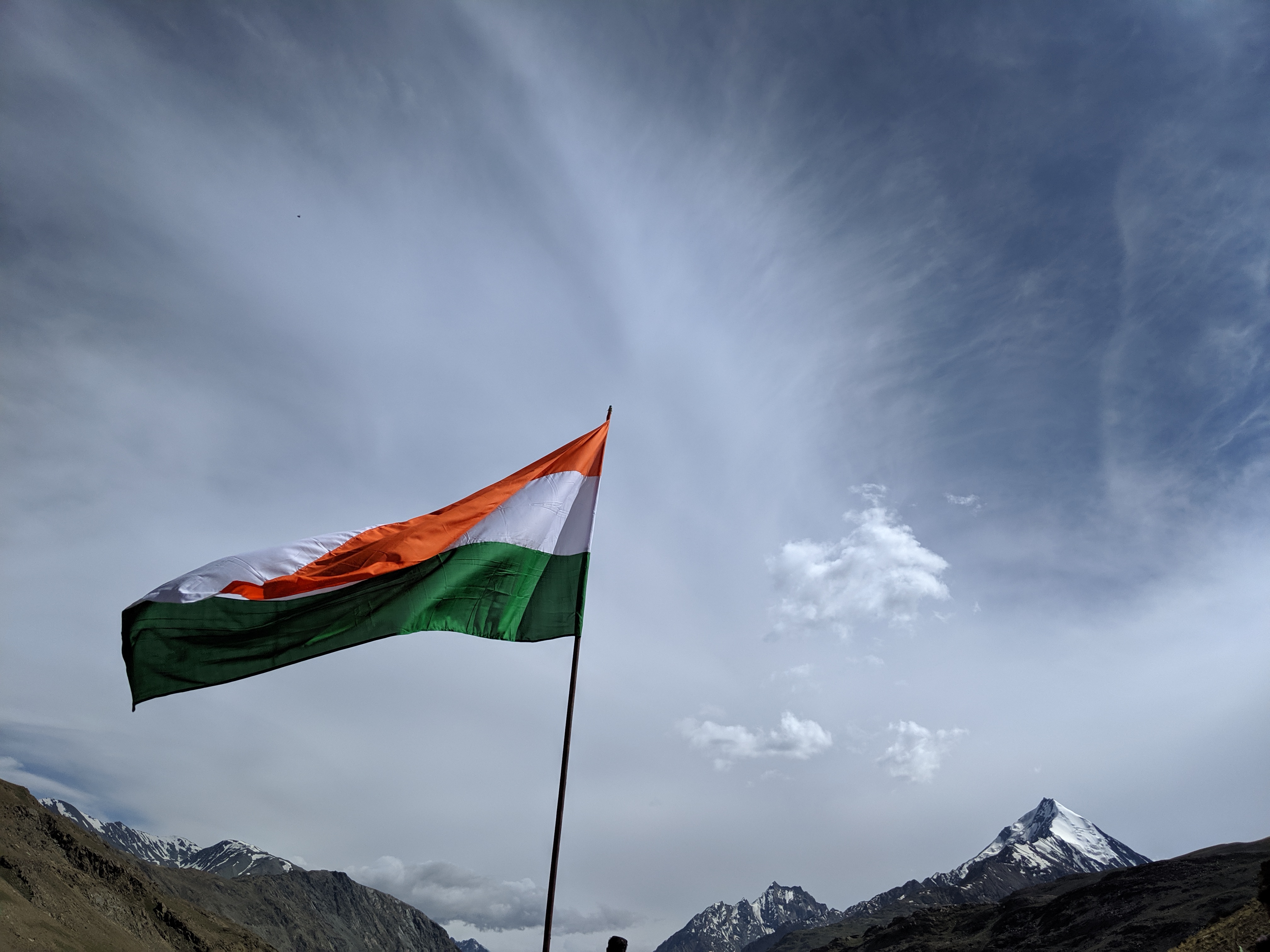
There’s a huge crowd at Chicham bridge with a lot of people taking pictures. So I stop and take out my Indian flag (it’s the 15th of August) and try getting a solo picture with the flag and the bridge. Wrong – I’m mobbed by everyone wanting to take a picture with the flag.
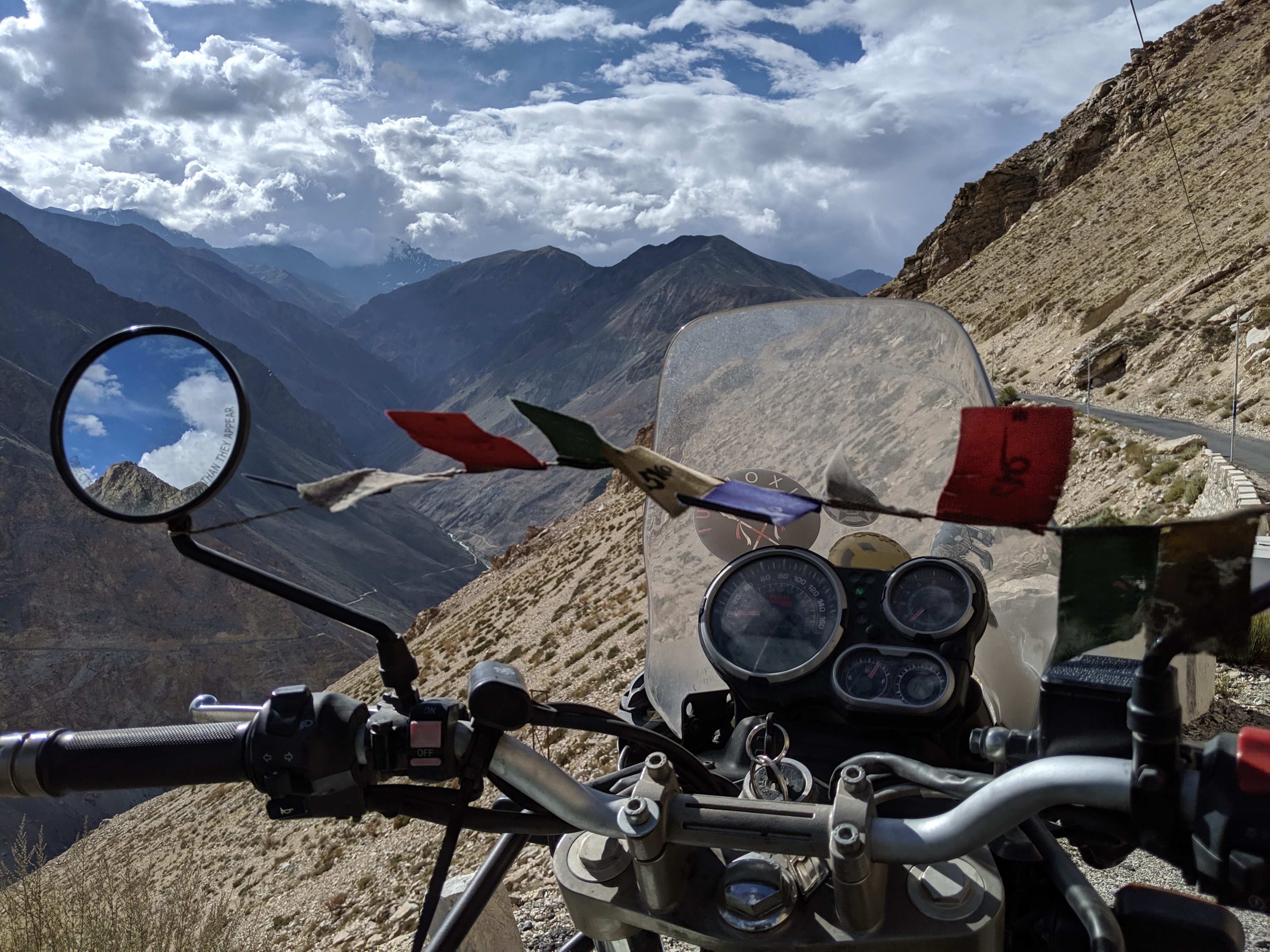
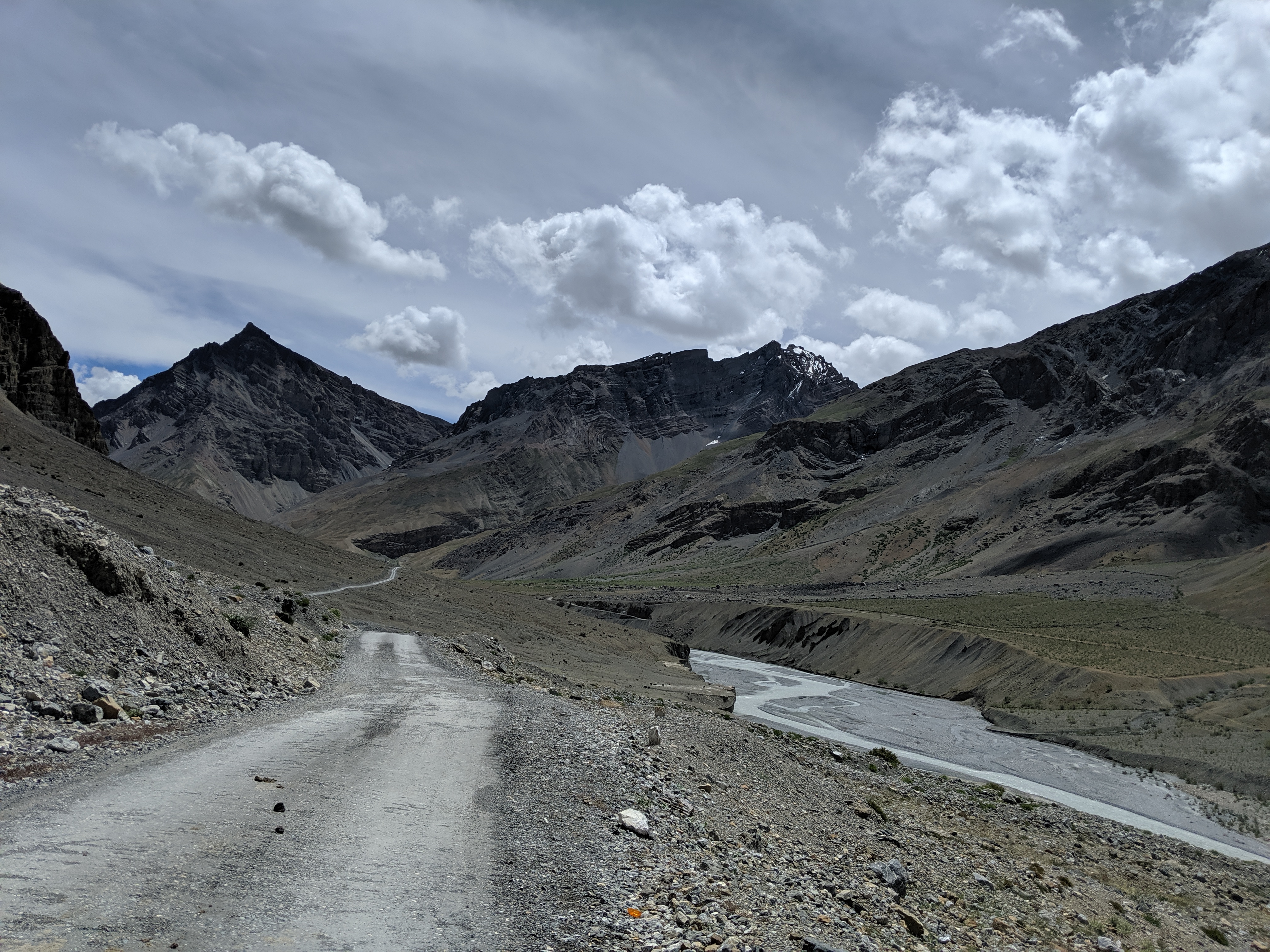
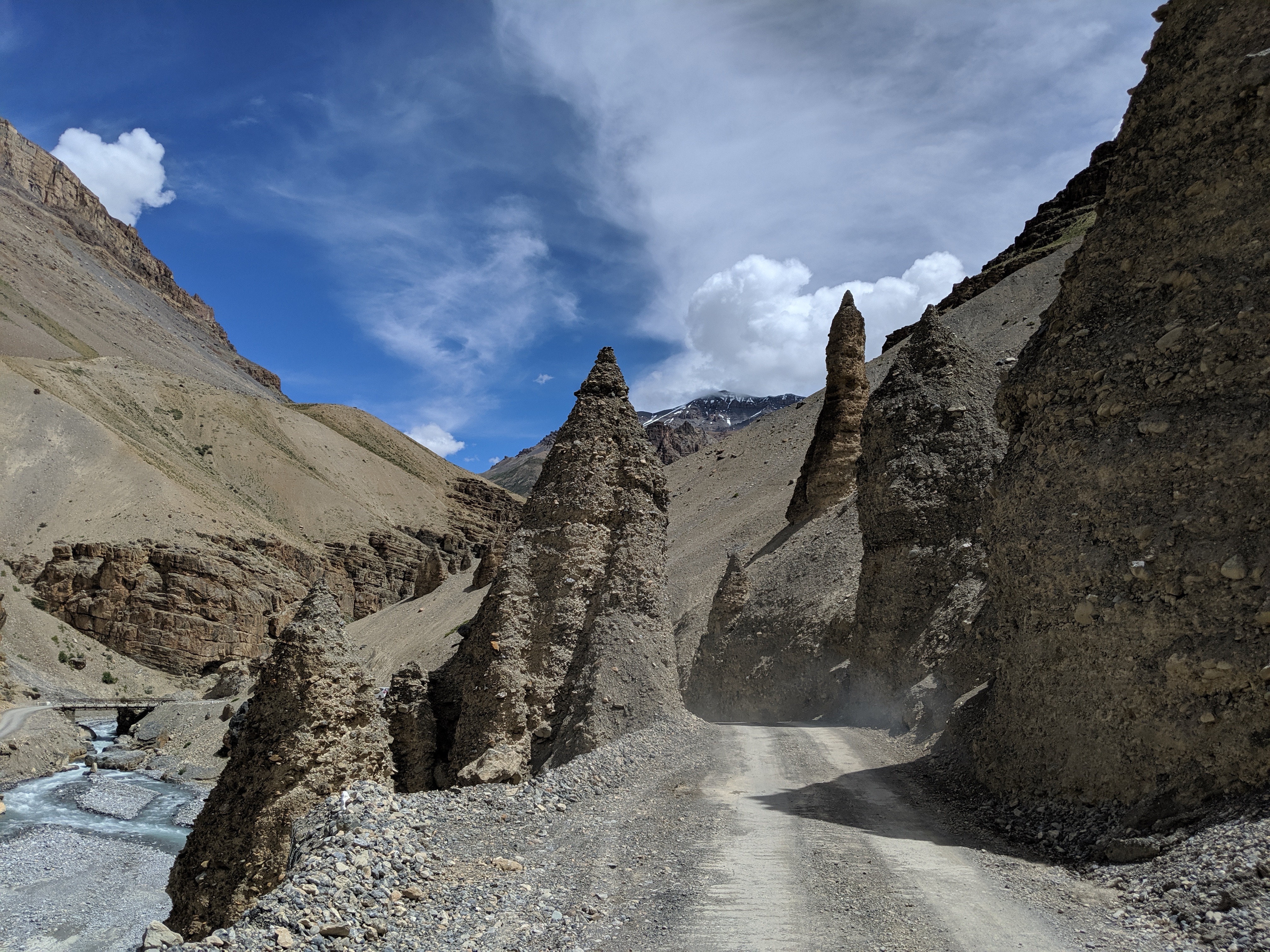
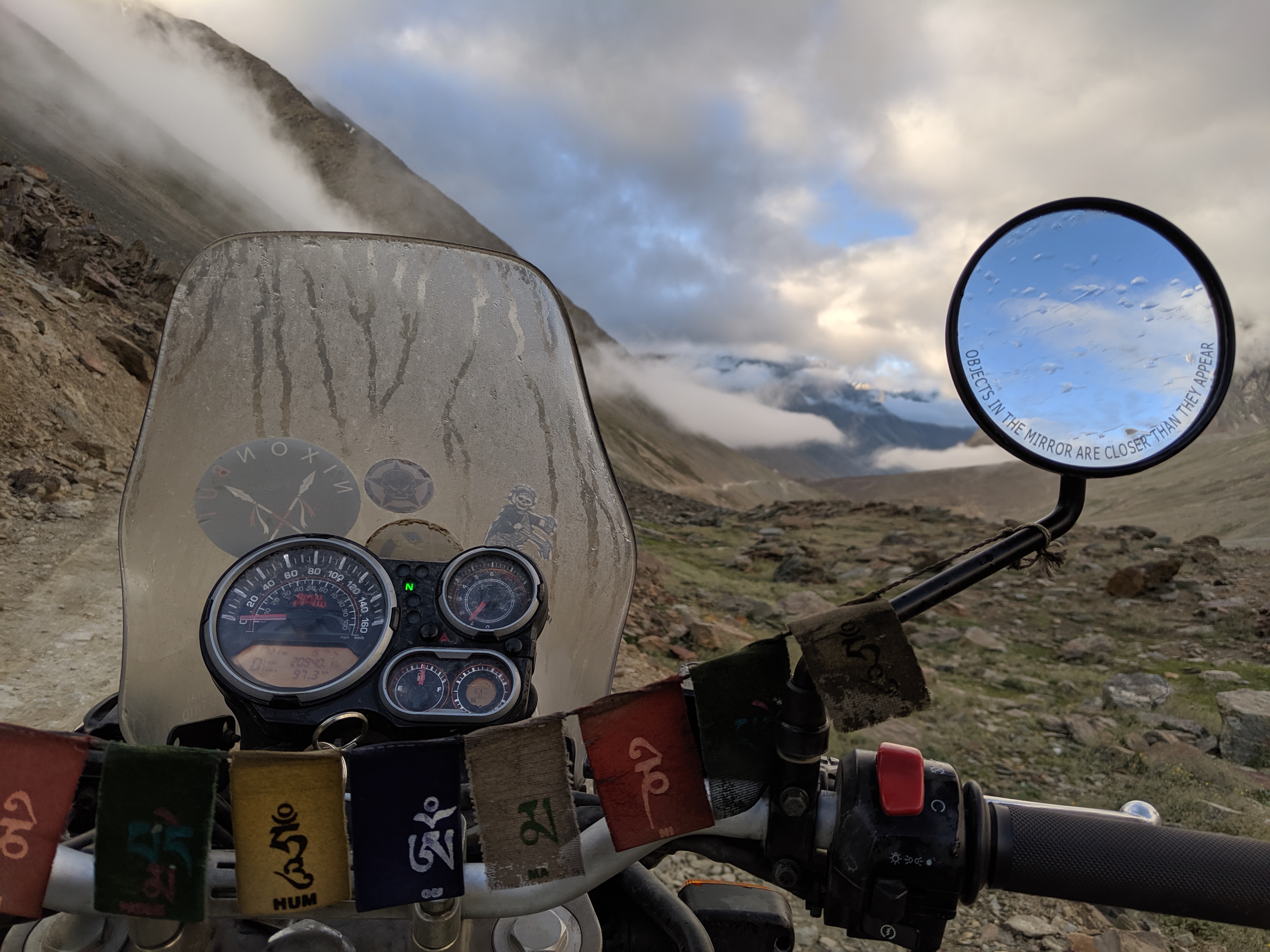
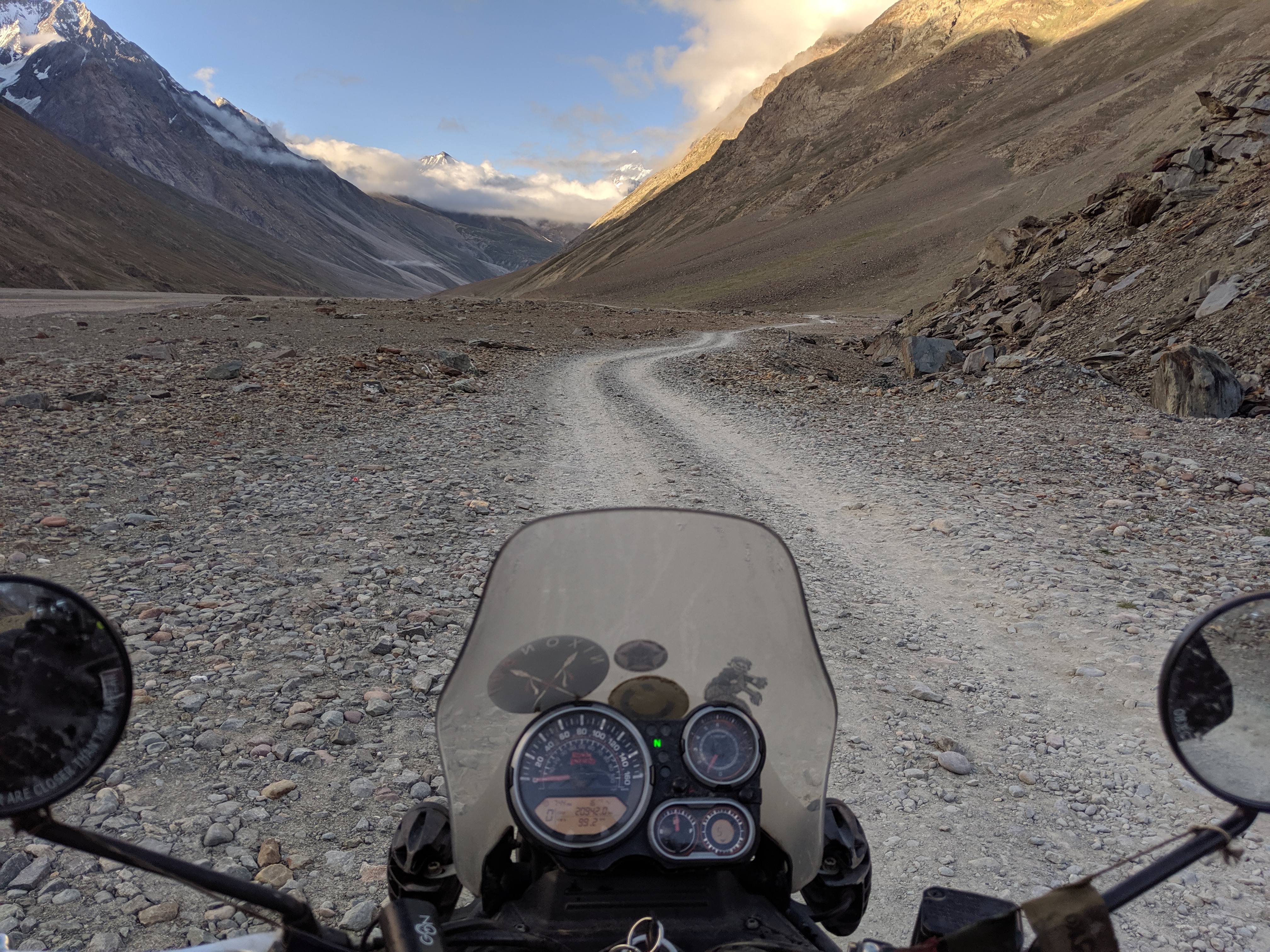
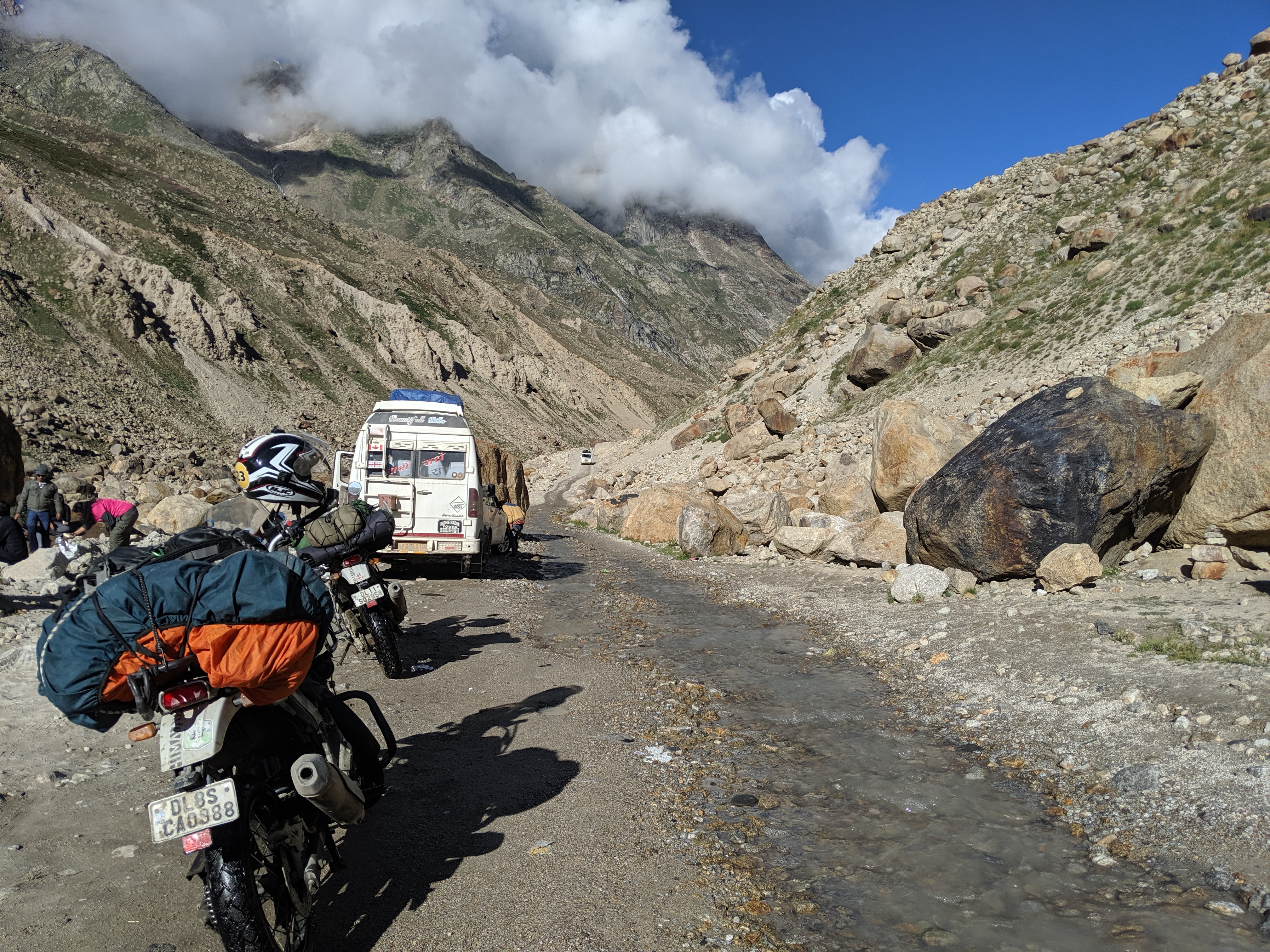
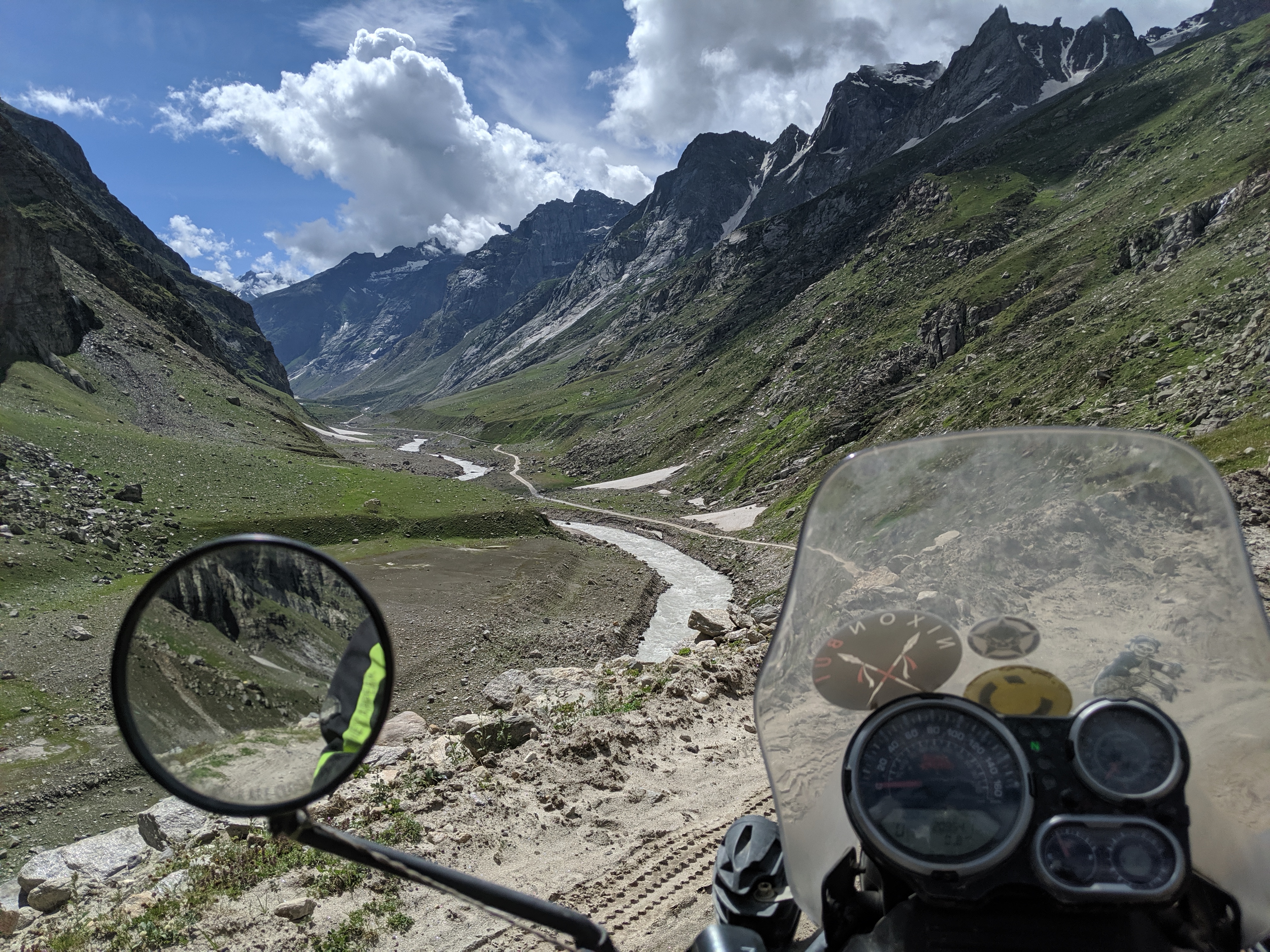
We move on, the tarmac roads end, and we start riding on sand and gravel and stones (my favourite). There’s no sitting down now, you stand upright and rip across the pseudo roads. Push hard for a couple of hours and reach a point where everyone’s taking a break.
Meet two boys from Indore, who been having a hard time on the road riding alone and so they stick to a riding group from Indore. We talk about why we do this, and what if something happens to us on the road. It’s dangerous, and it’s easy to disappear around a corner, without a trace. “Why are you travelling alone, bhaiya? Gharwalo ko bataane waala bhi toh koi hona chahiye na”
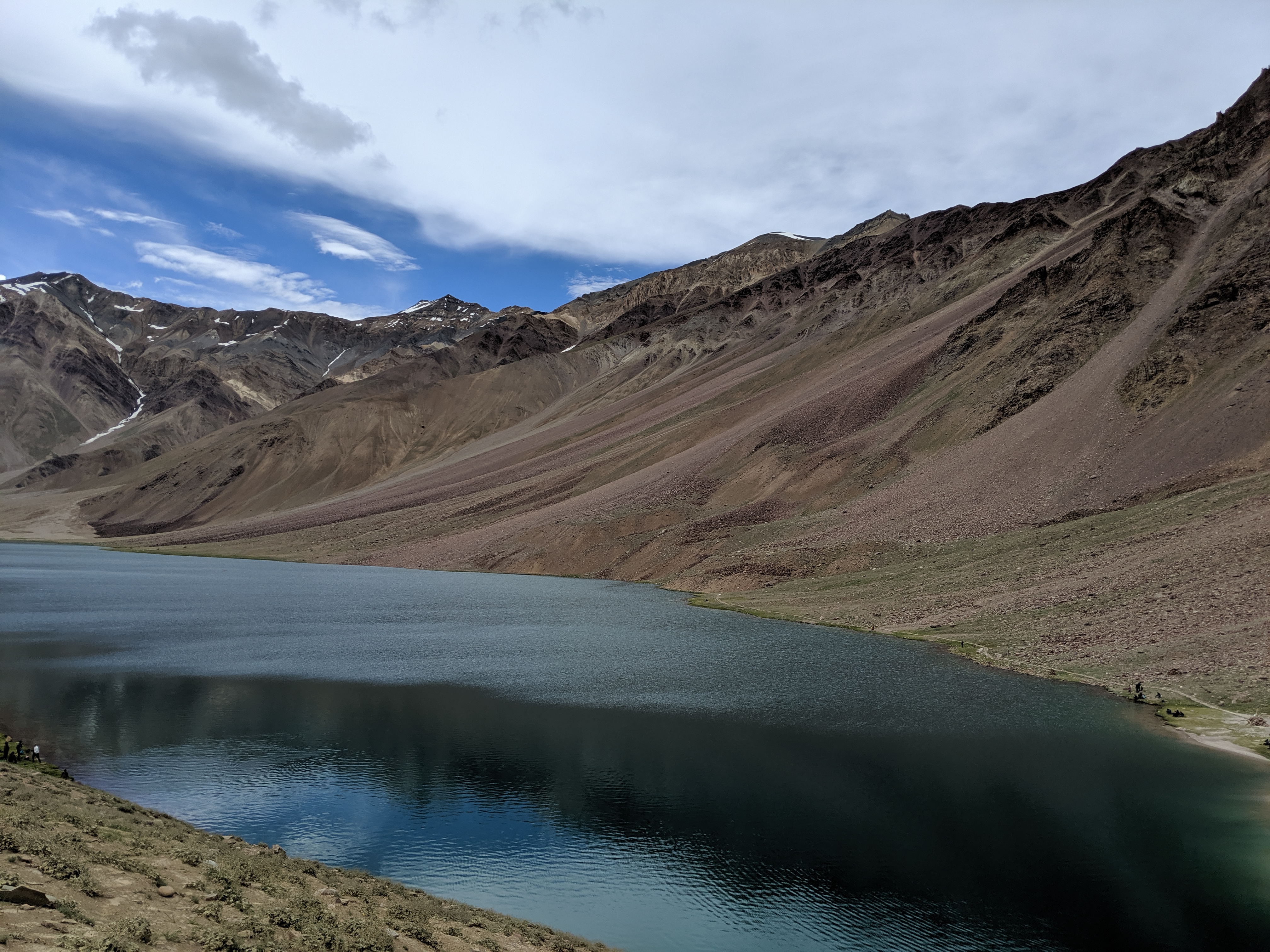
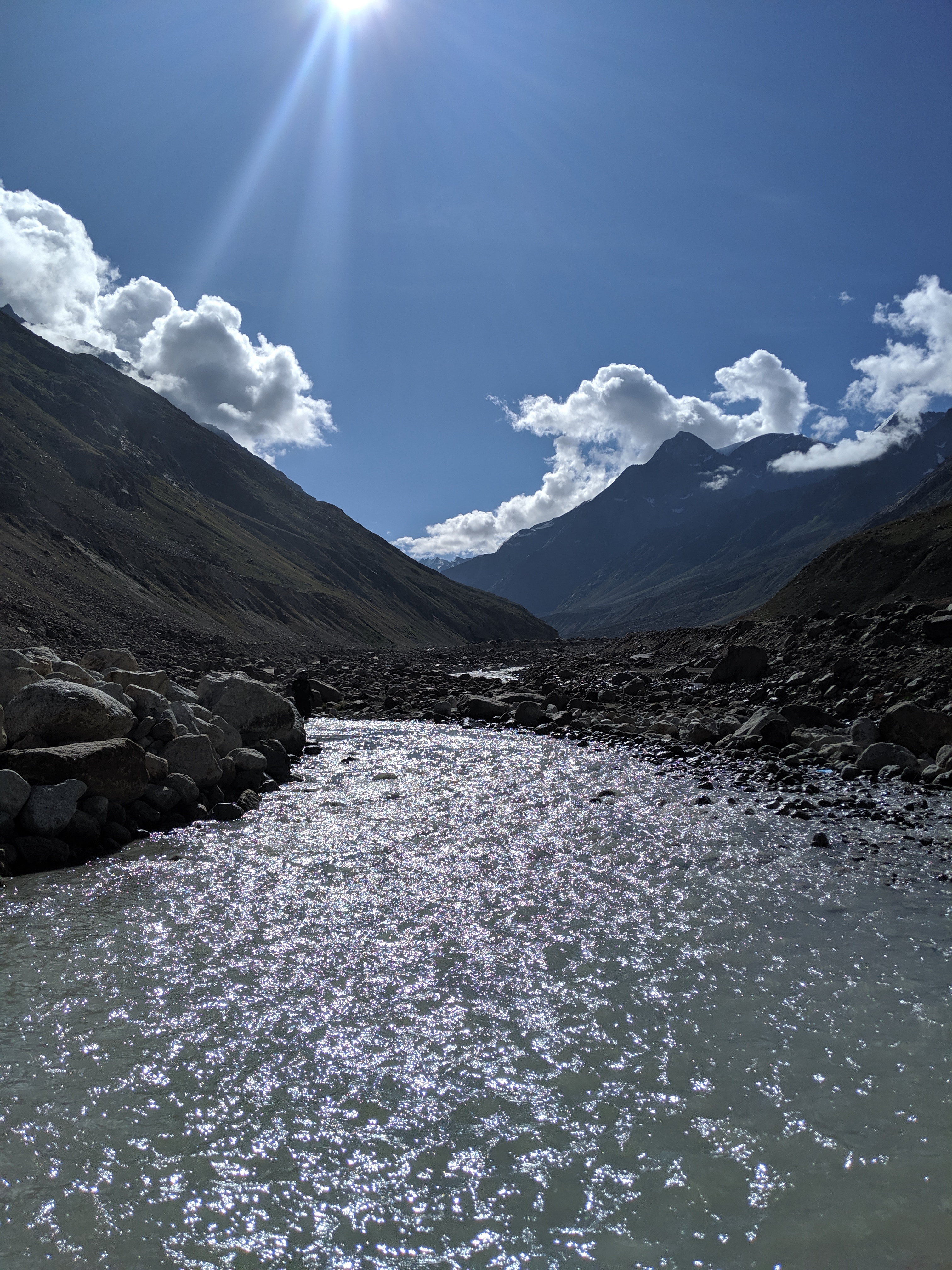
On we go, ripping through the raw paths, stopping only to take a few pictures, no more breaks. After passing a couple of water crossings, I finally reach the Chandra Tal campsite around 2:30pm. Bali bhai is kind enough to get me one last tent. While drying my drenched boots, I met 3 boys, Shivam, Rishabh and Akshit, from Patna and Jaipur. These guys are super chilled-out and have an extra spot in their cab, so I hitch a ride with them up to the Chandra Tal.
Panoramic view of the lake
I retire super early at 9pm that night. Curling up inside the sleeping bag, anxiously waiting for the big day ahead.
Day 7 – Chandra Tal to Manali, 123 kms (Friday, 16.08.19)
Wake up at 4:30, ready to leave the campsite early. Bali bhai feeds me chai and eggs and bread, I say goodbye to the 3 lads, and off we go.
4:30am at the campsite, everyone’s up and about (mostly).
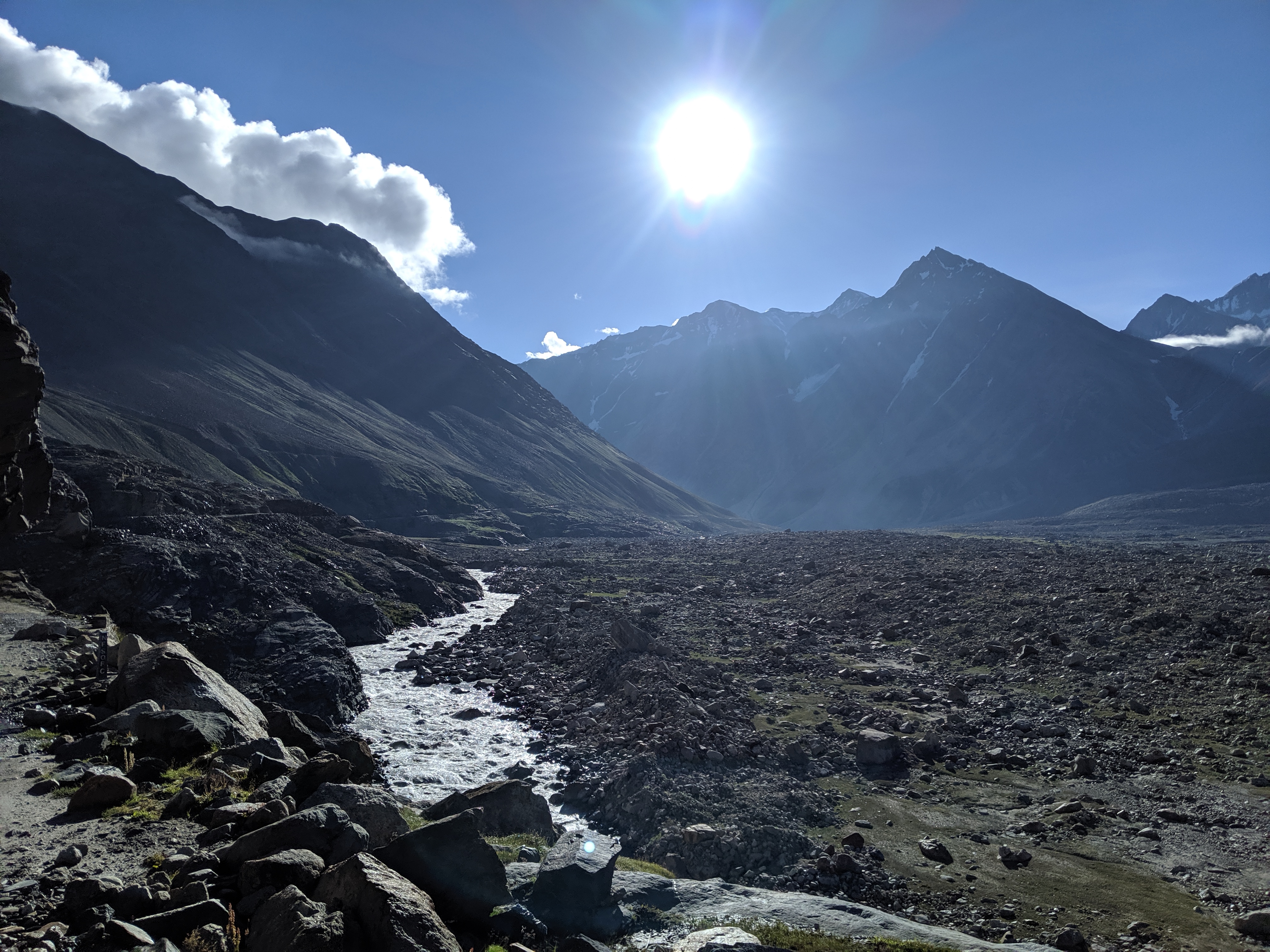
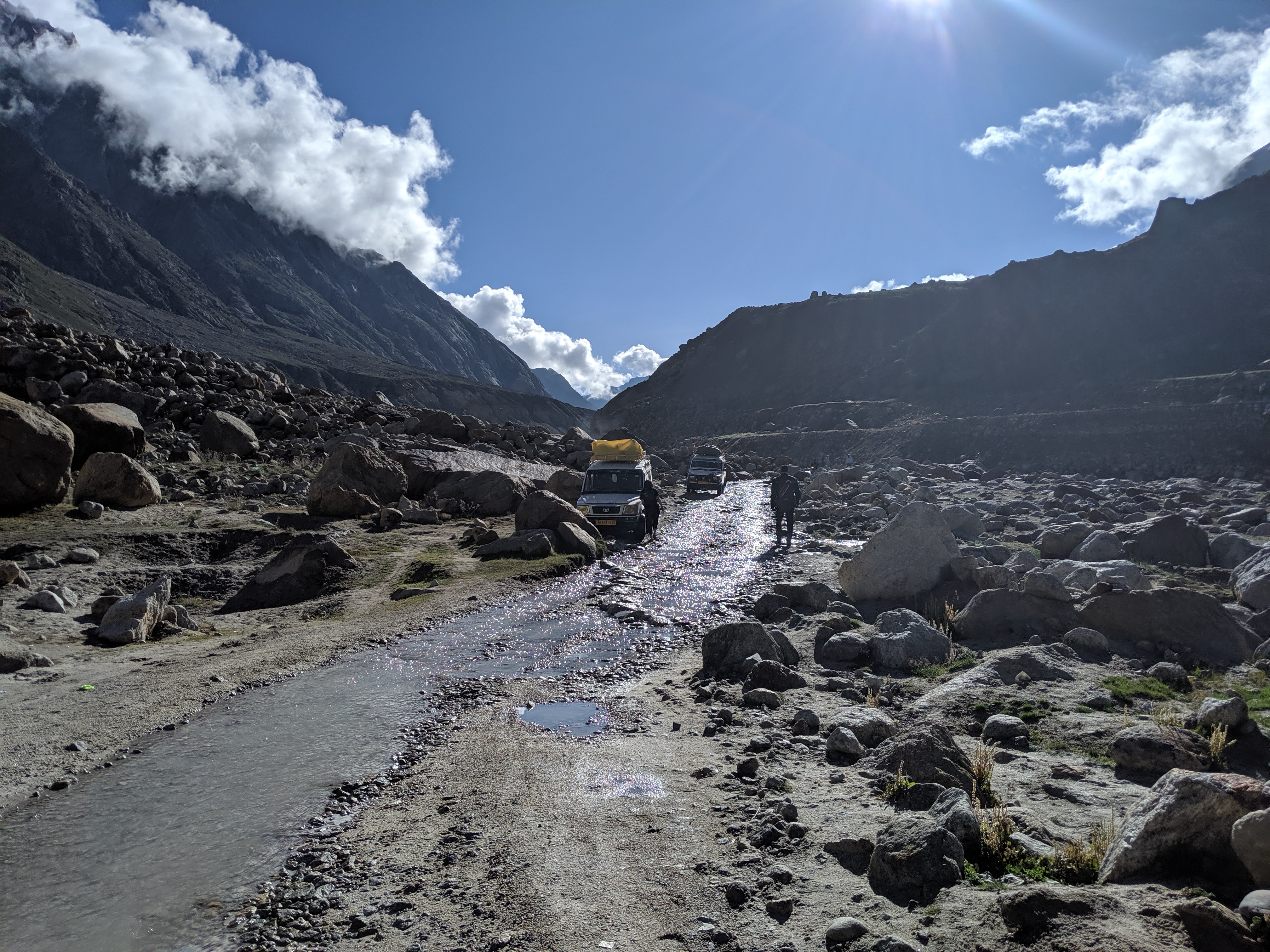
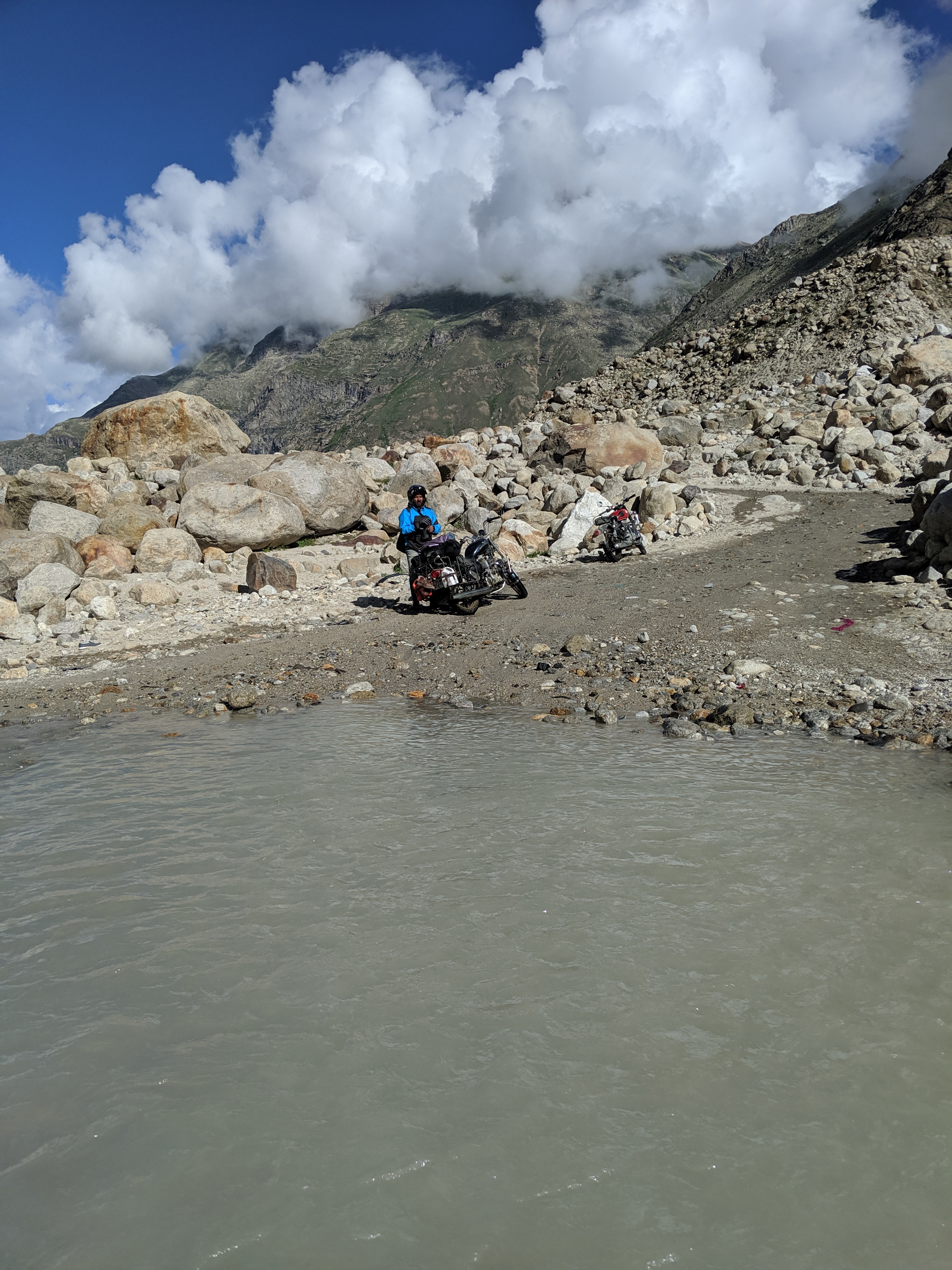
Smooth riding, the sun is still trying to break free from the mountains up ahead – there are small water crossings which serve as warnings as to what lies up ahead. My boots are soaked in the first 30 mins of the ride. Our pace is good and we hit the first water crossing around 8am. The most important bit of this day is to get clear of the water crossings (nalas) before 10am. Why? Because the flow of water increases considerably later in the day.
There are bikes and cars parked on the sides – everyone waiting to take the first steps. I’m really nervous – but I don’t think twice before plunging into the water. There’s another rider in front of me, we cross the streams of water and park our bikes beyond the water crossing. And then we head back to help out the other riders who are slipping and sliding their way through, most of the non-Himalayans have trouble in the water and need a push. Eventually everyone makes it through, and now we’re 3 different groups of riders tackling every water crossing together.
I meet the 3 boys from Chandra Tal for the last time at the next dhaba – and off we go to Manali. Super tired, but super happy to reach Manali during daylight, right before it starts to rain.
At night I venture out towards Old Manali where I head for the most popular bar. It feels strange to have so many people around me, yet no one talks to you, or even looks at you as a fact – everyone’s busy in their phones, or busy getting wasted. Welcome back to civilisation!
Day 8 – Manali to Chandigarh, 300 kms (Saturday, 17.08.19)
What-a-ride!
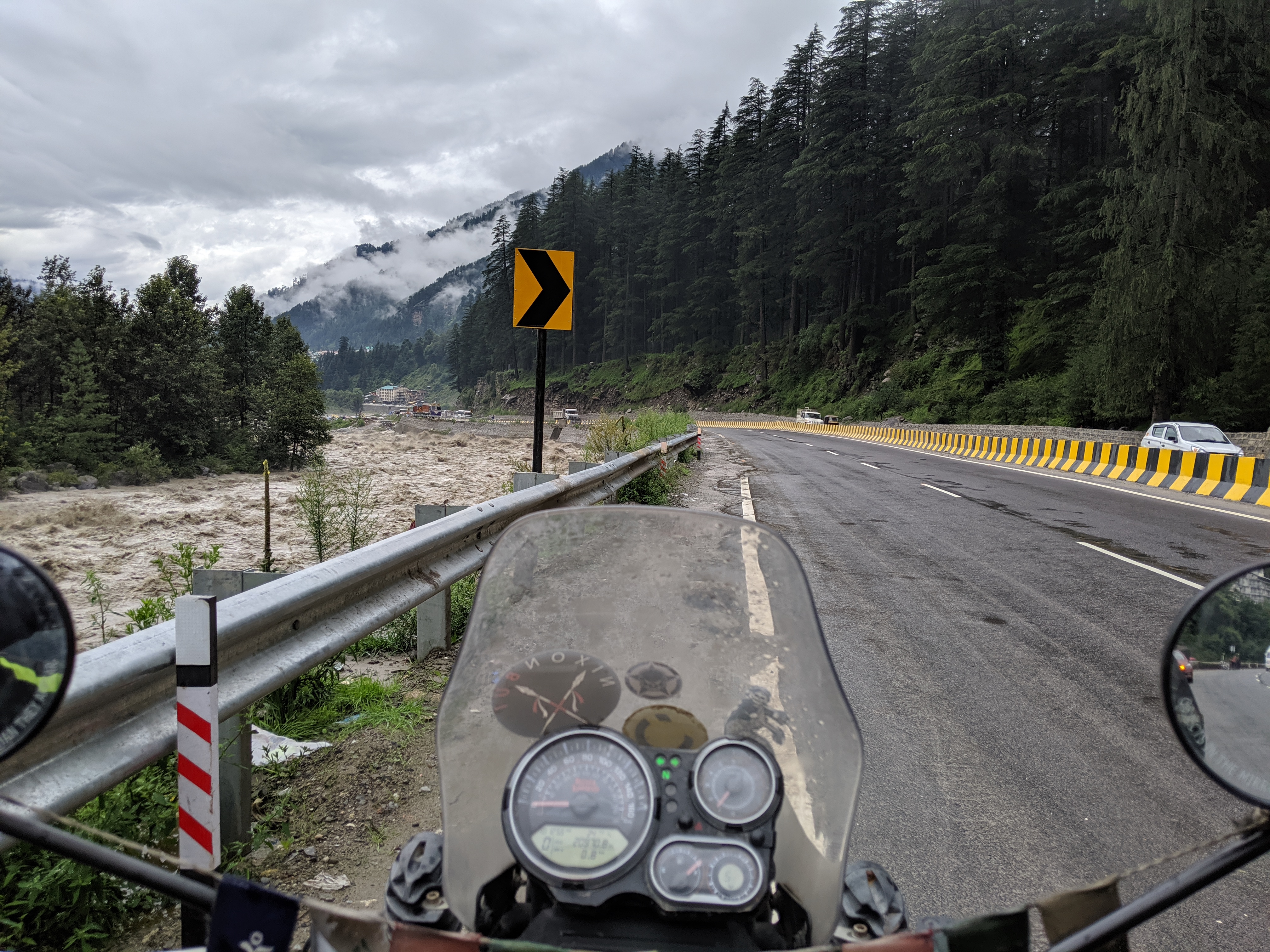
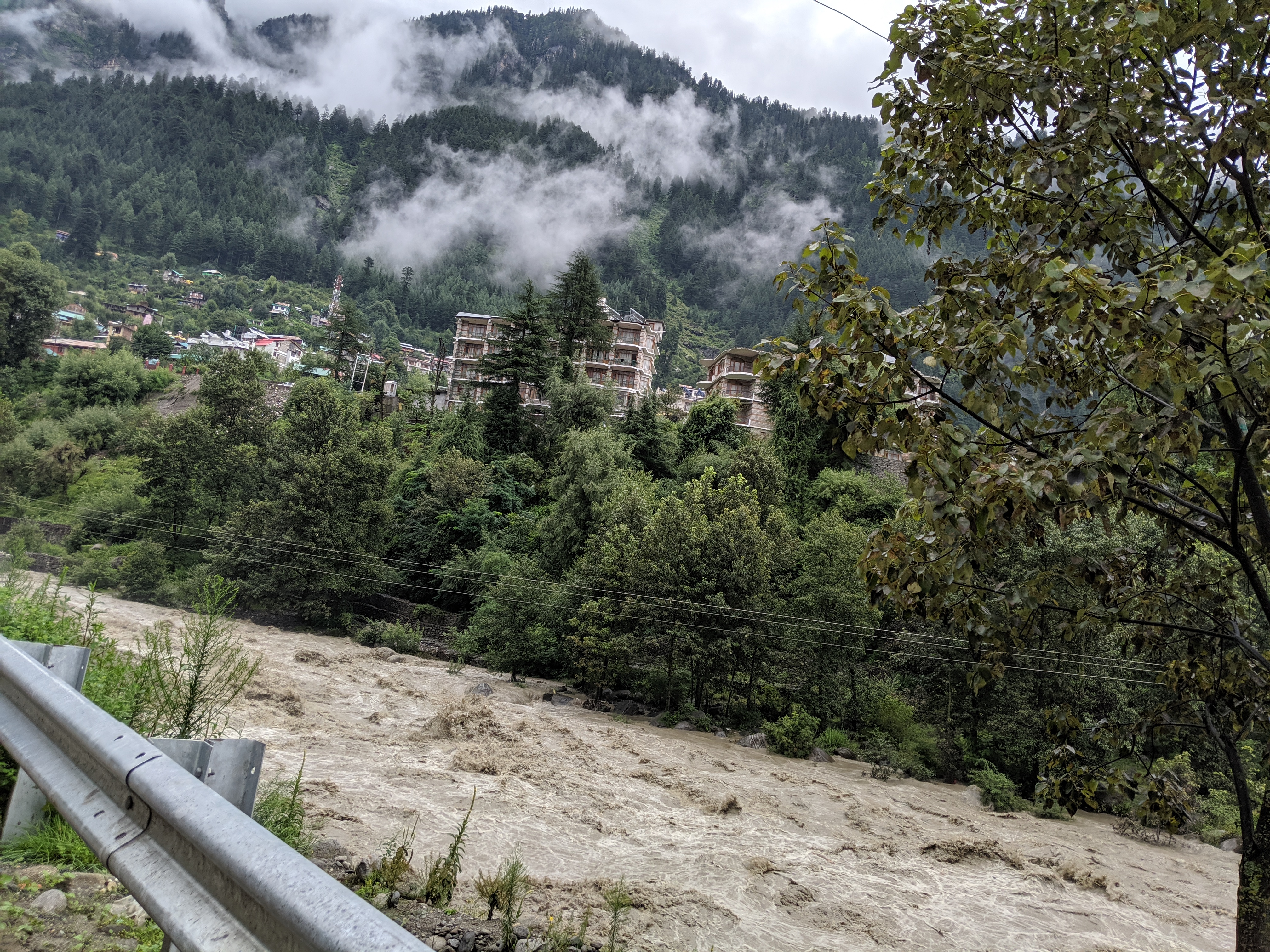
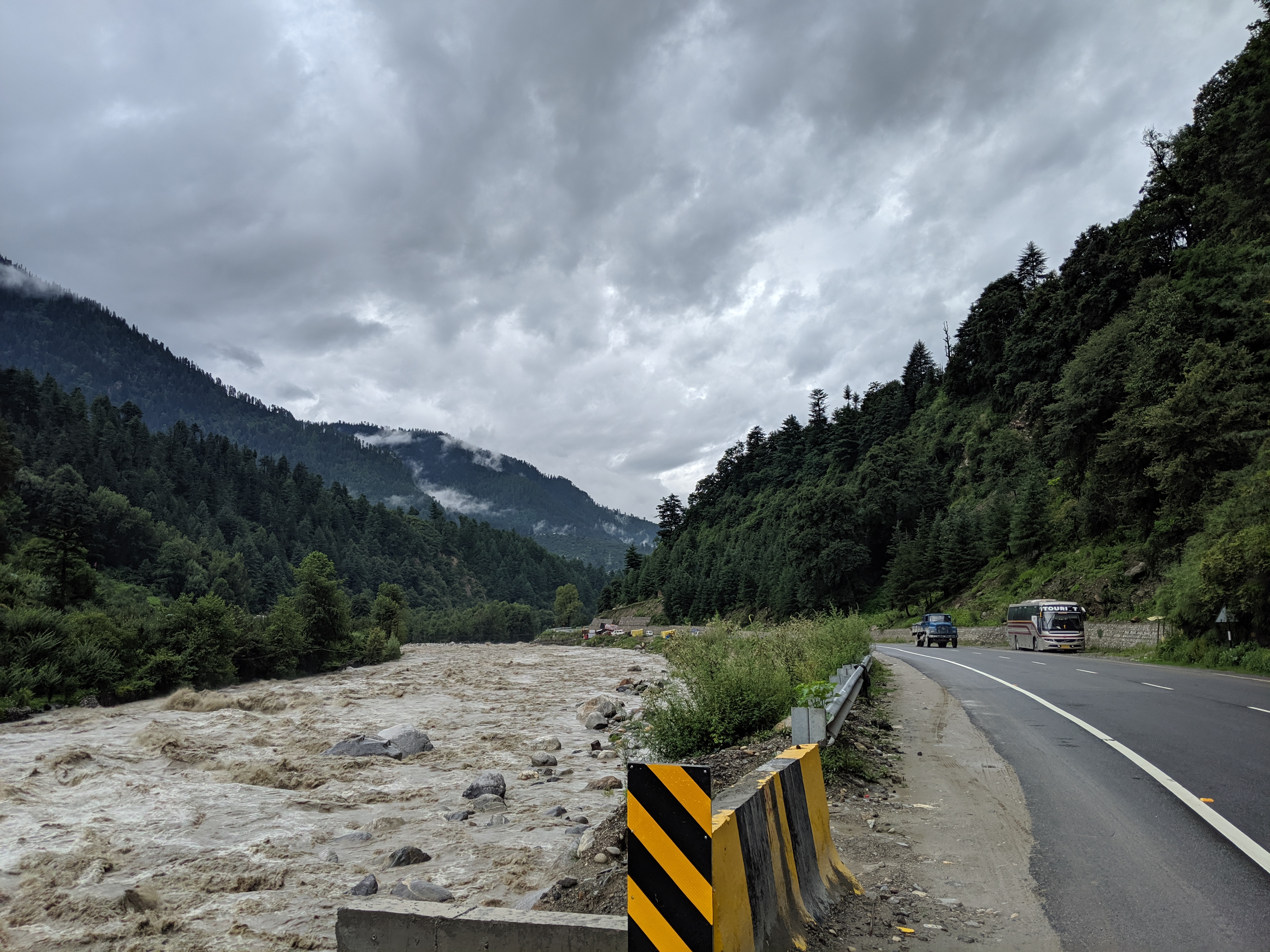
One of my hardest rides ever; constant rain, the mud and slush, roads caving in with trucks and SUVs trying to overtake you on a packed highway in the mountains.
I woke up to the constant splatter of the rain – contemplating for a while whether to leave or to stay and then finally make up my mind about leaving. It had drizzled all night, and the downpour was starting to get stronger. I have breakfast and leave around 10am.
The initial 60 mins are fine, we manage to head out of Manali without any trouble, and then it starts to rain, and never stops. No matter what rain gear you have – if you’re riding in heavy rain, the water will eventually get to you. 30 mins in and I’m soaking wet, it’s cold, but there’s no time to stop. There is no road now, even if there was one till yesterday. Riding in a muddy field with rain splattering against my helmet’s visor and my glasses, it’s almost impossible to make out where you’re going – so you find yourself a good car driver at a pace you can keep up with, and put your trust in them and follow the car blindly. It’s a race against time, to cross the roads before a landslide puts all traffic to a halt. We ride for 5 hours straight, finally get out of the high mountains and the muddy roads and stop for lunch around 3pm.
The dhaba owner tells me that there have been landslides, and there is no more movement from here to Manali. All roads have been shut behind us.
We’re off again, the rain is relentless – but so are we. The aim is to cover as much distance as I can before the sun goes down, because riding in the rain once it’s dark with a wet visor and wet glasses is as bad as it gets.
7:15pm, still on the road, I’m starting to feel tired now – everything is pitch black and it’s still raining, albeit very light rain. 3 more treacherous hours and I have made it to the plains, it’s still raining – fuck this rain!
I find refuge at one of those shitty-ass highway restaurant / DELUXE AC rooms accommodations – it’s not so cheap, and so disgusting. The room literally smells of sex. I have my dinner and pass out, too tired to care about anything else.
BOOM! A loud crash and a splash of water on my face wakes me up around 3am. The wind is blowing the rain right into the room now, I jump up to cover the windows with the heavy curtains, and go back to sleep.
Day 9 – Chandigarh to Delhi, 252 kms (Sunday, 18.08.19)
No more pictures. The boring plains, the top gear, the silky roads are back. Although I am saddened to hit the plains, there’s a sense of achievement and relief – as I speed along the highway, probably one of the handful of bikers who made their way out of Manali yesterday. The roads in the mountains are still blocked due to heavy landslides. The ride back home is safe & smooth, and we’re back home before sunset.
Standing in front of the mirror, I question myself, “why do we do the things that we do?”.

 meneenja's travel blog